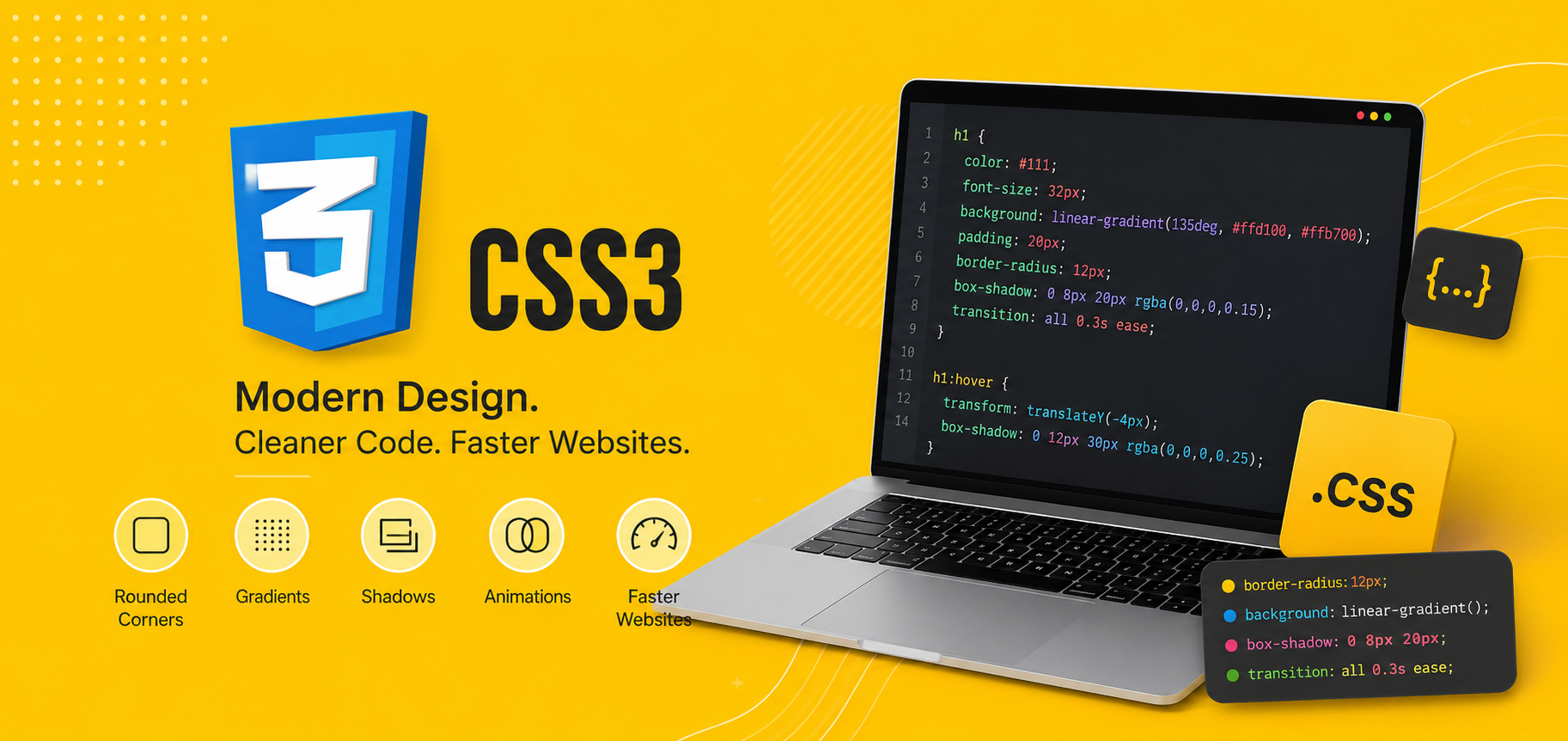
The web design industry is constantly evolving, and one of the most exciting developments over the past year has been the growing adoption of CSS3. As modern web browsers continue to improve, web designers are beginning to move away from image-heavy designs in favour of cleaner, more efficient code.
For many years, creating professional-looking websites often required numerous images, complex layouts and various design techniques to achieve simple visual effects. With CSS3, many of these effects can now be created directly within the browser using code alone.
Although support continues to improve across different browsers, CSS3 is already beginning to change the way websites are designed and developed.
What Is CSS3
CSS, or Cascading Style Sheets, controls the appearance of a website.
While HTML provides the structure of a webpage, CSS determines how that content is presented, including colours, fonts, spacing and layout.
CSS3 is the latest evolution of CSS, introducing a range of new features that allow developers to create more attractive websites with less reliance on images and additional code.
These improvements are helping designers build cleaner, faster and more flexible websites.
Rounded Corners Without Images
One of the most noticeable additions in CSS3 is the ability to create rounded corners using simple code.
Previously, achieving rounded buttons or content boxes often required multiple images.
Now developers can use the border-radius property to create smooth rounded edges.
This offers several advantages:
- Less code.
- Fewer image files.
- Faster page loading.
- Easier maintenance.
It may seem like a small improvement, but it saves developers considerable time while producing cleaner websites.
Creating Gradients Using Code
Background gradients have become increasingly popular in modern web design.
Before CSS3, gradients usually had to be created as image files.
CSS3 now allows developers to generate smooth colour transitions directly within the browser.
This means websites can display attractive backgrounds without requiring additional graphic files.
The result is:
- Smaller webpages.
- Faster downloads.
- More flexibility.
- Easier updates.
Changing colours is now as simple as editing a few lines of code.
Adding Shadows to Improve Design
CSS3 also introduces support for shadows.
Developers can now create:
- Text shadows.
- Box shadows.
- Layered effects.
Previously, these effects often required graphics created with image-editing software.
Using CSS3 keeps websites cleaner while enabling subtle visual enhancements that improve a page's overall appearance.
Smooth Animations Without Flash
Another exciting feature is CSS3 animation and transition support.
Instead of relying on Adobe Flash or JavaScript for simple visual effects, designers can now animate page elements using CSS.
Examples include:
- Buttons changing colour.
- Navigation menus fading into view.
- Images smoothly enlarging.
- Content sliding into position.
These animations make websites feel more modern while keeping code relatively simple.
Faster Websites
One of the greatest advantages of CSS3 is improved performance.
Reducing the number of images used throughout a website means browsers have fewer files to download.
This can help improve page loading times, especially for visitors with slower internet connections.
Smaller webpages also reduce bandwidth usage for website owners.
As internet users increasingly expect fast-loading websites, these improvements become even more valuable.
Cleaner Code Means Easier Maintenance
Maintaining older websites often involves editing numerous image files whenever a design changes.
With CSS3, many design elements are controlled directly through style sheets.
This makes updates much simpler.
Changing a colour, border, or button style can often be achieved by editing a single stylesheet rather than replacing dozens of graphics.
Developers benefit from:
- Better organisation.
- Less duplication.
- Simpler maintenance.
- Faster updates.
Modern Browsers Continue to Improve
Support for CSS3 continues to grow.
Modern browsers including:
- Google Chrome
- Mozilla Firefox
- Safari
- Opera
- Internet Explorer 9
are introducing increasing levels of CSS3 compatibility.
Although some features still require browser-specific prefixes and testing, developers are finding it much easier to create consistent designs than in previous years.
As browser adoption continues, CSS3 is expected to become the standard approach for modern website styling.
Better Experiences for Website Visitors
Visitors may never notice the technology behind a website, but they do notice the results.
CSS3 helps create websites that feel:
- Faster.
- Cleaner.
- More modern.
- Easier to navigate.
- More visually appealing.
Small design improvements often contribute to a much more enjoyable browsing experience.
Supporting Responsive Design
As smartphones and tablet computers continue growing in popularity, websites must become more flexible.
CSS3 introduces media queries that allow layouts to adapt depending on screen size.
Rather than creating separate desktop and mobile websites, developers can begin designing pages that adjust automatically.
Although responsive web design is still developing, CSS3 is expected to play a major role in its future.
Less Reliance on Images
One of the biggest advantages of CSS3 is reducing dependence on graphics.
Features such as:
- Rounded corners.
- Shadows.
- Gradients.
- Borders.
- Animations.
can now often be created entirely through code.
This makes websites easier to update while reducing page size.
For businesses, this means lower maintenance costs and improved website performance.
Looking Towards the Future
CSS3 represents another significant step forward for web development.
When combined with HTML5 and JavaScript, it provides developers with powerful new tools for creating modern websites that are attractive, efficient, and easier to maintain.
As browser support continues improving throughout 2011 and beyond, CSS3 is likely to become an essential part of every professional web developer's toolkit.
Businesses investing in new websites should consider adopting modern web standards to ensure their websites remain competitive for years to come.
Final Thoughts
The web is becoming faster, cleaner and more interactive, and CSS3 is helping drive that transformation.
By reducing the need for images, simplifying website maintenance and introducing powerful new design capabilities, CSS3 is changing the way websites are built.
Although the technology is still evolving, its growing adoption suggests that CSS3 will become a cornerstone of modern web design.
For businesses planning a new website or refreshing an existing one, embracing CSS3 today could provide a strong foundation for the future.