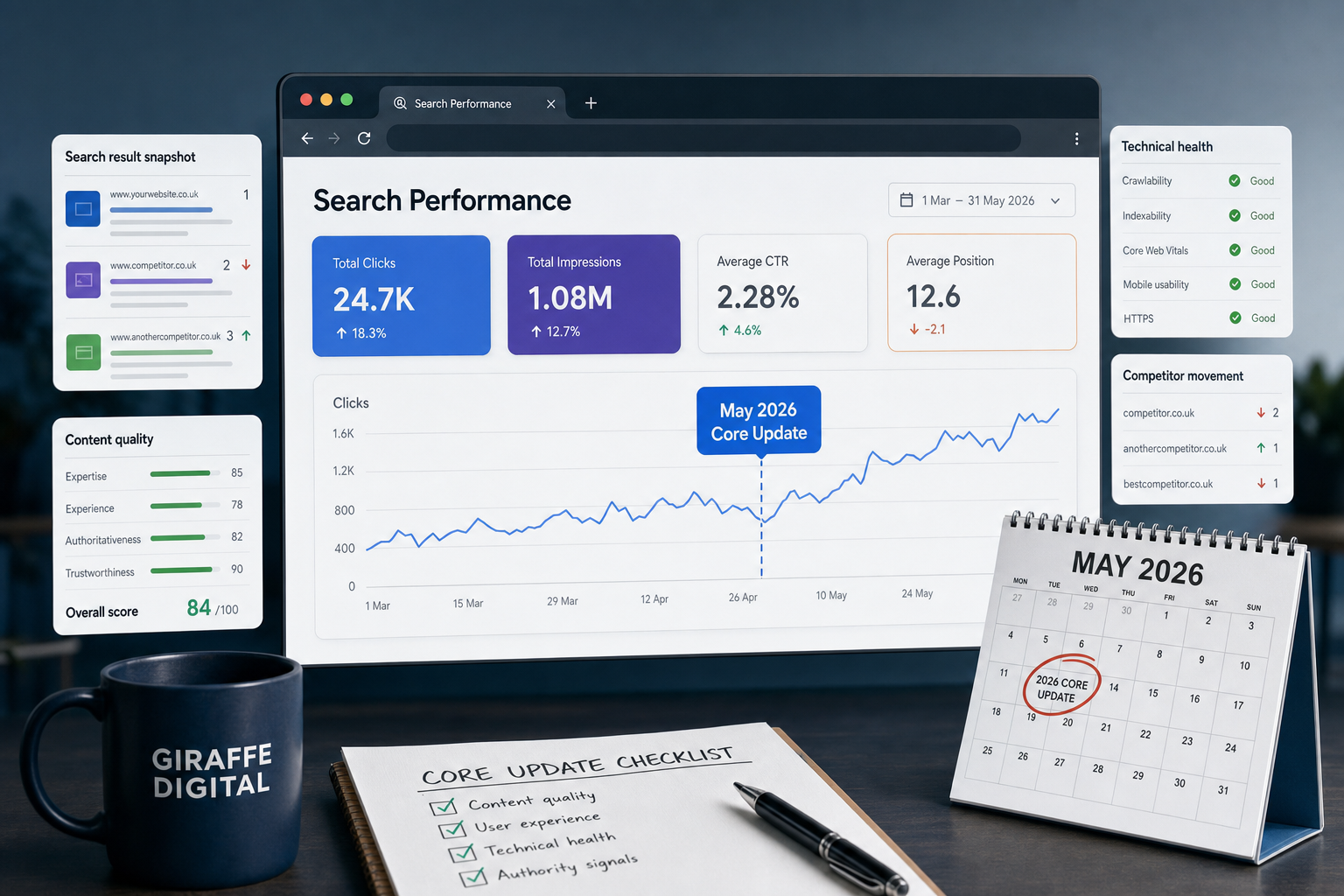
Search engine optimisation has changed significantly over the past few years, but Google's latest algorithm update could prove to be one of the biggest changes yet. Earlier this week, Google officially launched the Penguin Update, an algorithm designed to reduce the rankings of websites that use manipulative SEO techniques while rewarding those that focus on high-quality content and natural optimisation.
For businesses and website owners, this update sends a clear message. Shortcuts that may have worked in the past are becoming far less effective, while websites that provide genuine value to visitors are likely to benefit.
If your website relies heavily on outdated SEO tactics, now may be the time to review your strategy.
What Is the Google Penguin Update
Google Penguin is a major change to Google's search algorithm that focuses on improving the quality of search results.
The update specifically targets websites that attempt to manipulate rankings through techniques discouraged by Google's Webmaster Guidelines.
Google has stated that the aim is to provide users with more relevant, trustworthy and useful search results.
Rather than rewarding websites that have the most links or the highest keyword density, Google is placing greater emphasis on quality.
Why Has Google Introduced Penguin
Google's search engine is used by millions of people every day.
Its success depends on providing accurate and useful results.
In recent years, some website owners have attempted to manipulate rankings through questionable SEO practices.
These include:
- Buying backlinks.
- Participating in link exchange schemes.
- Keyword stuffing.
- Creating low-quality content.
- Building links from unrelated websites.
- Using hidden text or links.
Penguin has been introduced to reduce the effectiveness of these techniques.
The End of Link Spam
Backlinks have always played an important role in SEO.
A link from another website has traditionally been viewed as a recommendation.
Unfortunately, this led to the creation of thousands of low-quality websites whose sole purpose was to generate backlinks.
Many businesses purchased large numbers of links in the hope of improving their Google rankings.
The Penguin Update is designed to identify these unnatural link patterns.
Websites with suspicious backlink profiles may now see their rankings fall dramatically.
Keyword Stuffing No Longer Pays
Another tactic Google is targeting is keyword stuffing.
Some websites have attempted to improve rankings by repeating the same keyword dozens or even hundreds of times throughout a page.
This often resulted in content that was difficult for visitors to read.
For example, a page might repeatedly include the phrase:
"Web design company, affordable web design company, professional web design company."
While this may once have influenced search rankings, it now creates a poor user experience.
Google is making it increasingly clear that content should be written for people rather than search engines.
Better Content Is Becoming Essential
One of the biggest lessons from Penguin is the importance of creating quality content.
Useful articles, informative pages and well-written website copy are far more valuable than pages created purely to target search engines.
Businesses should focus on:
- Answering customer questions.
- Explaining products and services clearly.
- Providing useful advice.
- Keeping content up to date.
- Writing naturally.
High-quality content benefits both visitors and search engines.
Quality Over Quantity
Many SEO campaigns have focused on acquiring as many backlinks as possible.
Penguin suggests that quality is becoming far more important than quantity.
A small number of links from trusted, relevant websites may now provide greater value than hundreds of links from poor-quality directories or unrelated websites.
This represents a significant shift in how many SEO professionals approach link building.
Natural SEO Is the Future
The Penguin Update reinforces the importance of natural optimisation.
Rather than looking for shortcuts, businesses should focus on long-term strategies that genuinely improve their websites.
These include:
- Publishing useful content.
- Improving website structure.
- Creating better user experiences.
- Earning genuine backlinks.
- Keeping websites updated.
These techniques require more time but are likely to produce more sustainable results.
What Should Website Owners Do
If your website has experienced a drop in search rankings following the Penguin Update, it may be worth reviewing your SEO practices.
Questions to consider include:
- Have backlinks been purchased?
- Is content written naturally?
- Are keywords being overused?
- Are backlinks coming from relevant websites?
- Does the website provide genuine value?
Identifying and correcting these issues may help improve long-term performance.
Good SEO Is Still Important
Although Penguin targets poor-quality optimisation, it does not mean SEO is no longer valuable.
Search Engine Optimisation remains an important part of helping search engines understand your website.
Good SEO includes:
- Clear page titles.
- Helpful headings.
- Logical website structure.
- Fast page loading.
- Original content.
- Relevant internal linking.
- Easy navigation.
These practices improve both user experience and search engine visibility.
Think About Your Visitors First
Google has repeatedly stated that websites should be created primarily for users.
When businesses focus solely on search engines, the quality of the website often suffers.
Instead, ask yourself:
- Does this page answer a customer's question?
- Is the information useful?
- Is it easy to read?
- Would someone want to share it?
If the answer is yes, you are likely moving in the right direction.
A New Direction for Search
The Penguin Update follows Google's continuing efforts to improve search quality.
Recent algorithm improvements suggest that Google is becoming increasingly effective at identifying websites that deserve higher rankings because of the value they provide rather than the techniques they use.
This is good news for businesses that invest time in creating quality websites and helpful content.
Looking Ahead
Google is unlikely to stop improving its search algorithms.
As search technology becomes more sophisticated, businesses should expect ongoing changes aimed at improving the quality of search results.
Those who focus on producing useful content, earning genuine recommendations and providing excellent user experiences are likely to benefit most from future updates.
Rather than chasing quick wins, successful SEO is becoming about building trust and authority over time.
Final Thoughts
Google's Penguin Update marks another important milestone in the evolution of Search Engine Optimisation.
By targeting link spam, keyword stuffing and other manipulative practices, Google is encouraging website owners to focus on quality rather than shortcuts.
Although some websites may see changes in their rankings, the long-term impact should be a better internet for everyone. Businesses that create valuable content, build genuine relationships, and put their visitors first will be well-positioned for success as search engines continue to evolve.