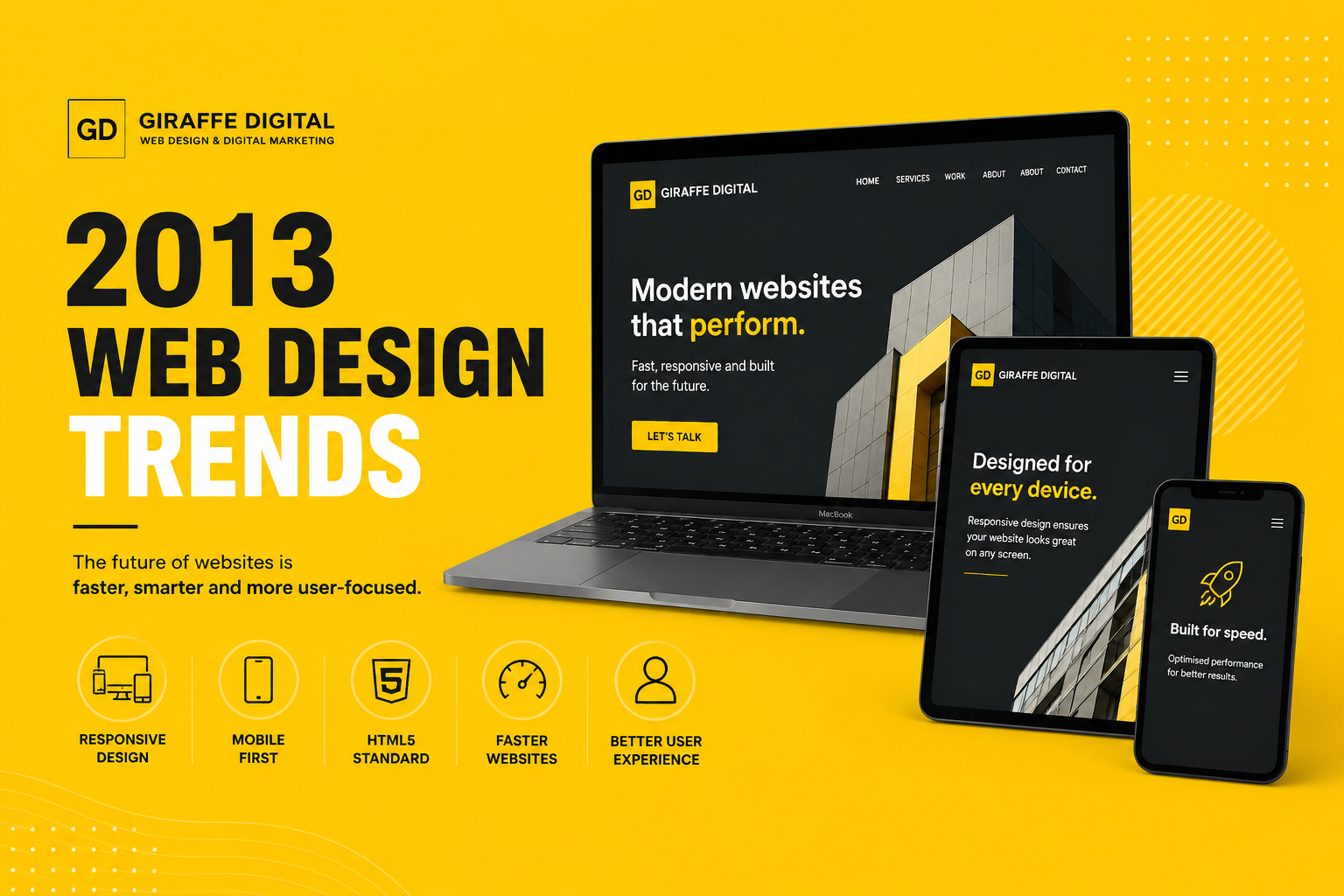
As 2012 comes to a close, it has been another exciting year for the web design industry. We've seen significant advances in web technologies, major changes to search engine optimisation, the continued growth of social media and a dramatic increase in the number of people browsing the internet on smartphones and tablets.
Businesses are beginning to recognise that having a website is no longer enough. Visitors now expect websites to be faster, easier to use and accessible on every device.
Looking ahead to 2013, several emerging trends are likely to shape the future of website design and development. While technology never stands still, there are clear signs that the internet is moving towards a more responsive, user-focused and standards-based future.
Responsive Web Design Will Become the Standard
Over the past two years, responsive web design has moved from being an interesting concept to an increasingly popular development approach.
Rather than creating separate desktop and mobile websites, developers are now building websites that automatically adjust to different screen sizes.
As smartphones and tablets continue growing in popularity, responsive design is expected to become the preferred solution for new websites throughout 2013.
Businesses planning a website redesign should consider responsive layouts as part of their long-term strategy.
Benefits include:
- Improved usability.
- Easier maintenance.
- Consistent branding.
- Better support for future devices.
Responsive design is no longer simply an option. It is quickly becoming an expectation.
Mobile Internet Usage Will Continue to Grow
One of the biggest technology stories of recent years has been the rapid rise of smartphones.
Consumers are increasingly using mobile devices to:
- Browse websites.
- Read emails.
- Search for local businesses.
- Shop online.
- Compare products.
Tablet computers have also become more common, creating even greater demand for websites that perform well across different screen sizes.
Businesses that ignore mobile users may find themselves falling behind competitors who provide a better browsing experience.
HTML5 Will Continue Replacing Flash
Throughout 2012, HTML5 continued to gain momentum.
More developers are using HTML5 to create:
- Online video.
- Audio players.
- Interactive graphics.
- Rich web applications.
At the same time, Adobe Flash appears to be playing a smaller role in modern website development.
With improved browser support and growing mobile adoption, HTML5 is expected to become the preferred technology for delivering interactive content online.
Developers are increasingly embracing open web standards that work across multiple browsers and devices without requiring additional plugins.
Website Performance Will Become More Important
Internet users have become less patient.
Visitors expect websites to load quickly, regardless of whether they are using a desktop computer, smartphone or tablet.
Businesses should continue focusing on:
- Optimised images.
- Efficient code.
- Reliable web hosting.
- Reduced page sizes.
- Browser caching.
Fast websites not only improve the user experience but may also contribute to stronger search engine performance.
As online competition continues to grow, website speed is likely to become an even greater priority in 2013.
User Experience Will Take Centre Stage
Design is about far more than appearance.
Successful websites make it easy for visitors to find information and complete tasks.
Businesses are beginning to recognise that a positive user experience encourages visitors to stay longer, return more often and make enquiries.
In 2013 we expect to see increased focus on:
- Clear navigation.
- Readable typography.
- Simpler layouts.
- Faster interactions.
- Consistent page design.
The best websites will place users at the centre of every design decision.
Simpler Designs Will Continue to Grow
Many websites have moved away from cluttered layouts in favour of cleaner, more organised designs.
Large banners, generous spacing and improved typography have helped create websites that are easier to read and navigate.
Rather than overwhelming visitors with unnecessary graphics and animations, designers are increasingly focusing on presenting information clearly.
This trend is expected to continue throughout 2013.
Content Will Become Even More Important
Google's recent algorithm updates have reinforced the importance of publishing useful, original content.
Businesses are beginning to invest more time in creating:
- Blog articles.
- Buying guides.
- Frequently asked questions.
- Customer advice.
- Industry news.
Providing helpful information benefits both visitors and search engines.
Content marketing is likely to become an increasingly valuable part of online marketing strategies over the coming year.
Social Media Will Continue Supporting Websites
Social media has become an important communication tool for businesses.
Platforms such as:
allow companies to engage directly with customers while promoting new products, services and website content.
Rather than replacing company websites, social media is increasingly acting as a gateway that encourages visitors to learn more about a business.
We expect businesses to place even greater emphasis on integrating social media with their websites during 2013.
Browser Technology Will Continue Improving
Modern browsers continue to evolve rapidly.
Google Chrome, Mozilla Firefox, Internet Explorer and Safari are all introducing improved support for modern web standards.
As browser compatibility improves, developers will have greater freedom to create richer websites using technologies such as:
- HTML5.
- CSS3.
- JavaScript.
This should lead to more consistent browsing experiences across different platforms.
Businesses Must Continue Adapting
The internet changes quickly.
Websites that were considered modern only a few years ago can soon begin to look outdated.
Businesses should regularly review their websites to ensure they remain:
- Easy to use.
- Fast.
- Secure.
- Compatible with modern browsers.
- Suitable for mobile visitors.
Investing in regular improvements can help businesses remain competitive in an increasingly digital marketplace.
Looking Towards the Future
If 2012 has taught us anything, it is that web technology continues evolving at an incredible pace.
The coming year is likely to bring even greater emphasis on responsive design, mobile browsing, website performance and user experience.
Businesses that embrace these developments early will be better positioned to meet changing customer expectations while benefiting from modern web technologies.
The websites of tomorrow will not simply look attractive. They will be faster, more accessible, easier to use and capable of delivering consistent experiences across every device.
Final Thoughts
As we prepare to enter 2013, web design continues moving towards cleaner code, open standards and better user experiences.
Responsive layouts, HTML5, faster hosting and improved performance are no longer emerging technologies. They are becoming the foundations of modern website development.
For businesses planning a new website or considering an update to an existing one, there has never been a better time to invest in modern web design practices. Those who adapt to these changes will be well placed to succeed as the internet continues to evolve throughout the coming year.