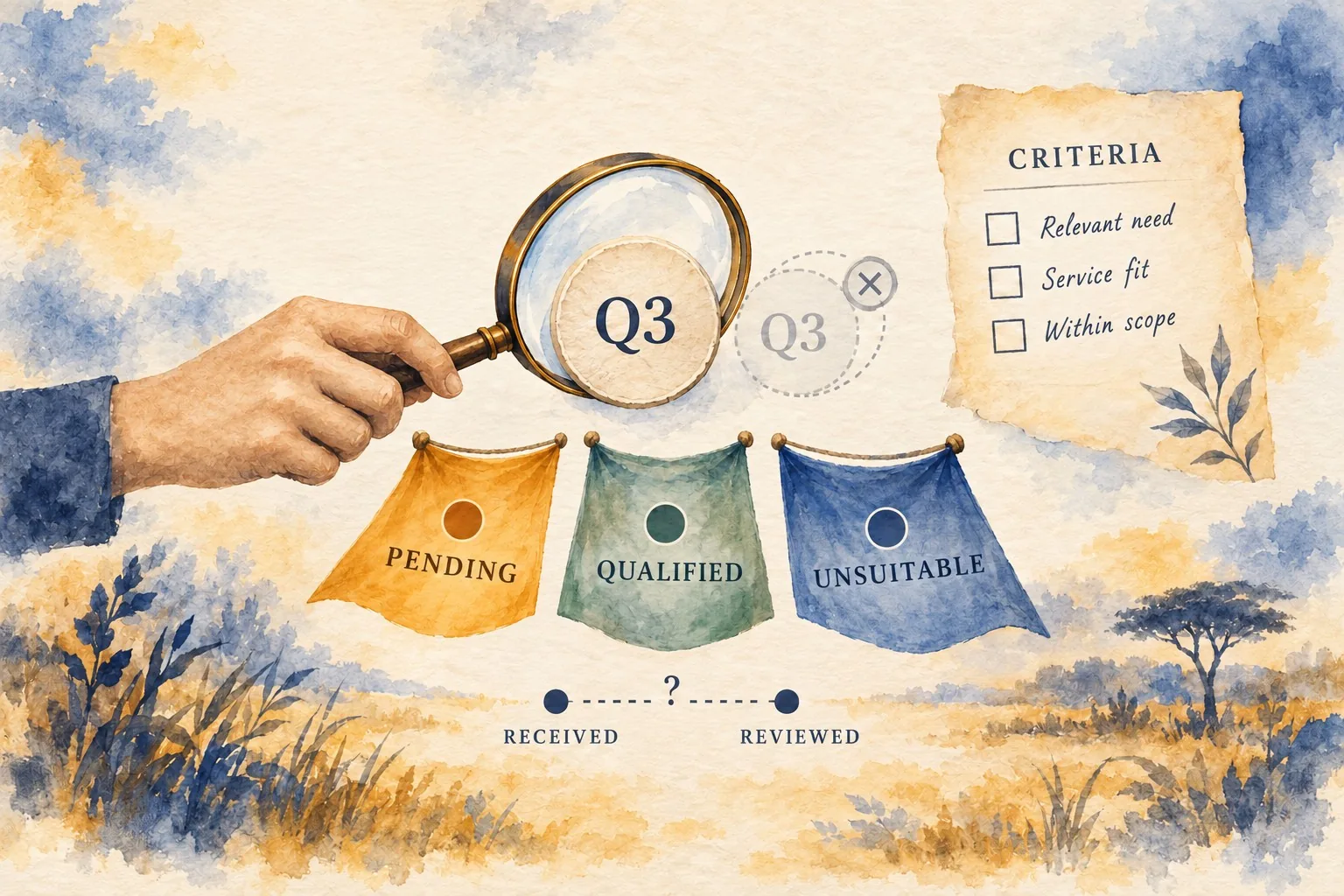

A digital roadmap can look convincing while leaving important work out of view. It might show a new website, a customer portal and an automated follow-up process, yet say nothing about the records, approvals or staff arrangements those changes require. The result is a plan whose visible milestones depend on tasks nobody has agreed to complete.
A useful roadmap connects intended outcomes with operational dependencies. It explains what needs to be ready, who owns that preparation and how the team will know it has been completed. This guide shows how to make those dependencies part of digital planning, so the roadmap reflects a service the business can actually run.
Start with outcomes the business can recognise
Describe the change you want in practical terms. “Customers can request the right service and receive a prepared response” is more useful than “launch a new digital platform”. It gives the team a shared purpose and creates a way to judge whether the proposed work supports it.
For each outcome, identify the people involved and the current difficulty. Include customers and staff where both contribute to the service. A new enquiry form might help visitors provide information, while staff still need a clear route to assign and answer the request. The outcome depends on both sides working.
Use a roadmap to communicate the intended direction and development of a service. Revisit priorities as understanding improves. A business plan should reflect evidence and changing conditions, with operational dependencies and decision owners visible alongside the proposed work. Our digital roadmap and change control guide provides the related checks.
Identify what each change needs before it can work
Take one proposed milestone and ask what must be available for it to succeed. A website connected to a customer management system might need approved fields, a routing process, appropriate access and a tested integration. A booking journey might need agreed appointment rules and staff calendars that are ready for customer use.
Separate prerequisites from helpful improvements. A working enquiry route may be essential before launching a campaign. A more polished internal report might be valuable later without preventing the first enquiries being handled. This distinction helps the team sequence work without either overlooking essential preparation or waiting for every desirable feature.
Record dependencies in plain language. “Operations approves the enquiry assignment rules” is clearer than “stakeholder alignment”. Include the evidence expected from that task, such as an approved rule set and a successful test with the responsible team. The roadmap should reveal what somebody actually needs to do.
Include information and content dependencies
Digital work often depends on approved information. A designer can propose a service page, but the business needs to confirm the service, audience, conditions and next action. An automation can move records, but the team needs agreed meanings for the fields and statuses it uses.
List the required source material and its owner. Identify whether it already exists, needs editing or requires a decision. A folder of old documents is not automatically a complete content supply. Someone must establish which information is current and suitable for the intended audience.
Give content preparation a place in the schedule. Include review and approval, not just writing. If several pages depend on one commercial decision, show that shared dependency. This helps the project team understand why a missing decision affects more than a single page and prevents repeated requests for the same information.
Make people and access visible
Identify the staff who need to contribute and the work they are expected to complete. Include their availability, approval authority and operational responsibilities. A roadmap that assumes unlimited time from a busy service manager will be difficult to deliver even if the technical tasks are straightforward.
Record required access without placing credentials in the roadmap. A developer may need an authorised route to the relevant website, hosting or integration environment. The plan should identify who coordinates that access and when it must be ready. Keep the actual access process with the appropriate technical owner.
Consider external suppliers too. If a connected system requires information or a change from another provider, give that dependency an owner and a confirmation step. Avoid treating an unverified supplier assumption as a committed milestone. The team should know which dates are agreed and which still depend on an answer.
Define readiness and completion separately
For an important piece of work, write what makes it ready to begin. This could include approved content, a confirmed interface requirement and access to a suitable testing environment. Then write what demonstrates completion, such as a tested customer task and a staff handover.
These definitions need to be specific enough to review. “Integration finished” can mean several things. “A controlled enquiry reaches the correct staff queue with the approved fields, and staff can handle it using the agreed instructions” is much more useful. It describes an observable result rather than a broad label.
Include necessary checks in the milestone rather than treating them as optional work after a launch date. The project should not call a service complete while essential access, information handling or support arrangements remain unresolved. Ask the relevant owners to agree the completion evidence before the team reaches that stage.
Sequence work into usable improvements
Look for a small change that can support a complete task. For example, one service enquiry route with accurate content, working assignment and a prepared response may provide a useful first release. Building several attractive pages without a working response process may leave the customer journey incomplete.
Keep later improvements visible without forcing all of them into the first release. The team might add more service types, improve reporting or extend automation after the initial route is stable. Explain which outcome each addition supports and what has to be learned or completed first.
Use broad planning horizons where precise dates are not yet justified. Near-term work can have more detail, while later ideas can record their purpose and unresolved dependencies. This gives people a view of direction without presenting an uncertain estimate as an unconditional promise.
Review changes through their dependency effects
When a priority changes, review what it affects. Moving a campaign launch may require changes to content approval, staff preparation and supplier testing. Changing a customer record structure may affect the website form, integration and reporting. A dependency record makes those consequences easier to identify.
Keep a concise decision history. Record what changed, why, who agreed it and which next actions follow. This helps people joining the project understand the current plan and prevents the team repeatedly reopening a decision without new evidence.
If a dependency is delayed, ask what useful work can continue and what should wait. Research, content drafting or a prototype may proceed while another decision is unresolved. Be clear about the limits of that work so the team does not mistake provisional material for an approved implementation requirement.
Plan the work after launch
Include the people who will operate the new service. Agree routine checks, support routes, content maintenance and responsibilities for connected tools. A successful handover should let the business explain how the system works, who can make changes and where to get help when a task fails.
Ask for the ongoing effort to be made visible in proposals. Include supplier support, staff time and expected maintenance alongside the initial delivery work. Avoid comparing options solely by the number of features promised at launch. The business needs an approach it can sustain.
After release, review the intended outcome using agreed evidence. Observe whether customers and staff can complete the task and examine recurring questions or exceptions. Feed that learning into the next roadmap review. The plan should improve as the team learns how the service behaves in practice.
Keep the roadmap connected to business priorities
Giraffe Digital's digital strategy services consider how websites, content, customer journeys and working tools connect. A roadmap supports that connection when it shows outcomes, operational preparation and accountable owners together.
Start with a short set of meaningful changes and make their dependencies explicit. Give each prerequisite an owner, each milestone reviewable evidence and each uncertainty a route to resolution. That turns a list of digital ambitions into a plan the business can understand, maintain and deliver.
Frequently asked questions
How should we start with outcomes the business can recognise?
Describe the change you want in practical terms. "Customers can request the right service and receive a prepared response" is more useful than "launch a new digital platform". It gives the team a shared purpose and creates a way to judge whether the proposed work supports it. For each outcome, identify the people involved and the current difficulty. Include customers and staff where both contribute to the service. A new enquiry form might help visitors provide information, while staff still need a clear route to assign and answer the request. The outcome depends on both sides working. Use a roadmap to communicate the intended direction and development of a service. Revisit priorities as understanding improves.
How should we include information and content dependencies?
Digital work often depends on approved information. A designer can propose a service page, but the business needs to confirm the service, audience, conditions and next action. An automation can move records, but the team needs agreed meanings for the fields and statuses it uses. List the required source material and its owner. Identify whether it already exists, needs editing or requires a decision. A folder of old documents is not automatically a complete content supply. Someone must establish which information is current and suitable for the intended audience. Give content preparation a place in the schedule. Include review and approval, not just writing. If several pages depend on one commercial decision, show that shared dependency.
How should we define readiness and completion separately?
For an important piece of work, write what makes it ready to begin. This could include approved content, a confirmed interface requirement and access to a suitable testing environment. Then write what demonstrates completion, such as a tested customer task and a staff handover. These definitions need to be specific enough to review. "Integration finished" can mean several things. "A controlled enquiry reaches the correct staff queue with the approved fields, and staff can handle it using the agreed instructions" is much more useful. It describes an observable result rather than a broad label. Include necessary checks in the milestone rather than treating them as optional work after a launch date. The project should not call a service complete while essential access, information handling or support arrangements remain unresolved.
How should we review changes through their dependency effects?
When a priority changes, review what it affects. Moving a campaign launch may require changes to content approval, staff preparation and supplier testing. Changing a customer record structure may affect the website form, integration and reporting. A dependency record makes those consequences easier to identify. Keep a concise decision history. Record what changed, why, who agreed it and which next actions follow. This helps people joining the project understand the current plan and prevents the team repeatedly reopening a decision without new evidence. If a dependency is delayed, ask what useful work can continue and what should wait. Research, content drafting or a prototype may proceed while another decision is unresolved. Be clear about the limits of that work so the team does not mistake provisional material for an approved implementation requirement.
How should we keep the roadmap connected to business priorities?
Giraffe Digital's digital strategy services consider how websites, content, customer journeys and working tools connect. A roadmap supports that connection when it shows outcomes, operational preparation and accountable owners together. Start with a short set of meaningful changes and make their dependencies explicit. Give each prerequisite an owner, each milestone reviewable evidence and each uncertainty a route to resolution. That turns a list of digital ambitions into a plan the business can understand, maintain and deliver.