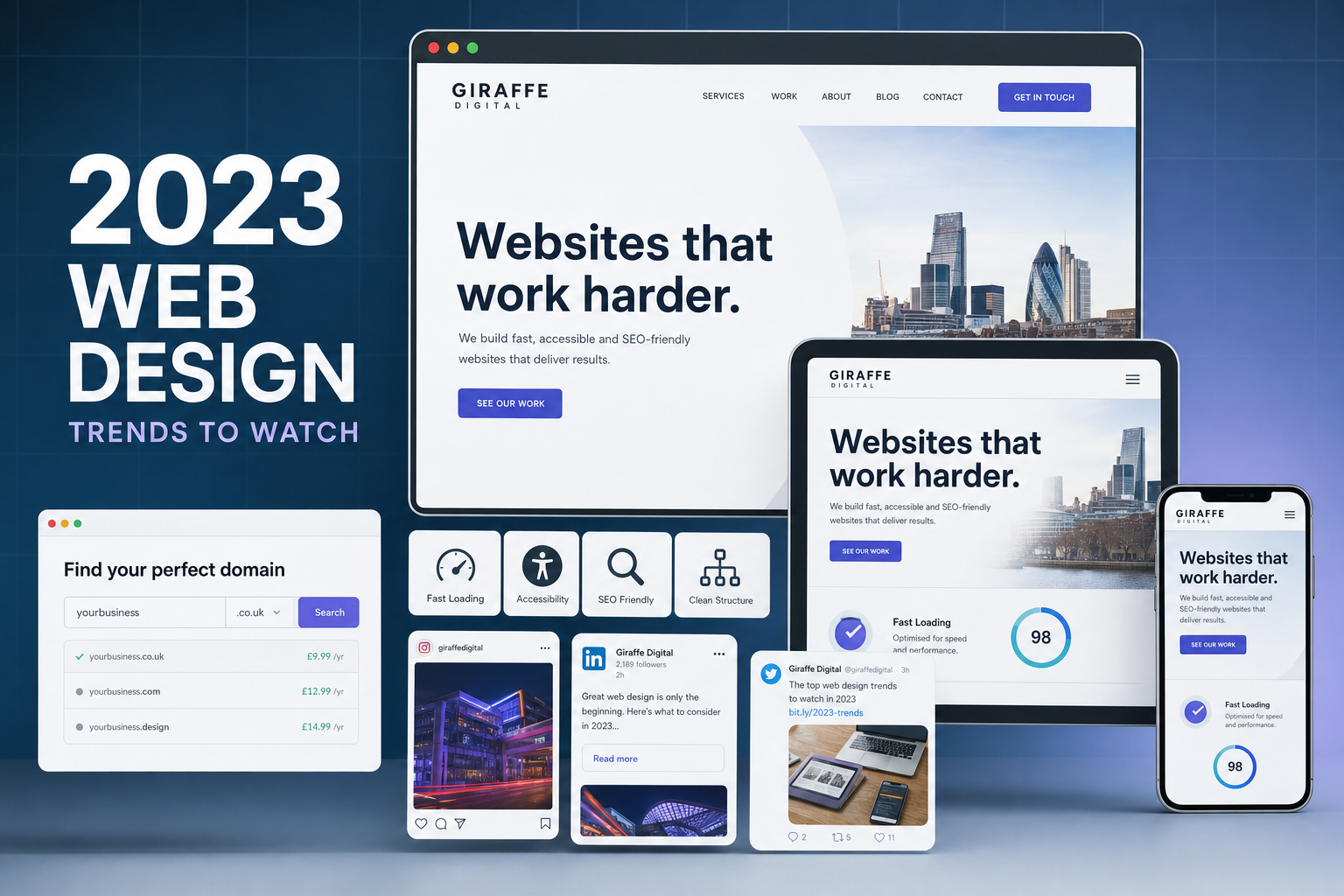
As businesses plan their digital activity for the year ahead, website design has become far more than a matter of visual taste. A strong website now needs to support search visibility, customer trust, social media marketing, lead generation, e-commerce and long-term brand growth. The most useful Web Design Trends to Watch in 2023 will not simply make a site look current; they will help people find information faster, understand your offer clearly and take action with confidence.
For UK business owners, the opportunity is to make practical improvements that enhance the customer experience while also supporting wider digital marketing. Whether you are refreshing an existing site or planning a new build, the following trends are worth watching closely in 2023.
Performance-led design will continue to shape better websites
Fast-loading websites are no longer a technical luxury. Speed directly affects user experience, search performance and conversion rates. If a page takes too long to load, visitors are more likely to leave before they have seen your products, services or contact details.
In 2023, more web design decisions should be made with performance in mind. That means using images correctly, avoiding unnecessary code, keeping layouts clean and making sure key content loads quickly on mobile connections. A visually impressive site can still work well, but design choices need to be balanced with speed and usability.
For service businesses, performance-led design might mean a simpler home page with a clear value proposition, quick-loading case study previews and an obvious enquiry route. For e-commerce brands, it could mean optimised product imagery, fewer distractions at checkout and a smoother journey from product discovery to purchase.
Search engines have already placed strong emphasis on page experience and Core Web Vitals, so a faster site can support both customer satisfaction and organic visibility. The practical lesson is simple: a website should look good, but it must also feel quick, stable and easy to use.
Mobile-first thinking will become even more important
Many customers will first encounter your business on a mobile device, often after seeing a social media post, local search result, email campaign or online advert. If your website is awkward to use on a phone, the quality of your wider marketing can be undermined in seconds.
Mobile-first design is not just about shrinking a desktop website to fit a smaller screen. It involves thinking carefully about thumb-friendly buttons, readable text, simplified navigation, fast-loading pages and forms that are easy to complete. Contact details, opening hours, location information and calls to action should be easy to find without excessive scrolling.
This is particularly important for local businesses. Someone searching for a trade, restaurant, clinic, venue or professional service may want to call, book, visit or request a quote quickly. Mobile design should support that intent, not slow it down.
In 2023, businesses should review their websites on real mobile devices rather than relying only on desktop previews. Test how easy it is to complete the most important actions: finding a service, reading reviews, submitting an enquiry, booking an appointment or buying a product.
Clear brand identity will matter more than decorative design
One of the strongest web design trends in 2023 is the move towards more distinctive, confident branding. Many websites have become visually similar, with the same stock images, predictable layouts and generic statements. Businesses that invest in a clear brand identity can stand out more effectively.
This does not mean every website needs to be loud or experimental. For many organisations, a strong brand might be expressed through carefully chosen typography, consistent colour use, authentic photography, concise messaging and a tone of voice that reflects the way the business actually works.
A professional services firm may need a website that feels calm, authoritative and trustworthy. A creative brand may benefit from more expressive visuals and bolder copy. A family-run local business may want to emphasise personality, heritage and service. The aim is not to follow a style for its own sake, but to design a site that feels recognisably yours.
Brand consistency also supports social media marketing. If your website, social profiles, email graphics and digital adverts all share a consistent look and message, customers are more likely to recognise and remember you. In a busy online environment, familiarity is valuable.
Accessibility and inclusive design will be business essentials
Accessible website design is becoming a central part of good digital practice. It helps more people use your website, including visitors with visual, motor, hearing or cognitive needs. It also encourages clearer structure, better content and more reliable user journeys for everyone.
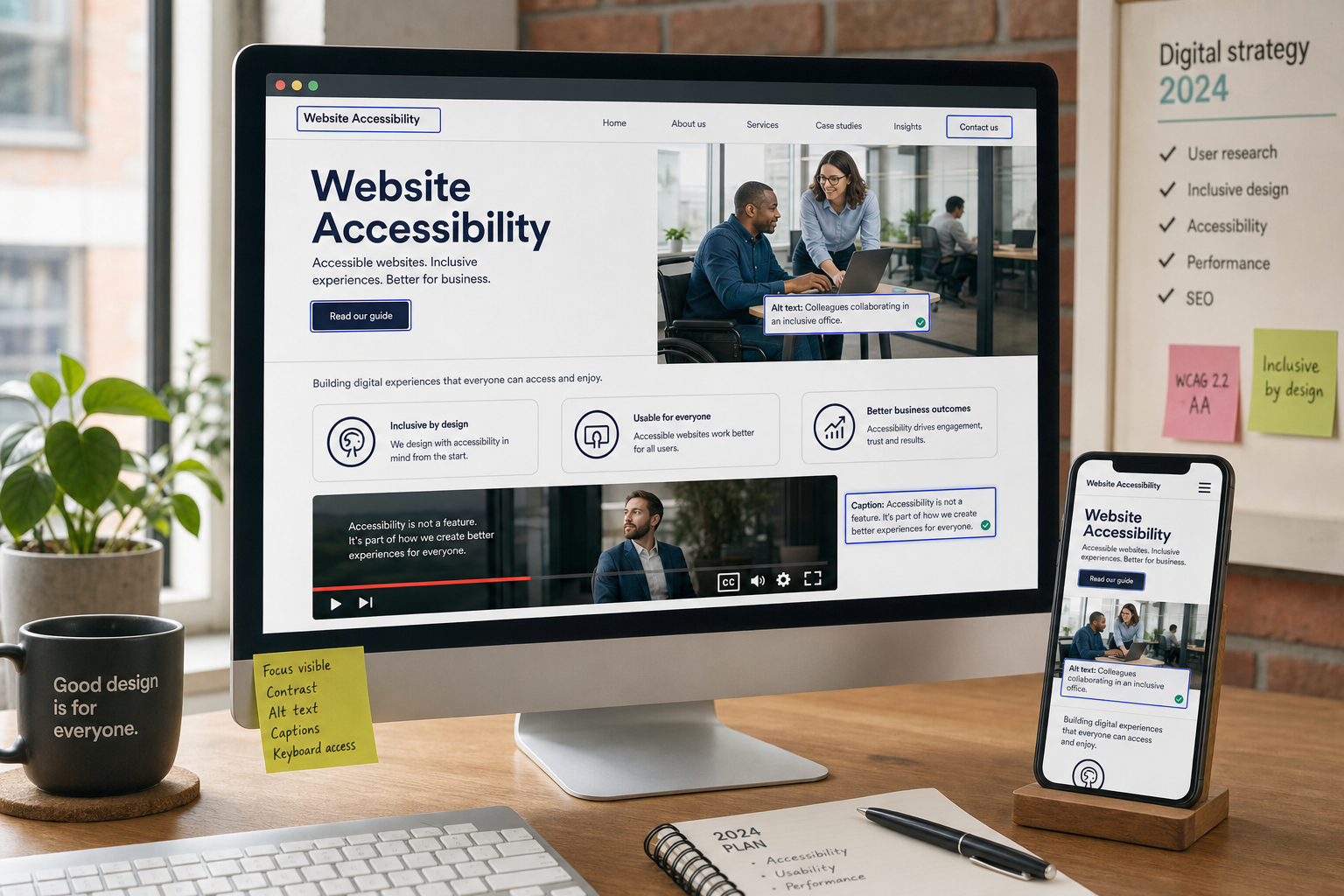
Practical accessibility improvements include using sufficient colour contrast, writing descriptive link text, structuring pages with meaningful headings, ensuring forms are clearly labelled and making sure the website can be navigated using a keyboard. Video content should include captions where possible, and important information should not be communicated by colour alone.
Accessibility is also closely connected to trust. A website that is easy to read, well organised and considerate of different users often feels more professional. For public-facing organisations, charities, education providers, healthcare-related businesses and professional services, this can be especially important.
In 2023, accessibility should be considered from the start of a web design project rather than treated as a final check. Retrofitting accessibility can be more difficult than building it into the design, content and development process from the beginning.
Content-led layouts will support SEO and decision-making
Modern website design needs to give content the space and structure it deserves. Search visibility depends on more than technical optimisation; it also relies on useful, relevant and well-organised information. Customers want to understand what you do, who you help, why they should trust you and what they should do next.
In 2023, expect to see more websites using content-led layouts that answer real customer questions. This could include detailed service pages, helpful buying guides, comparison content, FAQs, project examples, resource hubs and location-specific pages where relevant.
For SEO, each key page should have a clear purpose. A service page should not simply list what you offer; it should explain the problem you solve, the benefits of your approach, your process, relevant evidence of expertise and the next step. This supports both search engines and human visitors.
Google’s focus on helpful content means businesses should avoid thin, duplicated or overly generic copy. A website that demonstrates expertise, authority and trust is more likely to perform well over time than one built only around keywords. The best approach is to combine kekeyword researchith genuinely useful guidance, clear internal linking and well-written page titles and descriptions.
Subtle movement and interactive elements will add value when used carefully
Animation, microinteractions and interactive design can make a website feel more polished, but they should always serve a purpose. In 2023, the strongest use of movement will be subtle and functional rather than distracting.
Examples include a button changing state when selected, a menu opening smoothly, a product image gallery responding cleanly, or a short animation helping to explain a process. These details can make the website feel more intuitive and modern, especially when they guide the user towards an action.
However, unnecessary movement can slow a site down, create accessibility issues or distract from important content. Businesses should avoid adding animation simply because it looks fashionable. If it does not help the visitor understand, navigate or act, it may not be worth including.
The same principle applies to richer visual features such as video backgrounds, scrolling effects and interactive graphics. Used carefully, they can enhance storytelling. Used excessively, they can make a website harder to use and maintain.
Video and social proof will play a bigger role in website trust
Social media has changed how people evaluate businesses. Customers often expect to see proof that a company is active, credible and trusted by others. Your website should support that expectation by bringing together useful evidence in a structured way.
Video can be particularly effective when it answers questions or demonstrates value. Short introduction videos, product demonstrations, customer guidance, behind-the-scenes clips and event highlights can all help visitors understand your business more quickly. These assets can also be repurposed for social platforms, email campaigns and paid advertising.
Social proof should be presented thoughtfully. Testimonials, reviews, accreditations, project examples and media mentions can all contribute to trust, but they need context. Rather than placing a few vague quotes on a page, consider showing what problem was solved, what service was provided and why the customer valued the experience.
It is also worth making sure social media links are current and relevant. A website that links to inactive profiles can create the wrong impression. If social channels are important to your marketing, keep them visually aligned with your website and make the journey between platforms clear.
Smarter e-commerce design will focus on confidence and convenience
For online retailers, 2023 will continue to reward websites that make buying simple and reassuring. Shoppers want clear product information, good images, transparent delivery details, secure payment options and straightforward returns information. If any of these are hard to find, customers may hesitate.
Good e-commerce design reduces friction. Product pages should include useful descriptions, sizing or specification details where relevant, stock information, reviews and clear calls to action. Basket and checkout pages should be uncluttered, with progress indicators and minimal distractions.
For businesses using social media to drive product discovery, landing pages need to match the promise of the post or advert. If someone clicks from a campaign promoting a specific product, collection or seasonal offer, they should land in the right place immediately. Consistency between social content, adverts and website pages improves both user experience and campaign performance.
Even small improvements, such as better filtering, clearer category names or more persuasive product photography, can make a meaningful difference to how customers browse and buy.
Domain choices and technical foundations should not be overlooked
Trends in visual design are important, but the foundations of your website matter just as much. Domain registration, hosting, security and technical maintenance all affect how reliable and professional your online presence feels.
When choosing a domain name, keep it clear, memorable and easy to spell. For UK businesses, a relevant UK domain can support familiarity and trust, particularly for local or national audiences. It is also sensible to think about protecting closely related domain variations where appropriate, especially if your brand name could be misspelt or confused with another business.
Avoid choosing a domain that is too long, difficult to say aloud or overly dependent on hyphens. Your domain may appear on vans, signage, print materials, business cards, social media profiles and email addresses, so it should be practical beyond the website itself.
Security should also be treated as standard. A website should use HTTPS, reliable hosting and regular updates. Contact forms should be protected from spam, backups should be in place and privacy information should be clear. These details may not be visible in the same way as design, but they contribute to trust and resilience.
Data, measurement and continuous improvement will guide better design decisions
A website should not be treated as a one-off project that remains unchanged for years. In 2023, successful businesses will increasingly use data to understand what visitors do and where improvements are needed.
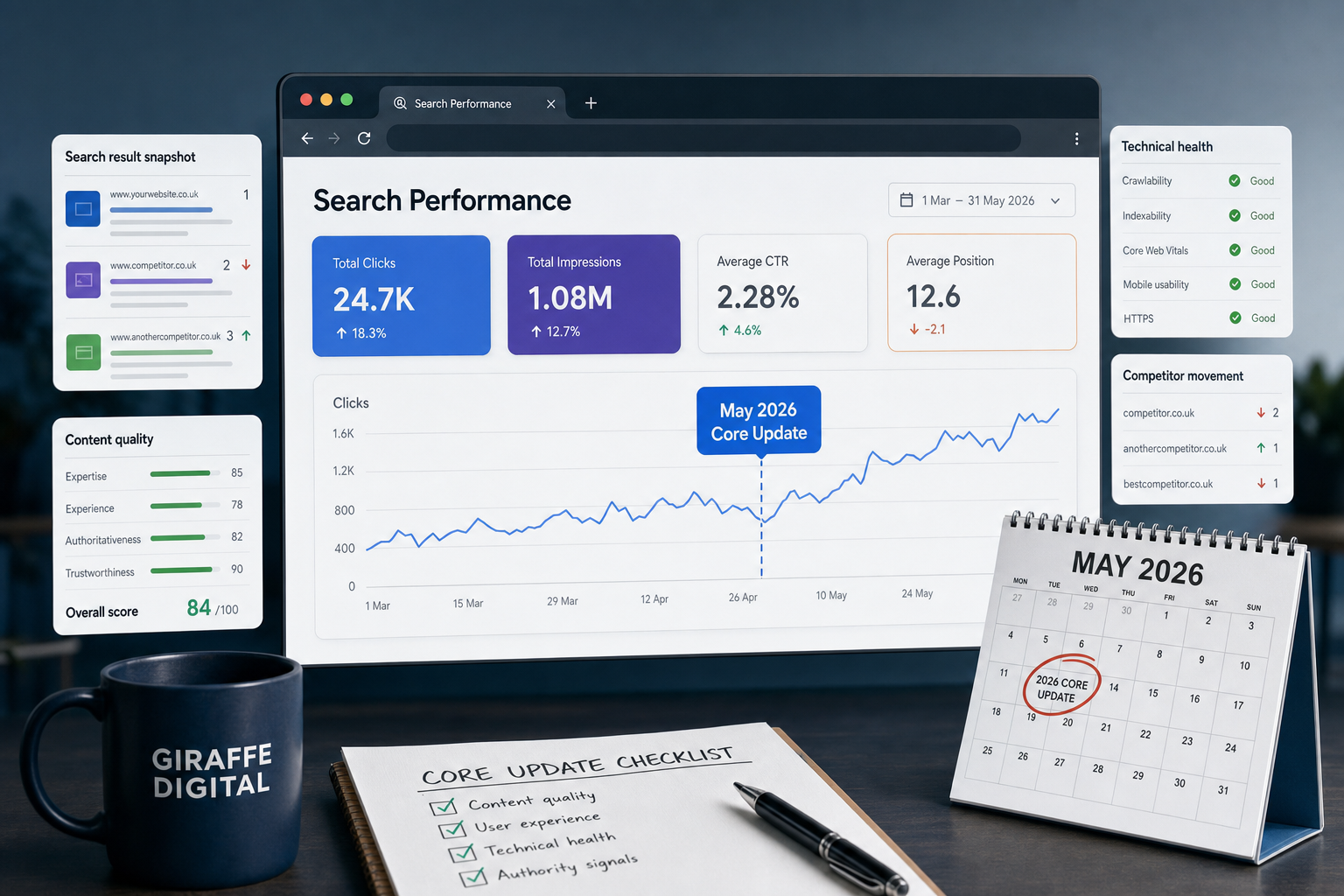
Analytics can show which pages attract traffic, where users leave, which campaigns generate enquiries and how people move through the site. Search Console data can reveal queries, impressions and click-through rates. Heatmapping and user testing can help identify confusing layouts or missed opportunities, provided they are used responsibly and with appropriate privacy considerations.
Businesses should also be preparing for changes in analytics platforms and privacy expectations. Clear cookie consent, sensible tracking choices and accurate reporting are all important. The goal is not to collect data for its own sake, but to make better decisions about content, design and marketing.
Regular reviews can help identify pages that need rewriting, calls to action that need clarifying, images that need replacing or forms that need simplifying. Small, ongoing improvements often produce better long-term results than waiting for a complete redesign every few years.
How to apply these web design trends in 2023
The most effective way to approach web design trends in 2023 is to prioritise the changes that support your business goals. A trend is only useful if it improves the customer journey, strengthens your brand or helps your marketing perform more effectively.
Start by reviewing your current website from a customer’s point of view. Is it clear what you offer? Does it load quickly? Is it easy to use on mobile? Can visitors find proof of your work? Are your service pages detailed enough to support SEO? Do your social media campaigns send people to relevant landing pages? Is your domain name easy to remember and consistent with your brand?
From there, create a practical plan. Some businesses may need a full redesign, while others may benefit from focused improvements such as rewriting key pages, optimising mobile layouts, improving site speed or refreshing visual branding. The right route depends on your current website, your audience and your commercial objectives.
Good website design in 2023 should be clear, fast, accessible, distinctive and connected to your wider digital marketing. By focusing on the trends that deliver real business value, UK organisations can build websites that not only look modern but also work harder for search visibility, customer trust and growth.