Online shopping growth is no longer only a concern for large retailers. More UK customers are researching, comparing and buying through websites, search engines and social media before they contact a business. For many organisations, the website has become the first sales conversation, the product catalogue, the customer service desk and the brand experience all in one place. That means website priorities need to change. A site that once worked as a simple brochure may now need to support enquiries, transactions, stock information, trust signals, delivery details and clear calls to action across mobile and desktop devices.
For business owners planning a new website or reviewing an existing one in March 2020, the question is not simply whether the site looks modern. The more useful question is whether it helps customers complete the actions they already want to take. Can they find the right product or service quickly? Does the site answer practical questions? Is it fast enough on a mobile connection? Does it support search visibility? Does it make the organisation look credible? These are the areas where online shopping growth is reshaping sensible digital investment.
Why online shopping growth matters to more than retailers
When people talk about online shopping, they often picture fashion, electronics or household goods. In reality, the change affects many types of UK businesses. A local food producer may need to take orders online. A trade supplier may need better product pages and clearer stock information. A consultancy may not sell a physical item, but prospective customers still compare services online before they enquire. A visitor who is used to smooth e-commerce experiences will bring those expectations to almost every website they use.
This shift creates practical opportunities. A stronger website can reduce repetitive phone calls by answering common questions. It can bring in enquiries outside office hours. It can help customers compare options without pressure. It can also support existing sales teams by giving them a professional place to send prospects for product information, case studies, service details or downloadable resources.
However, growth in online behaviour also raises the standard. Customers are less patient with confusing navigation, unclear delivery information, poor mobile layouts or forms that are difficult to complete. If a competitor makes the next step easier, the customer may not wait. Website design, search marketing, social media and branding therefore need to work together rather than sit as separate activities.
Make the website easier to buy from, not just nicer to look at
Good visual design still matters, but online shopping growth has made usability even more important. A visually impressive website can underperform if visitors cannot find prices, options, availability, contact details or delivery information. For service businesses, the equivalent problem is vague copy that does not explain who the service is for, what happens next or why the business can be trusted.
Start with the main customer journeys. For an e-commerce site, that might include finding a category, filtering products, viewing clear images, reading specifications, adding an item to the basket and completing checkout. For a service business, it might include landing from Google, understanding the offer, reading proof of expertise and submitting an enquiry. Each journey should be reviewed on a mobile phone as well as a desktop screen.
Useful website improvements often include:
- Clear navigation: keep menus simple, use familiar labels and make important pages easy to reach.
- Strong product or service pages: include benefits, specifications, images, frequently asked questions and an obvious next step.
- Visible contact options: show telephone numbers, email routes, enquiry forms and opening hours where relevant.
- Trust signals: include reviews, accreditations, secure payment reassurance, returns information and clear company details.
- Reduced friction: avoid unnecessary form fields, hidden charges, confusing checkout steps and unclear delivery messages.
For many businesses, the best design work begins with removing uncertainty. Customers should not have to guess whether you deliver to their area, whether a product is suitable, whether VAT is included or how long a response will take. Clear content can be as valuable as a new visual layout.
Mobile performance is central to the buying experience
Mobile traffic has continued to grow, and many customers now begin their research on a phone even if they later complete a purchase on another device. This makes responsive design essential. A responsive website should adapt properly to different screen sizes, with readable text, usable buttons, simple menus and images that do not break the layout.
Speed is also a commercial issue. Slow pages can discourage users before they have seen the offer. Large images, unnecessary scripts, poor hosting and overcomplicated page layouts can all affect performance. In practical terms, a faster site can support more enquiries, a better user experience and stronger search performance.
Business owners do not need to become developers, but they should ask the right questions during a website project. Will images be optimised before upload? Will the site use secure HTTPS? Will forms work correctly on mobile devices? Is the checkout simple? Are tracking tools set up correctly? Are redirects handled if an old site is replaced? These details may not be visible in a design mock-up, but they can affect results after launch.
Search visibility should support commercial intent
Search engine optimisation remains one of the most valuable ways to benefit from online shopping growth. When customers search for a product, service, brand comparison or local supplier, they are often showing intent. A website that is well structured and well written has a better chance of being found at the right moment.
SEO in 2020 should focus on useful content, strong technical foundations and clear relevance. That means creating pages around real customer needs rather than simply repeating keywords. For example, a furniture retailer may need separate pages for dining tables, oak dining tables, compact dining tables and delivery information. A professional services firm may need pages for each core service, each location served and common questions clients ask before enquiring.
Important SEO priorities include:
- Keyword research: understand how customers describe products and services, including local and long-tail searches.
- Page titles and descriptions: write accurate, compelling metadata that reflects the page and encourages clicks.
- Headings and page structure: organise content clearly so users and search engines can understand the topic.
- Internal linking: guide visitors between related products, guides, services and contact pages.
- Image optimisation: use descriptive file names and alt text where appropriate, while keeping image sizes sensible.
- Structured information: where relevant, product, review, organisation or local business information can help search engines interpret key details.
For local businesses, search visibility also depends on consistent name, address and telephone information across the web, accurate map listings and regular attention to reviews. A polished website and a neglected local search presence can send mixed signals, so they should be managed together.
Content must answer buying questions
As online shopping grows, content becomes part of the sales process. Customers often want reassurance before they buy or enquire. They may need to understand sizing, delivery, installation, returns, materials, service stages, guarantees, lead times or aftercare. If your website does not answer these questions, customers may contact a competitor whose website does.
Useful content does not have to be complicated. A well-written buying guide, a clear comparison table, a frequently asked questions page or a short explanation of how your process works can all improve confidence. For e-commerce websites, category text should be written for people first. It should help visitors choose, not simply exist for search engines. For service businesses, case studies and sector pages can show experience without making unsupported claims.
It is also worth reviewing the tone of the website. Online customers cannot speak to your team immediately unless they call or message you, so the copy has to carry more weight. It should be clear, direct and reassuring. Avoid jargon where possible. Explain important details plainly. If a customer is about to spend money or submit personal information, confidence matters.
Social media now plays a larger role in product discovery
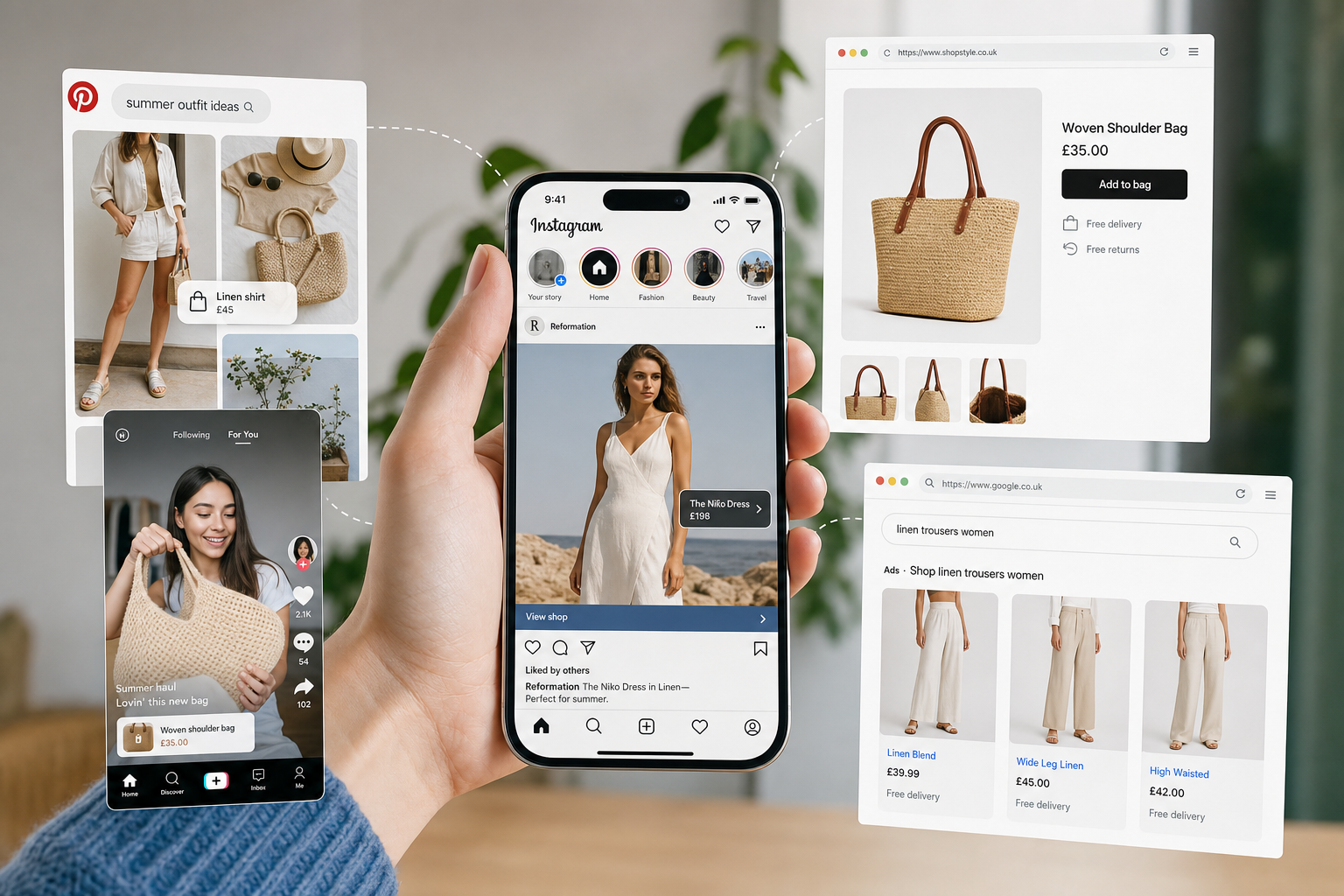
Social media marketing is increasingly connected with shopping behaviour. Customers may discover a product on Instagram, read reviews on Facebook, ask for recommendations in a local group, watch a short demonstration video or click through to a website from a post. Social platforms should therefore be treated as part of the wider sales journey rather than an isolated awareness channel.
For many UK businesses, a practical social media approach in 2020 includes consistent branding, useful product or service posts, timely responses to comments and messages, and campaigns that direct people to relevant website pages. Instagram can be effective for visual products, interiors, food, fashion and lifestyle-led brands. Facebook can still be valuable for local audiences, community engagement and customer service. LinkedIn is often more suitable for business-to-business services, recruitment and professional credibility.
The key is to avoid sending all social traffic to the homepage by default. If a post promotes a particular product range, link to that range. If a campaign discusses a service, link to the relevant service page. If a seasonal offer is being promoted, make sure the landing page explains the offer clearly and reflects the same message as the post or advert. Consistency helps conversion and reduces confusion.
Domain names and branding need careful planning
Online shopping growth also increases the importance of owning and protecting the right domain name. A domain is more than a technical address. It affects memorability, brand trust, email credibility and how easily customers can find you again. When choosing a domain, keep it simple, easy to spell and closely aligned with the business name or main brand.
UK businesses should consider whether a .co.uk, .uk or .com domain best suits their audience and plans. In many cases, securing more than one relevant extension can help protect the brand, with one primary domain used for the live website and others redirected appropriately. Avoid long strings of keywords, awkward hyphens or spellings that need to be explained over the phone.
It is also important to register domains using accurate ownership details and to keep renewal information up to date. Domains should be managed as business assets, not as afterthoughts held in an individual employee’s personal account. If a website, email system or e-commerce store depends on a domain, losing control of it can cause serious disruption.
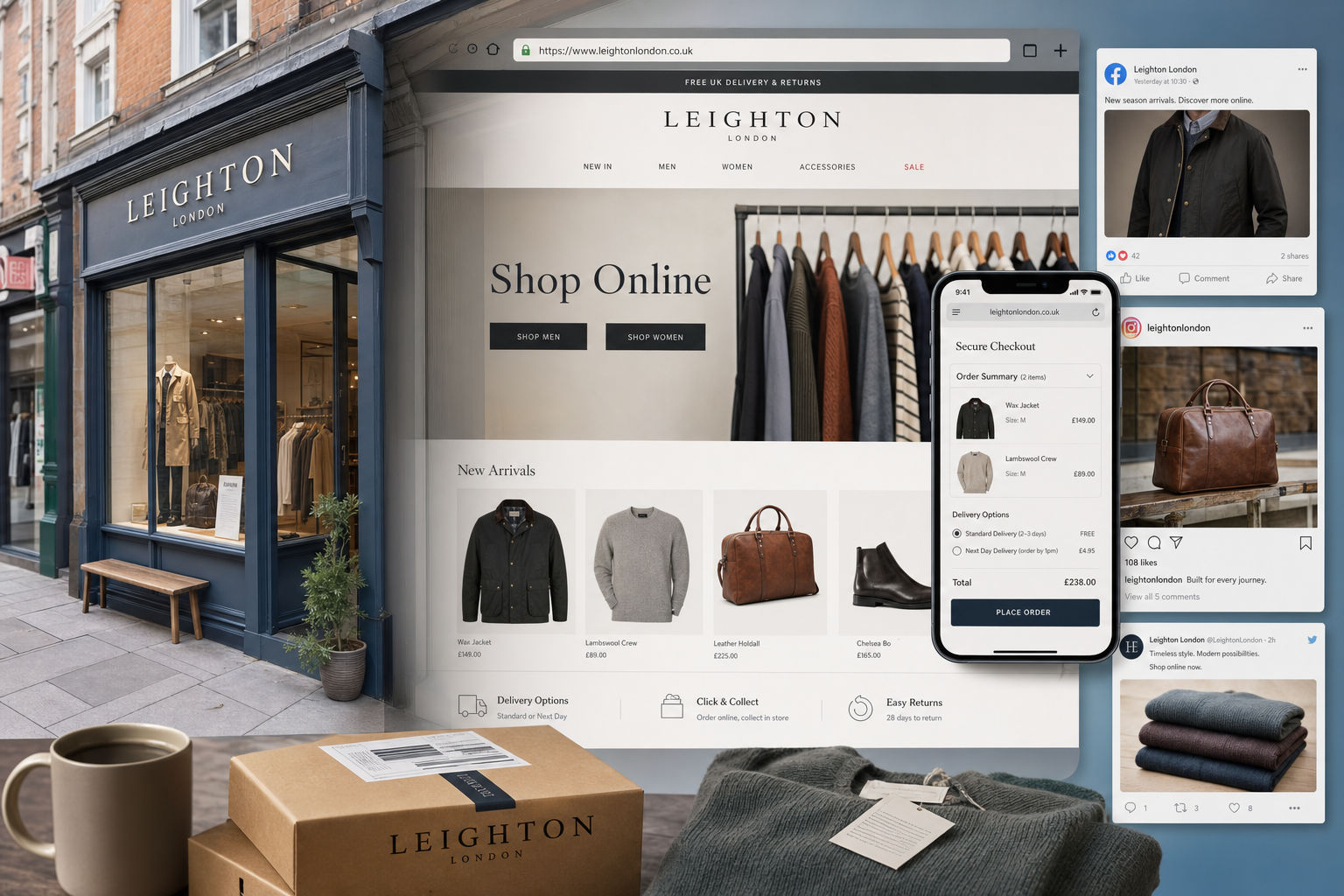
Brand consistency matters alongside domain choice. The website, email addresses, social media profiles, packaging, signage and printed materials should all feel connected. As more customer journeys begin online, a mismatch between names, visuals or messages can reduce trust.
Technology choices should match business needs
There is no single best website platform for every organisation. The right choice depends on product range, stock control, payment requirements, content needs, internal skills and future plans. Some businesses need a straightforward brochure website with enquiry forms and strong SEO foundations. Others need a full e-commerce system with product variations, delivery rules, promotional codes, customer accounts and integration with existing processes.
Common e-commerce requirements in 2020 include secure payment processing, stock management, order confirmation emails, discount codes, analytics tracking and a manageable product catalogue. Businesses with larger catalogues may also need search filters, bulk product import, integration with accounting or stock systems, and clear processes for handling returns or customer support.
Before commissioning a website, list what the business needs now and what may be required in the next 12 to 24 months. A cheaper or simpler build can become expensive if it cannot support realistic growth. Equally, an overcomplicated system can slow teams down if the business only needs a focused, manageable site. The aim is to choose technology that supports commercial objectives rather than technology that looks impressive in isolation.
Measurement turns online activity into business insight
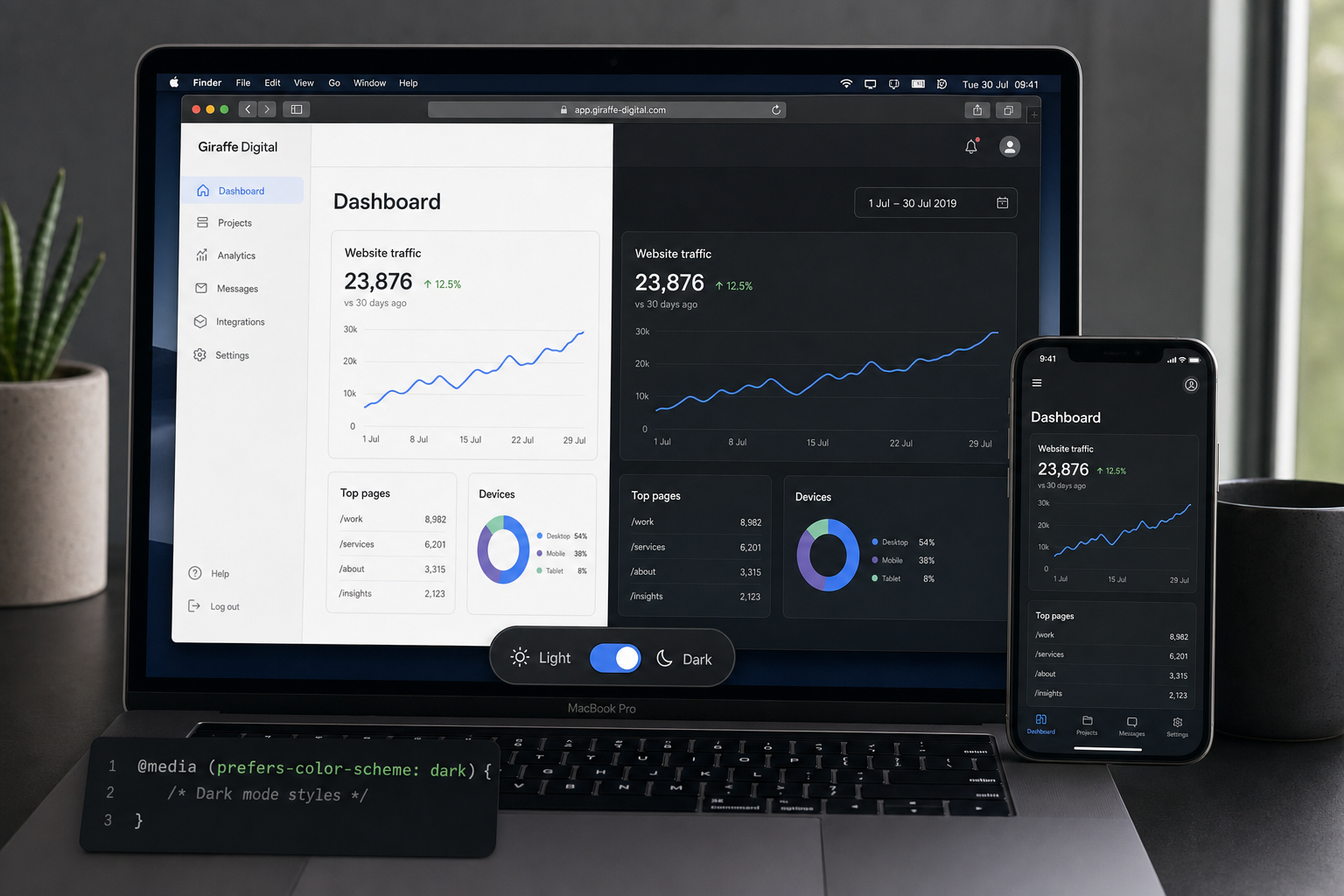
A website should not be launched and left alone. Online shopping growth creates more data, and that data can help business owners make better decisions. Analytics can show which pages attract traffic, where visitors leave, which marketing channels generate enquiries and which products or services receive the most attention.
At a minimum, businesses should have website analytics, search performance monitoring and conversion tracking for important actions such as purchases, enquiry forms, calls or email clicks where practical. Regular reporting does not need to be overwhelming. A useful monthly review might look at traffic sources, top landing pages, search queries, conversion rates, checkout issues and social media referral traffic.
Measurement is especially useful when combined with small improvements. If many visitors reach a product page but few add to basket, the page may need clearer information, better images or stronger reassurance. If people abandon an enquiry form, the form may be too long or unclear. If a blog post attracts search traffic but does not lead visitors onwards, it may need better internal links or a stronger call to action.
Preparing your website for continued online growth
Online shopping growth is changing expectations across almost every sector. Customers increasingly want clarity, speed, reassurance and convenience. A strong website can help meet those expectations while supporting sales, enquiries, customer service and brand credibility.
For UK business owners, the most valuable next step is a practical review. Look at the website through the eyes of a first-time visitor. Test it on a phone. Search for your own products or services. Check whether important information is easy to find. Review whether social media activity leads to relevant pages. Confirm that the domain, branding and technical foundations are secure and professionally managed.
The businesses that benefit most from changing online behaviour are not always those with the largest budgets. They are often the ones that make the buying journey clearer, remove friction, invest in useful content and treat the website as a central business asset. As more customers choose to research and buy online, those priorities will only become more important.