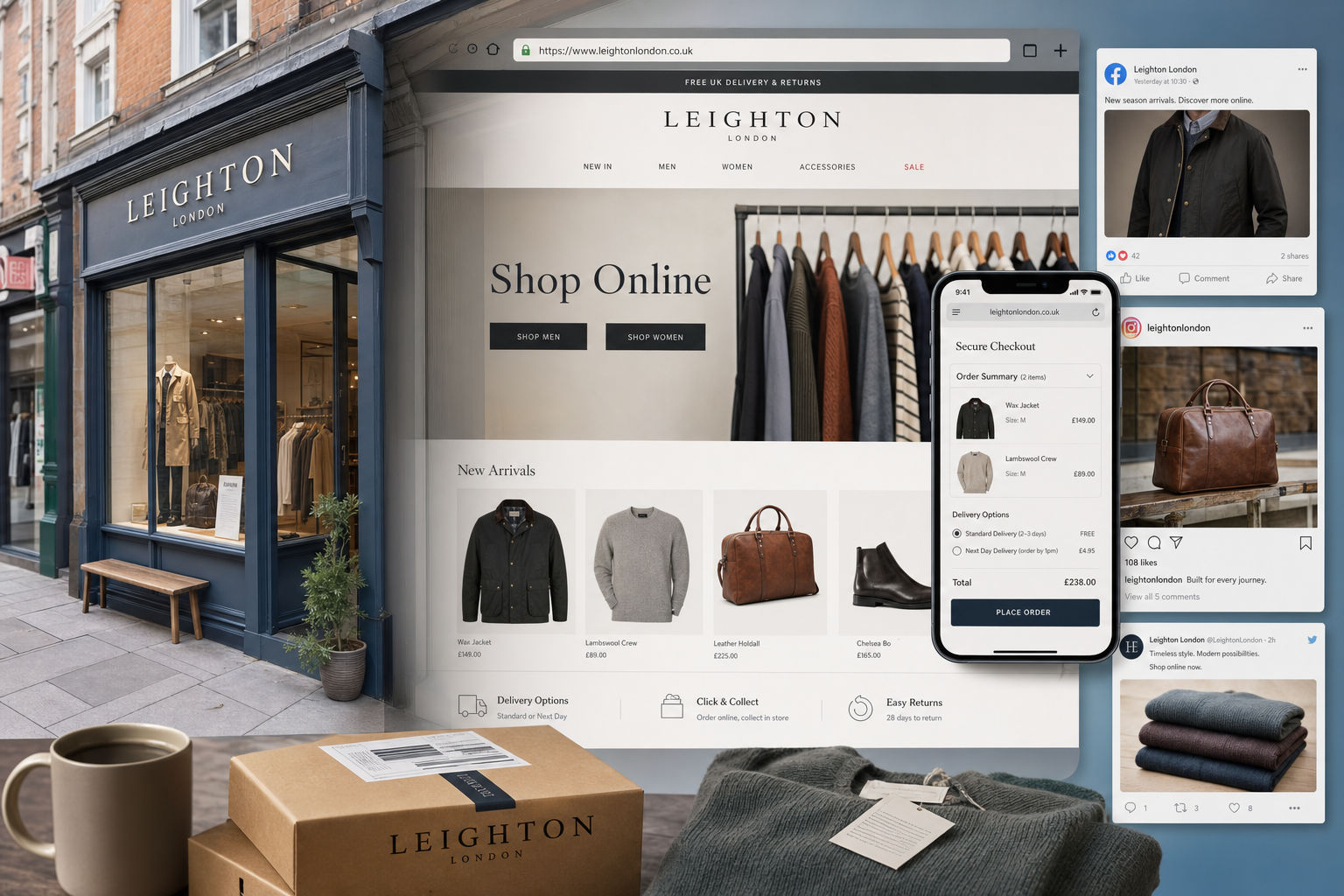
Social commerce is changing the way customers find, consider and buy products online. For many UK businesses, social media is no longer just a place to build awareness or post updates. It has become a discovery channel, a product showcase, a customer service touchpoint and, in some cases, a direct route to purchase. The businesses that benefit most are not simply adding shopping tags to a few posts. They are joining up their social media marketing, website design, search visibility, branding and digital infrastructure so that a customer can move from interest to action with minimal friction.
In July 2022, this matters because customer behaviour has become increasingly visual, mobile-led and influenced by peer recommendation. A product might be discovered through an Instagram Reel, researched through Google, compared on a brand website, saved on Pinterest and finally purchased after a direct message or retargeting advert. That journey is not always linear, but it can still be planned for. A strong social commerce strategy helps your business appear in the right places, present products clearly and convert interest into measurable value.
What social commerce means for businesses
Social commerce refers to the use of social media platforms to support product discovery, product consideration and purchasing activity. It can include shoppable posts, product tags, live shopping, catalogue integrations, direct messages, customer reviews, creator partnerships and paid social campaigns that lead customers to an online shop.
For a small or medium-sized business, the real value is not necessarily about replacing your website with a social platform. In most cases, your website remains the central asset: the place you control, optimise, measure and build over time. Social commerce works best when it feeds qualified interest into a well-designed website, a clear product catalogue and a reliable checkout process.
There are several practical benefits. Social platforms help products appear where people are already spending time. They allow businesses to demonstrate use cases, answer objections and show products in context. They also encourage social proof, whether through comments, shares, customer photographs or reviews. When handled well, social commerce can shorten the gap between seeing a product and taking action.
However, social commerce is not a shortcut for weak branding, poor product information or an underperforming website. If a post generates attention but the product page is slow, confusing or unconvincing, the opportunity is likely to be lost. The best results come from treating social commerce as part of a wider digital marketing system.
How product discovery is changing
Search engines remain vital, especially when customers have a clear intention. Someone searching for a specific product type, local supplier or comparison query is often closer to purchase. Social media, however, is particularly powerful at the earlier discovery stage. It can introduce a product before the customer has actively searched for it.
This is where visual content matters. A clothing retailer might use short-form video to show how an item fits and moves. A homeware business might use carousel posts to show styling ideas. A food brand might demonstrate a recipe. A beauty brand might use before-and-after content, ingredient explanations or user-generated posts. The customer is not just reading a product description; they are seeing the product in a situation that feels relevant.
Social platforms also influence what people later search for. A user may see a product on TikTok or Instagram, then search Google for the brand, product name or reviews. This means social media activity can increase branded search demand, even when the final conversion happens elsewhere. Businesses should therefore look beyond last-click reporting and consider how different channels contribute across the full journey.
For UK business owners, the key question is not whether social media can generate attention. It is whether that attention is being captured in a useful way. If people discover your product on a platform but cannot find your website, understand your offer or complete an enquiry or purchase, your marketing is doing only part of the job.
Choosing the right platforms for social commerce
Not every business needs to be active everywhere. The right platforms depend on your audience, product type, content capacity and commercial objectives. A considered presence on two relevant channels is usually more effective than a stretched presence across six.
Instagram and Facebook
Instagram and Facebook Shops can be useful for businesses with visually appealing products and a clear catalogue. Product tagging in posts, Stories and Reels can help customers move from inspiration to product detail quickly. For many UK businesses, these features work best when linked to a strong e-commerce website where the full product information, delivery details and checkout experience are managed properly.
Instagram is particularly useful for lifestyle presentation, brand building and community engagement. Facebook may be valuable for local audiences, interest-based communities and remarketing. Both can support paid campaigns that reach people who have engaged with your content or visited your website.
TikTok
TikTok has become an important discovery platform, especially for products that can be demonstrated quickly or tied to trends, routines and practical tips. Its strength lies in authenticity and entertainment. Overly polished adverts can underperform if they do not fit the style of the platform.
Product-led content on TikTok should focus on usefulness, demonstration and clear storytelling. Businesses should be realistic about resource: consistent short-form video requires planning, testing and a willingness to learn from audience response. Shopping features and integrations may vary by account and market, so your website should still provide the dependable conversion path.
Pinterest remains valuable for discovery in categories such as interiors, fashion, weddings, crafts, gifts, beauty, food and lifestyle planning. Users often save ideas with future intent, so it can influence purchases over a longer period. Strong product photography, clear titles and well-optimised landing pages are important.
Unlike fast-moving social feeds, Pinterest content can continue to gain visibility over time. This makes it a useful bridge between social content and search behaviour, particularly when your product pages and blog content are designed around common planning and inspiration queries.
YouTube and video search
YouTube can support social commerce through product demonstrations, reviews, tutorials and buying guides. It is also closely connected to search behaviour. A customer considering a higher-value or more technical product may want to see how it works before committing. Video content can reduce uncertainty and give your website stronger supporting material.
For many businesses, a short, helpful video embedded on a product or category page can improve the user experience. It also gives you content that can be repurposed for other channels.
Your website still does the heavy lifting
Social commerce can bring customers to the door, but your website often determines whether they step inside. A strong website gives you control over branding, content, product structure, analytics, SEO and conversion. It also protects your business from relying too heavily on one platform’s algorithm or advertising environment.
Good e-commerce website design in 2022 should be fast, mobile-friendly and easy to navigate. Social traffic is heavily mobile, so product pages must load quickly and present key information clearly on smaller screens. Customers should not have to pinch, zoom or search for essential details such as product variations, delivery information, returns, contact options and trust signals.
Product pages should be designed for both people and search engines. Use clear product names, descriptive headings, concise benefit-led copy and well-structured specifications. Include high-quality images that show scale, detail and use. Where relevant, add reviews, frequently asked questions and supporting content such as guides or videos.
The journey from social post to product page should feel consistent. If a customer taps a product in a post, the landing page should match the product, imagery and promise they have just seen. Sending all traffic to a homepage can create unnecessary friction. Dedicated product, category or campaign landing pages will usually perform better.
How SEO and social commerce work together
Social media and SEO are often discussed separately, but they support each other. Social content can create awareness and demand; search marketing helps capture that demand when people look for more information. If someone discovers your product on a social platform and then searches for your brand, your website needs to appear clearly and convincingly.
Start with the basics. Make sure your brand name, product names and key categories are reflected consistently across your website, social profiles and product catalogues. Your website should have accurate page titles, meta descriptions, clean URLs and clear internal linking. Structured product data can also help search engines understand product information such as price, availability and reviews, where implemented correctly.
Content marketing can strengthen the journey. Buying guides, comparison pages, style inspiration, how-to articles and care guides can all support both search visibility and social sharing. For example, a garden furniture retailer might create guides around small patio ideas, weatherproof materials and maintenance. These pages can rank for useful searches while also giving the social media team practical content to promote.
Local SEO should not be overlooked. If your business has a showroom, studio, workshop or local service area, ensure your location information is accurate and consistent. Social commerce may spark interest, but local search can convert customers who want to visit, collect or speak to someone nearby.
Branding, trust and customer confidence
Trust is central to social commerce. Customers are often moving quickly from an entertaining post to a commercial decision, so your brand needs to feel credible at every step. Inconsistent visuals, vague product details or a poorly maintained website can create doubt.
Brand consistency does not mean every piece of content must look identical. It means customers should recognise your tone, values and visual style wherever they meet you. Your profile images, product photography, packaging, website design and email communication should feel connected. This is especially important for newer businesses that are still building recognition.
Customer service is also part of the brand experience. Social commerce often creates questions in comments and direct messages. Businesses should decide how quickly they can respond, who is responsible and what information can be provided publicly. Clear responses can reassure not only the person asking the question but also others reading the thread.
User-generated content can be powerful, but it should be handled with care. Ask permission before reusing customer photographs or testimonials. Keep claims accurate, especially in sectors where product performance, health, finance or safety are involved. A practical, honest approach is better for long-term trust than exaggerated promises.
Domain names and digital foundations
Your domain name is a key part of your digital identity. Even when social media drives the first interaction, many customers will still check your website before buying. A clear, memorable domain helps people recognise your business and return directly.
When choosing a domain, keep it as simple as possible. Avoid unnecessary hyphens, confusing spellings or names that are too close to another organisation. If you trade mainly in the UK, consider whether a UK-focused domain extension supports customer confidence, while also securing the most relevant alternatives where appropriate. The aim is to reduce confusion and protect your brand as it grows.
Before registering a domain, check that the name works across your website, email addresses and social media handles. Consistency makes marketing easier and reduces the risk of customers finding the wrong business. You should also review trademark considerations and make sure the domain does not create avoidable legal or reputational issues.
Security and ownership matter. Your domain should be registered in the correct business name, with up-to-date contact details and access controlled by trusted people. Use secure passwords and enable account protection features where available. Losing access to a domain can disrupt your website, email and marketing activity, so it should be treated as a business-critical asset.
Measuring practical business value
Social commerce should be measured against business objectives, not vanity metrics alone. Likes and views can indicate reach, but they do not always translate into revenue, enquiries or customer retention. A better measurement plan looks at the steps between discovery and conversion.
Useful indicators include product page visits from social platforms, add-to-basket activity, enquiry form completions, assisted conversions, email sign-ups, catalogue engagement and repeat purchases. For content-led campaigns, you may also want to track branded search growth, saves, shares and comments that indicate buying intent.
Analytics should be configured carefully so that campaign traffic can be understood. Use consistent tracking on paid campaigns and review landing page performance by source. If social traffic is high but conversions are low, investigate page speed, message match, pricing clarity, product photography, checkout usability and trust signals.
It is also worth reviewing qualitative feedback. Comments, direct messages and common questions can reveal what customers do not understand. That information can improve product pages, FAQs, paid adverts and future content. Social commerce is valuable not only because it can sell, but because it can show you how customers think.
Practical steps to get started
If you are considering social commerce, begin with a manageable plan. Choose a small number of products or categories and build a clear journey around them. Make sure the product pages are ready before increasing promotion. Check that images, descriptions, delivery information and calls to action are strong.
- Audit your website: test mobile speed, product page clarity, checkout steps and contact options.
- Review your product catalogue: ensure product names, images, descriptions and availability are accurate.
- Choose suitable platforms: prioritise the channels where your audience already discovers similar products.
- Create content themes: plan demonstrations, comparisons, customer questions, styling ideas and behind-the-scenes content.
- Connect SEO and social: use search data to shape content topics and use social feedback to improve website content.
- Measure the full journey: track discovery, landing page engagement, enquiries, sales and repeat interactions.
For businesses without an internal digital team, working with a specialist agency can help join the pieces together. Website design, SEO, social media marketing, branding and analytics all need to support the same commercial goal. A visually appealing campaign is much more effective when the technical foundations and conversion journey are properly built.
Social commerce is a connected strategy
Social commerce is not simply a feature to switch on. It is a shift in how customers discover, evaluate and act. The businesses that adapt well will make it easy for people to move from social inspiration to reliable information and a confident purchase.
For UK business owners, the opportunity is to build a connected digital presence: a recognisable brand, active and relevant social channels, a fast and trustworthy website, clear search visibility and a measurement framework that shows what is working. When these elements support each other, social commerce becomes more than a trend. It becomes a practical route to stronger customer engagement and sustainable online growth.