Follower counts are easy to see, easy to compare and, for that reason, easy to overvalue. A large audience can look impressive on a profile page, but it does not automatically mean people are listening, buying, recommending or returning. For many UK businesses in 2024, the more useful question is not how many people follow us, but how many people feel connected enough to engage, ask questions, share feedback and take the next step. That is where social media communities become commercially valuable.
A community is not simply a crowd. It is a group of people with a shared interest, need or identity who recognise your business as a relevant part of their online routine. That might be local homeowners following a renovation specialist for practical advice, independent retailers supporting a packaging supplier, parents discussing a children’s activity provider, or B2B buyers comparing approaches to digital transformation. The scale can vary, but the value comes from trust, relevance and repeated interaction.
Why follower counts can be a misleading measure
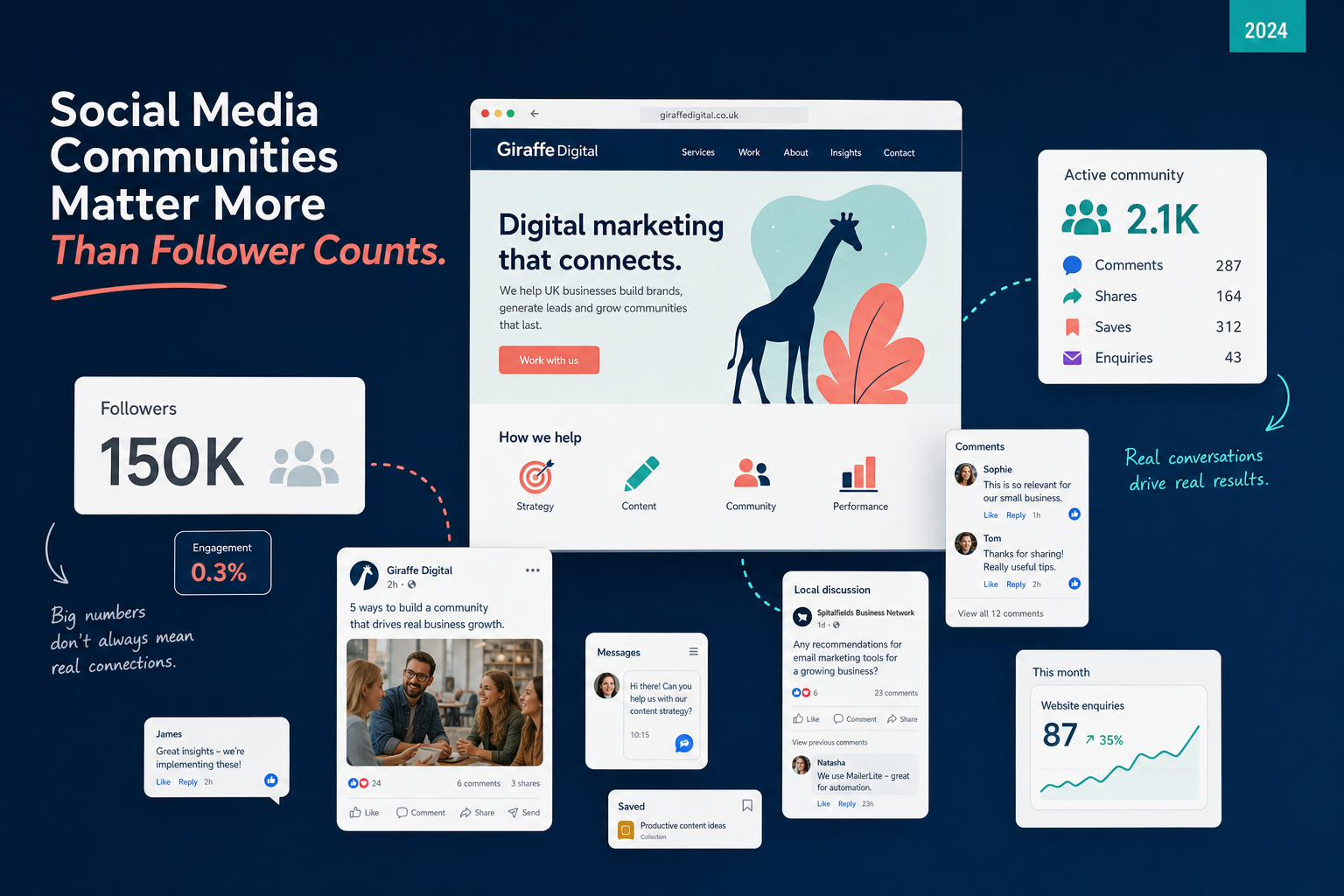
Follower numbers still have a place. They can help indicate reach, brand visibility and whether a channel is growing. The problem is that they are often treated as the main indicator of marketing success when they are only one part of the picture. A business can have thousands of followers and still struggle to generate enquiries if the audience is passive, poorly matched or rarely sees the content.
Social platforms increasingly prioritise content that encourages meaningful behaviour: saves, shares, comments, watch time, direct messages and repeat engagement. A post from a smaller account can outperform a post from a larger one if it is more relevant, more useful or more timely. This is especially important for businesses that serve a specific location, sector or customer type. A strong community of 800 local or niche followers may produce better business outcomes than 20,000 broadly interested but inactive followers.
Follower counts can also be distorted by old campaigns, irrelevant competitions, inactive accounts or people who followed years ago for a reason that no longer applies. If your business has changed its services, repositioned its brand or expanded into new markets, headline audience size may not reflect the people you need to reach now.
What a social media community actually looks like
A healthy community is visible in behaviour. People ask questions in comments. They reply to each other, not just to the business. They remember previous posts. They tag friends or colleagues when a topic is relevant. They share their own experiences. They use direct messages to ask for advice before they are ready to enquire formally. They may also visit your website repeatedly before completing a contact form, booking a consultation or making a purchase.
For a local service business, this could mean residents commenting on practical posts, sharing before-and-after project content and recommending the company in local groups. For an e-commerce brand, it may involve customers sharing how they use a product, requesting new variations and responding to behind-the-scenes content. For a B2B organisation, it might be a LinkedIn audience that returns for thoughtful posts, joins discussions and recognises the expertise behind the brand.
The important point is that community is built through consistent usefulness rather than constant selling. Promotional posts have a role, but they work better when they sit within a wider pattern of education, conversation, proof and personality.
The business value of active communities
Social media communities support several commercial goals at once. They can improve brand trust, increase repeat website visits, inform content strategy and reduce reliance on cold outreach. When people already understand what you stand for, the journey from awareness to enquiry is often smoother.
Trust develops before the sales conversation
Most people do not become customers the first time they see a business online. They notice, compare, observe and return. Community-led social media gives potential customers a way to evaluate your knowledge, tone, reliability and values over time. Comments, replies and customer conversations act as public evidence that your business is active, responsive and approachable.
This matters for website performance too. A visitor arriving from a trusted social interaction is often warmer than a visitor who has only seen a single advert. They may spend longer reading service pages, explore case studies or FAQs, and be more willing to submit an enquiry because the relationship has already started elsewhere.
Communities reveal what customers really care about
Search data tells you what people type into search engines. Social communities show how people talk when they are not restricted to a search box. The language in comments, polls, questions and direct messages can highlight pain points, objections and content opportunities that might not appear in keyword tools.
For example, a web design agency may notice that business owners are less worried about visual trends and more concerned about whether a new website will be easy to update. A home improvement company may find that customers repeatedly ask about planning, disruption and maintenance. A professional services firm may discover that its audience needs reassurance about process and timescales before they are ready to speak to a consultant.
These insights can then shape website copy, blog topics, FAQ sections, service page structure and paid campaign messaging. In this way, community engagement becomes a research channel as well as a brand channel.
Better engagement can support organic reach
Strong community behaviour can help content travel further. When people comment, save, share or send posts to others, platforms receive signals that the content is useful. While each platform works differently, meaningful interaction is consistently more valuable than passive audience size.
This does not mean every post needs to go viral. For most UK businesses, sustainable visibility among the right people is far more useful than one large spike of attention from the wrong audience. A post that sparks five serious enquiries, ten relevant questions and several website visits may be more valuable than a post with thousands of low-intent views.
How website design and social media communities should work together
Social media should not operate separately from your website. Your website is where people usually go to confirm credibility, understand services, compare options and take action. If your community is engaged but your website is confusing, slow, unclear or visually inconsistent, you may lose the trust that social media has helped build.
Good website design supports community-led marketing by making the next step obvious. If a social post answers a common question about a service, the linked page should continue that conversation with clear headings, helpful content and a simple route to enquire. If a post features a customer story, the website should provide related proof, not a generic landing page that ignores the visitor’s context.
Consistency is also important. The tone of voice, visual identity and promise on social media should match the website experience. If your social presence feels warm and expert but your website feels dated or vague, visitors may hesitate. If your social content is practical and direct but your website is filled with jargon, the journey becomes disjointed.
Practical website improvements that help convert community traffic
- Create focused landing pages for key services, locations or customer groups so visitors from social posts arrive somewhere relevant.
- Use clear calls to action such as requesting a consultation, booking a call, downloading a resource or asking a question.
- Add evidence through testimonials, accreditations, portfolio examples, FAQs and transparent process explanations.
- Improve mobile usability because much social traffic will arrive from mobile devices.
- Make page speed a priority so interest from a social post is not lost during a slow load.
- Use analytics properly to understand which social channels, posts and landing pages are contributing to enquiries.
Choosing the right platforms for community building
Not every business needs to be everywhere. A focused presence on the right platforms is usually more effective than a stretched presence across too many channels. Platform choice should be guided by audience behaviour, content format and the kind of conversation your customers want to have.
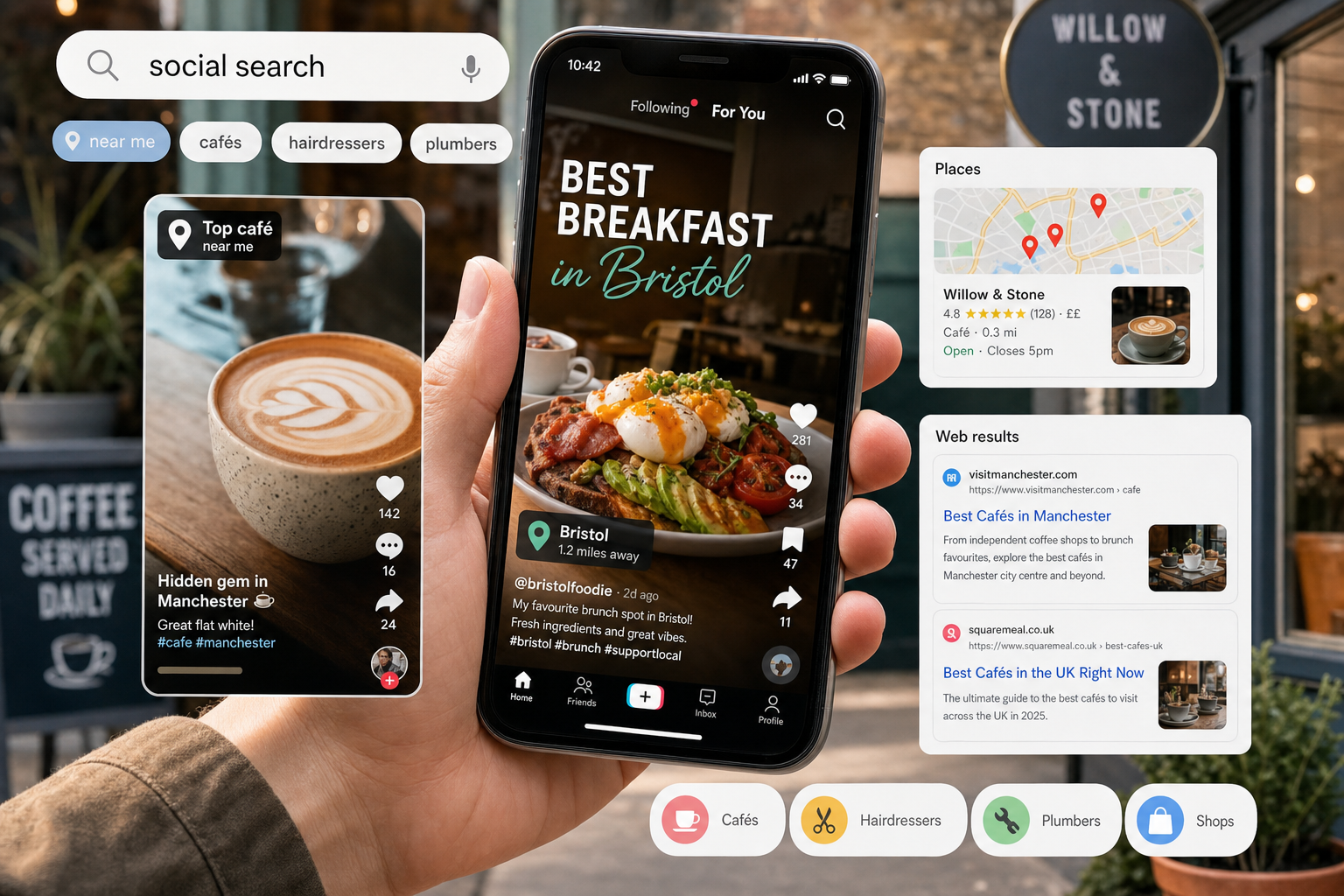
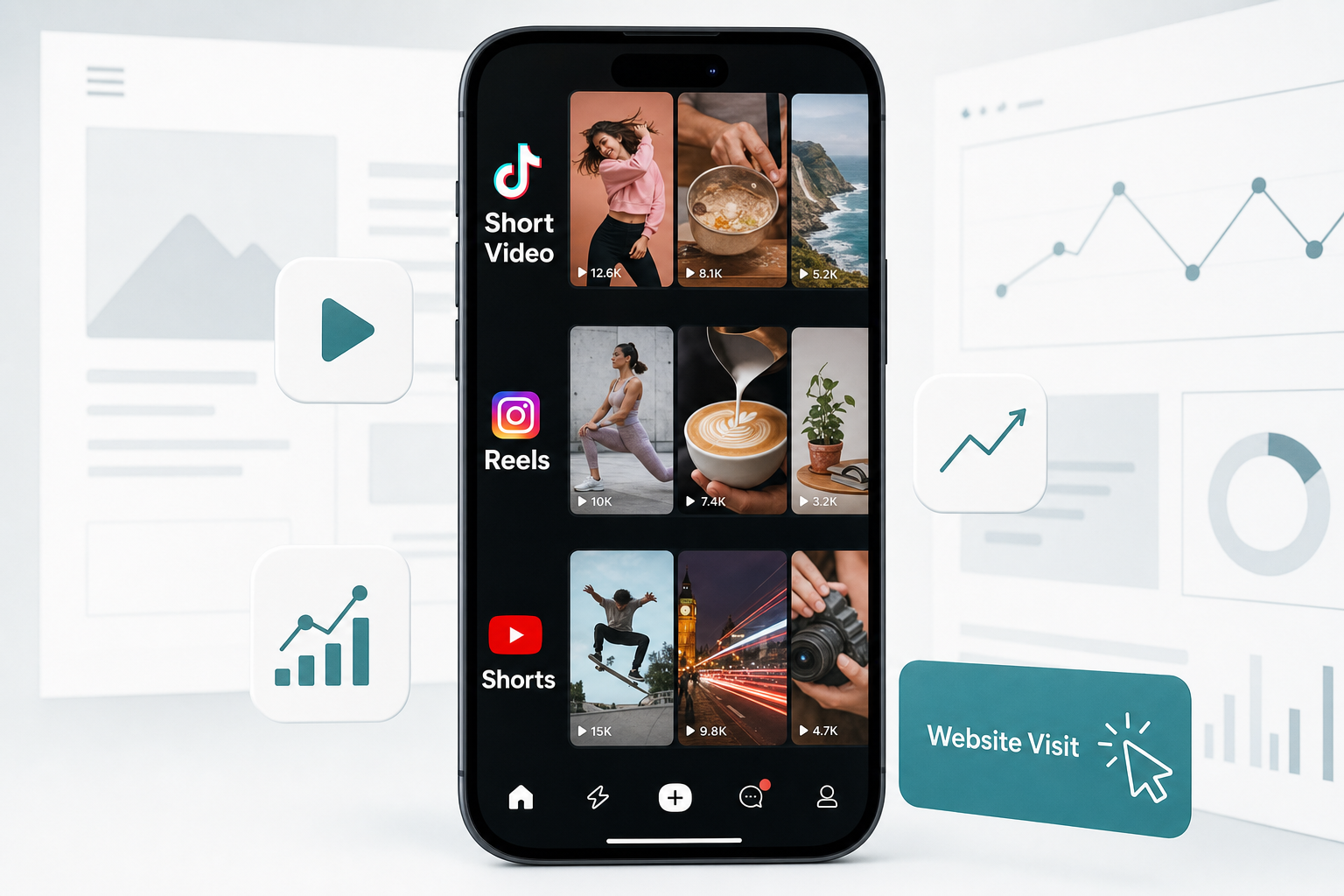
Facebook remains relevant for many local businesses, community groups, events and consumer-facing services. Local recommendations and group discussions can be especially influential. Instagram is useful for visual brands, hospitality, interiors, lifestyle, education, e-commerce and organisations with strong behind-the-scenes or product-led content. LinkedIn is often the strongest choice for B2B businesses, professional services, recruitment, consultancy and thought leadership. TikTok can be powerful for educational, entertaining and personality-led content, particularly where short-form video suits the brand. YouTube is valuable for longer-lasting educational content, product demonstrations, tutorials and search-led video discovery. Pinterest can support sectors such as interiors, weddings, fashion, crafts, food and home improvement, where visual planning is part of the buying journey.
Rather than chasing every new feature, business owners should ask where customers are already asking questions, comparing options and sharing recommendations. The best platform is the one where your business can show up consistently with content that suits both the audience and the team’s capacity.
Content that strengthens social media communities
Community-building content gives people a reason to respond. It should help, reassure, inspire or involve the audience. That does not mean every post needs to be long or complex. Some of the most effective community posts are simple because they address a real question clearly.
Useful content themes
- Customer questions: turn recurring enquiries into posts, short videos, carousels or stories.
- Process explanations: show what happens before, during and after someone works with your business.
- Behind-the-scenes updates: give people a sense of the people, standards and care behind the service.
- Opinion and perspective: explain what your business believes, especially where customers are facing confusing choices.
- Community prompts: ask for experiences, preferences or questions in a way that feels genuine rather than forced.
- Proof and outcomes: share examples of work, testimonials or lessons learned without exaggerating results.
- Educational series: create recurring posts around a topic your audience wants to understand better.
The strongest communities often form around repeated themes. If people know that every week you answer a practical question, review a common mistake or share a useful checklist, they have a reason to keep paying attention. Repetition is not a weakness when it creates familiarity and reinforces expertise.
Search marketing benefits of community-led social activity
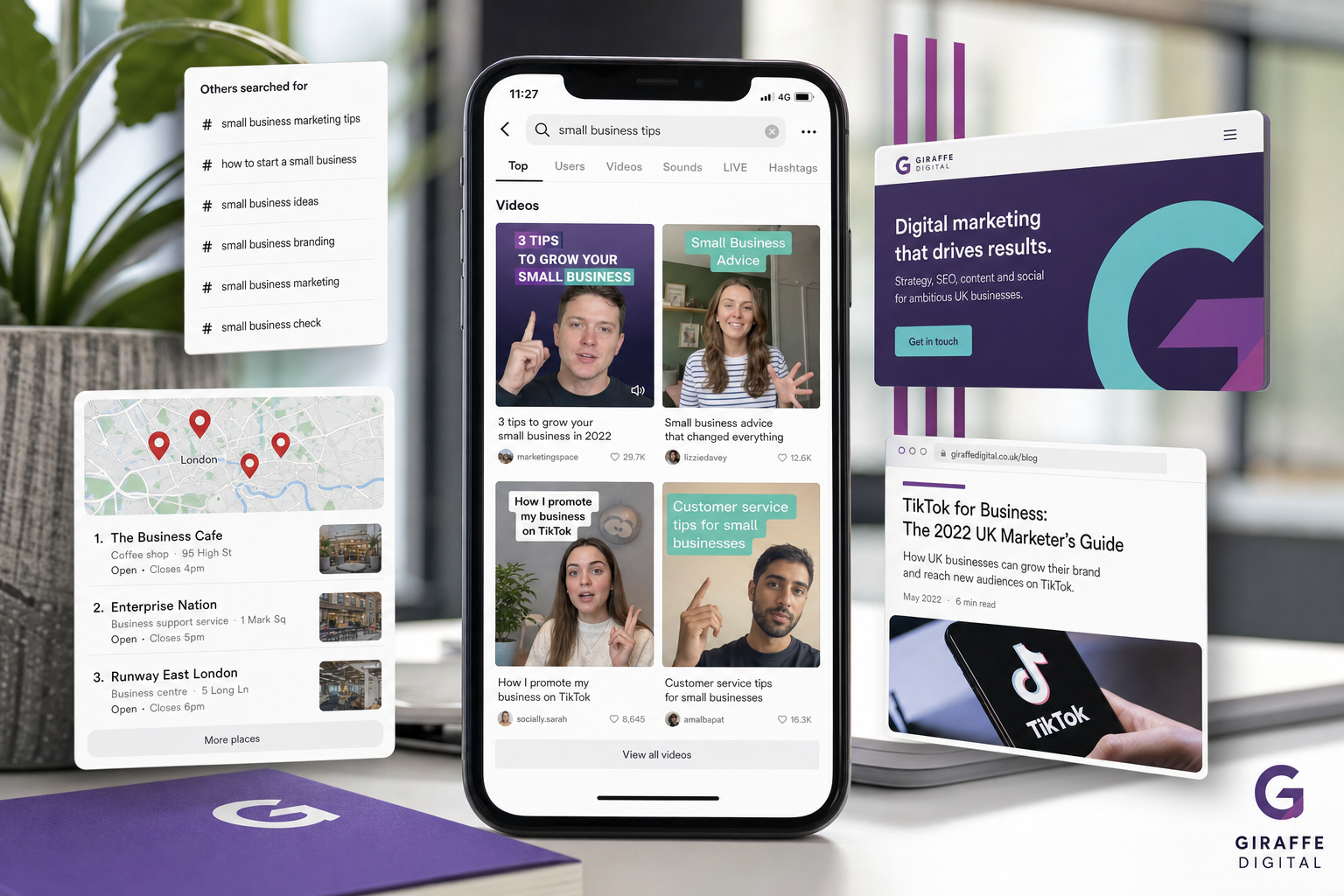
Social media activity is not a direct replacement for SEO, but it can strengthen your wider search marketing. A community can increase branded searches, generate repeat visits, support content discovery and help identify topics worth targeting on your website. When people see your advice on social media and later search for your business name or a related service, your brand becomes part of their decision-making process.
Community discussions can also inform long-tail content. If people repeatedly ask how to choose a service, what to prepare before a consultation or what mistakes to avoid, those questions may deserve dedicated website content. This can improve the usefulness of your site for both visitors and search engines.
For local businesses, community engagement can reinforce real-world relevance. Local conversations, event involvement, user-generated content and consistent location signals can all contribute to a stronger local digital presence when supported by a well-optimised website, accurate business listings and clear contact information.
Domain names, branding and community trust
Your domain name is part of how people remember and trust your business. If someone hears about you in a social community, sees your post shared by a friend or searches for you after a discussion, your domain should be simple, credible and aligned with your brand.
When registering a domain name, choose something easy to spell, easy to say aloud and difficult to confuse with another organisation. Avoid unnecessary hyphens, awkward abbreviations or wording that limits future growth. For UK businesses, it is sensible to consider relevant UK-focused options alongside broader domain extensions, depending on your audience and brand strategy.
It is also worth securing close variations where appropriate to protect your brand and reduce confusion. Keep ownership details, renewal settings and access credentials well managed internally. A domain is a business asset, not just a technical detail. Losing access or allowing an important domain to expire can damage trust and disrupt marketing activity.
Community trust is built through consistency. Your social handles, domain name, email address and website branding should feel connected. If users move from a social profile to a website and then receive an email from a completely different-looking address or brand style, confidence can weaken.
How to measure community value properly
Follower growth is only one metric. To understand whether social media communities are supporting the business, look at a broader set of signals. These should connect social activity to website behaviour, enquiries and customer insight.
- Engagement quality: comments, saves, shares and direct messages from relevant people.
- Repeat interaction: the same people returning to discussions, watching stories or responding to updates.
- Website traffic: visits from social channels to relevant landing pages, not just homepage clicks.
- Conversion behaviour: enquiry forms, calls, bookings, downloads or email sign-ups influenced by social traffic.
- Branded search growth: more people searching for your business name after seeing community content.
- Content insight: questions and objections that help improve your website, sales process and SEO strategy.
- Referral activity: people tagging others, sharing posts privately or recommending your business in groups.
It is useful to review these metrics monthly rather than reacting to individual posts too quickly. Community building is cumulative. Some posts create immediate engagement, while others quietly build credibility that leads to enquiries weeks or months later.
Common mistakes that weaken social media communities
One of the most common mistakes is broadcasting without listening. If every post is an announcement, offer or sales message, the audience has little reason to participate. Another mistake is treating engagement as a one-way performance metric rather than a conversation. Replies should feel human, helpful and timely.
Inconsistency can also damage momentum. A business does not need to post constantly, but it should avoid long, unexplained gaps followed by bursts of rushed content. A manageable content schedule is better than an ambitious plan that cannot be maintained.
Some businesses also create a mismatch between their community content and their website. They may share helpful, specific advice on social media, then send people to a generic website that does not answer the next question. This is a missed opportunity. Every strong social content theme should have a clear website destination or supporting page where appropriate.
Finally, avoid chasing engagement for its own sake. Controversial questions, gimmicks and irrelevant trends may attract comments, but they do not always build the right kind of trust. The aim is not noise; it is meaningful attention from people who may become customers, advocates or referrers.
Building a community-first digital strategy
A community-first strategy starts with understanding the audience. Who are you trying to reach? What do they need to know before they trust you? What questions do they ask before buying? Where do they spend time online? What would make them return to your content voluntarily?
From there, align your social media, website design, SEO, branding and email marketing. Social media can start conversations. Your website can deepen understanding. Search can capture active demand. Email can nurture longer decisions. Branding can make every touchpoint feel recognisable and credible.
This joined-up approach is especially important for businesses with considered purchases, local competition or complex services. A potential customer may first see a post, then read a blog, then check reviews, then return via search, then send a direct message before finally enquiring. Each step should feel connected.
Smaller, stronger and more useful beats bigger and quieter
Follower counts will continue to be visible, but they should not dominate digital marketing decisions. A smaller community that asks questions, shares posts, visits the website and trusts the business is often more valuable than a large audience that rarely engages.
For UK business owners, the opportunity is to build social media communities that support real commercial outcomes: better enquiries, stronger brand recall, useful customer insight and a website journey that converts attention into action. The businesses that benefit most will be the ones that treat social media not as a numbers game, but as part of a wider digital ecosystem built around relevance, trust and consistency.