Pinterest is quickly becoming one of the most talked-about social platforms for businesses with something visual to show. For retailers, designers, venues, makers, publishers, food brands, interiors companies and lifestyle organisations, it offers a simple idea with real marketing potential: people collect, organise and share images that inspire them. That behaviour may look informal, but it can influence discovery, brand awareness and visits to your website.
For UK business owners planning a new website, improving search visibility or reviewing social media activity, Pinterest marketing is worth understanding now. It is not suitable for every organisation, and it should not replace the basics of a well-built website, clear branding and consistent search marketing. However, for businesses with strong imagery and useful content, it can provide an additional route into the customer journey.
What Makes Pinterest Different
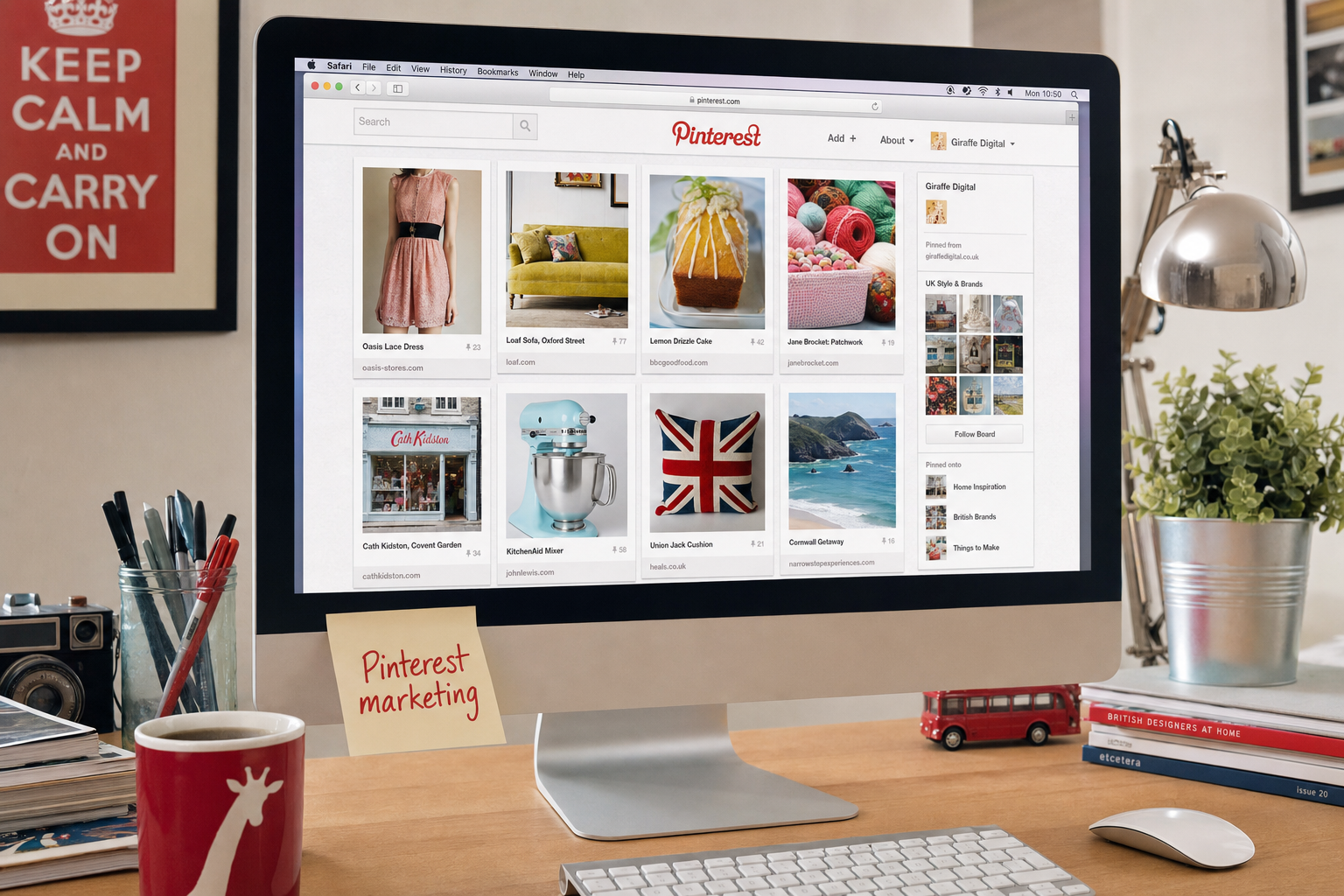
Most social media platforms encourage conversation, status updates or short bursts of news. Pinterest is more like a visual scrapbook. Users create themed boards and add images, known as pins, which often link back to the original source. A person planning a wedding might create boards for dresses, flowers, venues and invitations. Someone redecorating a home might collect examples of kitchens, colour schemes, lighting and furniture. A food enthusiast might gather recipes and serving ideas.
This makes Pinterest especially interesting because it is closely connected to intent. People are not only saying what they are doing; they are collecting ideas for what they may buy, make, visit or plan. That creates a useful opportunity for brands that can help, inspire or guide them.
The platform is also less dependent on posting several times a day than some social networks. A strong image can continue to be discovered and repinned over time, particularly if it sits within a useful board and links to a relevant page. This gives good website content a longer life than a fleeting status update.
Why Visual Brands Should Pay Attention
Pinterest marketing is most immediately useful for businesses where appearance, style, aspiration or demonstration plays a role in the sale. This includes fashion, gifts, jewellery, homeware, interiors, architecture, gardening, travel, hospitality, food and drink, events, art, craft, beauty and many independent retailers. It can also work for professional services if they can present information visually, such as design studios, wedding planners, training organisations or publishers.
The central question is not simply, do we have products? It is, do we have images that people would want to keep? A plain product shot on a white background may be useful on an e-commerce page, but it might not be inspiring enough for Pinterest. A styled photograph showing the product in use, a helpful infographic, a before-and-after example, a seasonal collection or a simple guide may work much harder.
For example, a garden centre could create boards around small garden ideas, summer planting, containers for patios and gift ideas for gardeners. A boutique hotel could create boards for local walks, room details, wedding inspiration and places to visit nearby. A kitchen company could show storage solutions, worktop finishes, colour combinations and completed rooms. In each case, the brand is not merely advertising; it is helping people form ideas.
Building a Pinterest Presence with a Clear Purpose
Before opening an account and pinning every photograph available, it is worth deciding what Pinterest should achieve for the business. The objective may be to increase referral traffic, support a product launch, build awareness in a niche market, encourage press interest, showcase expertise or help customers explore a range visually.
Boards should be planned around customer interests rather than internal departments. A clothing retailer, for instance, may find that boards such as Weekend Style, Wedding Guest Outfits and British Summer Essentials are more compelling than simple categories such as trousers, dresses and accessories. A furniture company might use Compact Living, Country Kitchen Ideas or Working from Home Corners. The board titles should be clear enough to be understood at a glance and descriptive enough to support discovery.
It is sensible to maintain a balance between your own content and related inspiration. If every pin is a direct product advert, the account can feel too narrow. If none of the pins leads back to your website, the commercial value is limited. A practical approach is to pin your own best images, mix in complementary ideas where appropriate, and ensure each board has a coherent theme.
Descriptions matter as well. Short, helpful wording can give context to the image and make the pin more useful. Avoid overloading descriptions with sales language. Instead, explain what the image shows, who it may help and why it is useful. Where a product is shown, describe it plainly and accurately.
Your Website Must Be Ready for Pinterest Traffic
Pinterest should not be viewed separately from website design. If a pin attracts attention and sends someone to your site, the landing page must deliver on the promise made by the image. A beautiful pin that leads to a confusing page, a broken link or a slow-loading gallery wastes the opportunity.
Good Pinterest marketing begins with good website content. Product pages should include strong photography, useful descriptions, clear calls to action and straightforward navigation. Blog posts, guides and lookbooks should be easy to read and should include images that are large enough to be compelling. Visitors should be able to understand where they are, what they can do next and how to contact you or buy from you.
Image quality is particularly important. Pinterest is a visual environment, so dark, grainy or poorly cropped images are unlikely to perform well. Invest time in creating photographs that suit your brand. Natural light, thoughtful composition, consistent styling and clear subject matter can make a significant difference. For businesses commissioning a new website, image planning should be part of the design brief, not an afterthought once the site is built.
It is also useful to make pages easy to share. Adding a visible Pinterest button or clear sharing options can encourage visitors to pin content from your site. However, these features should be implemented neatly and should not clutter the page. The main priority remains a professional, usable website that reflects the quality of the business.
Search Marketing Benefits and Sensible SEO Practice
Pinterest is not a shortcut around proper search engine optimisation, but it can support a wider search marketing programme. Pins may create referral traffic, increase awareness of your content and help more people discover your products or ideas. If people find something useful, they may share it, mention it elsewhere or return to your website directly.
For SEO in June 2012, the fundamentals still matter. Your pages should have clear titles, relevant headings, descriptive copy and images with sensible file names and alternative text. Search engines cannot interpret an image in the same way a person can, so surrounding text remains important. A page called blue-floral-summer-dress with a useful product description is stronger than a page with a vague title and no context.
Each pin should ideally lead to the most relevant page, not just the home page. If the image shows a recipe, link to the recipe page. If it shows a product, link to that product page. If it shows a guide, link to the guide. This improves the visitor experience and gives the content a better chance of converting interest into action.
Be careful not to treat Pinterest as a link-building scheme. The value is in useful visibility and relevant traffic, not in trying to manipulate search results. Search marketing is becoming increasingly focused on quality, relevance and trust. Pinterest should therefore be used to promote content that genuinely deserves attention.
Ideas for Pinterest Content
Many businesses hesitate because they are unsure what to pin. The best starting point is to think about common customer questions and moments of inspiration. What do people ask before buying? What do they need to compare? What do they find difficult to imagine? What styles, uses or combinations might help them make a decision?
- Product collections: grouped by season, colour, occasion, room, size or use.
- How-to guides: simple visual steps for styling, care, assembly, preparation or planning.
- Behind the scenes: tasteful images of materials, making processes, design details or preparation.
- Lookbooks: curated sets of images showing a campaign, range or theme.
- Customer inspiration: where permission has been granted, examples of products in real settings.
- Local interest: boards connected to your town, region, venue, event or visitor experience.
- Infographics: clear visual explanations, checklists or comparisons relevant to your audience.
For a service business, the approach may be more editorial. An accountant might struggle to create visually appealing pins from tax advice alone, but a training company could create visual checklists, course planning boards or presentation tips. A design agency can show brand mood boards, typography inspiration and project snapshots. The key is to translate expertise into a format people will want to save.
Brand Consistency and Copyright Considerations
As with any social channel, your activity should feel consistent with your brand. The tone of descriptions, the quality of imagery and the choice of boards should all support the impression you want to create. A luxury brand may need a more restrained, carefully curated approach, while a craft retailer may benefit from a warmer and more abundant style.
Copyright should also be considered. Pinterest encourages sharing, but that does not mean every image on the web is free to use commercially. Businesses should prioritise their own photography, commissioned imagery, supplier images where permitted, and content they have a clear right to share. If repinning from others, choose reputable sources and keep attribution intact. Avoid presenting another organisation's work as your own.
It is worth preparing internal guidance for staff who manage social media. Decide what may be pinned, who approves images, how descriptions should be written and how enquiries should be handled. This is especially important for businesses with multiple locations or several people contributing to marketing activity.
Domain Names, Campaigns and Digital Planning
Pinterest can support campaigns, but it should sit within a sensible digital structure. Your main website and domain name remain central assets. If you are launching a new brand, product range or campaign, choose a domain name that is clear, memorable and easy to spell. Shorter is usually better, but clarity should not be sacrificed for cleverness.
For UK businesses, it is often sensible to secure the most relevant UK domain extension as well as considering appropriate alternatives for brand protection. Avoid hyphens unless there is a strong reason, and be cautious with names that sound similar to competitors or are easily mistyped. Check that the name works in print, over the telephone and on social media profiles.
If you create a campaign landing page for Pinterest traffic, it will usually be better to host it within your main website rather than sending visitors to a disconnected microsite. This helps users recognise the brand, supports measurement and keeps your search marketing efforts concentrated. A well-structured website can still include dedicated pages for seasonal campaigns, competitions, product launches or downloadable guides.
Measuring Whether Pinterest Is Working
Marketing should be judged by more than enthusiasm. If your business uses website analytics, review whether Pinterest is sending visitors, which pages they land on and what they do afterwards. Look at time on site, pages viewed, enquiries, sales or newsletter sign-ups where relevant. A high number of repins is encouraging, but the business value depends on whether those interactions support your wider goals.
It is also worth observing which images attract attention. Do styled photographs work better than product cut-outs? Do guides outperform simple promotional images? Are seasonal boards more popular than permanent collections? These observations can feed back into website design, photography planning, email marketing and search content.
Do not expect every board to produce immediate sales. Pinterest is often part of the inspiration and research stage. A bride, homeowner or gift buyer may collect ideas weeks or months before making a decision. The aim is to become visible and useful during that planning process, then make the next step easy when the visitor reaches your site.
Common Mistakes to Avoid
One common mistake is treating Pinterest as another place to copy and paste existing adverts. The platform rewards inspiration and usefulness more than direct selling. Another mistake is pinning attractive images that lead to weak or irrelevant pages. The image and the destination need to work together.
Some businesses also create too many boards too quickly and then leave them empty. It is better to begin with a manageable set of well-populated boards and expand gradually. Consistency is more important than volume. A small, carefully maintained presence can be more persuasive than a large but neglected one.
Finally, avoid measuring Pinterest in isolation. It should connect with your website, search strategy, email activity, offline marketing and brand positioning. If a customer sees your product in a magazine, searches for your business, visits your website and later saves an image on Pinterest, all of those touchpoints contribute to the relationship.
Is Pinterest Right for Your Business
Pinterest marketing will be most valuable where visual inspiration is already part of the buying process. If your customers collect ideas, compare styles, plan occasions or seek examples before making a decision, the platform deserves consideration. If your offering is difficult to present visually, it may still have a role, but it should be approached carefully and tested rather than adopted simply because it is fashionable.
The best results are likely to come from businesses that combine strong imagery with a well-designed website, useful content, clear branding and sensible search marketing. Pinterest can introduce new people to your products and ideas, but your website must give them confidence once they arrive.
For UK businesses reviewing their digital strategy in 2012, the opportunity is clear: Pinterest gives visual brands another route to be discovered, remembered and revisited. Start with your audience, create images worth saving, link them to useful pages and measure the results. Used thoughtfully, Pinterest can become a valuable part of a broader online marketing mix.