Live video marketing is quickly becoming one of the most interesting opportunities for brands that want to communicate with customers in a more immediate, human and engaging way. For many UK businesses, video has already become an important part of website content, social media marketing and search visibility. What is changing now is the ability to broadcast in the moment, speak directly to an audience and encourage interaction while the content is still unfolding.
Until recently, producing video for the web usually meant planning a shoot, editing the footage, uploading it to a hosting platform and then promoting it through a website, email campaign or social network. That approach still has a great deal of value, particularly for polished brand films, product demonstrations and testimonial content. Live video does something different. It removes some of the distance between a business and its audience, giving viewers the chance to watch an event, ask a question, see a process or hear from a person inside the organisation in real time.
For smaller businesses, this can be particularly powerful. A live stream does not need to look like a television advert. In fact, part of its appeal is that it feels more direct and authentic. With sensible planning, clear branding and a useful purpose, live video can support search marketing, social media activity, customer service and an overall digital strategy.
Why live video is attracting attention
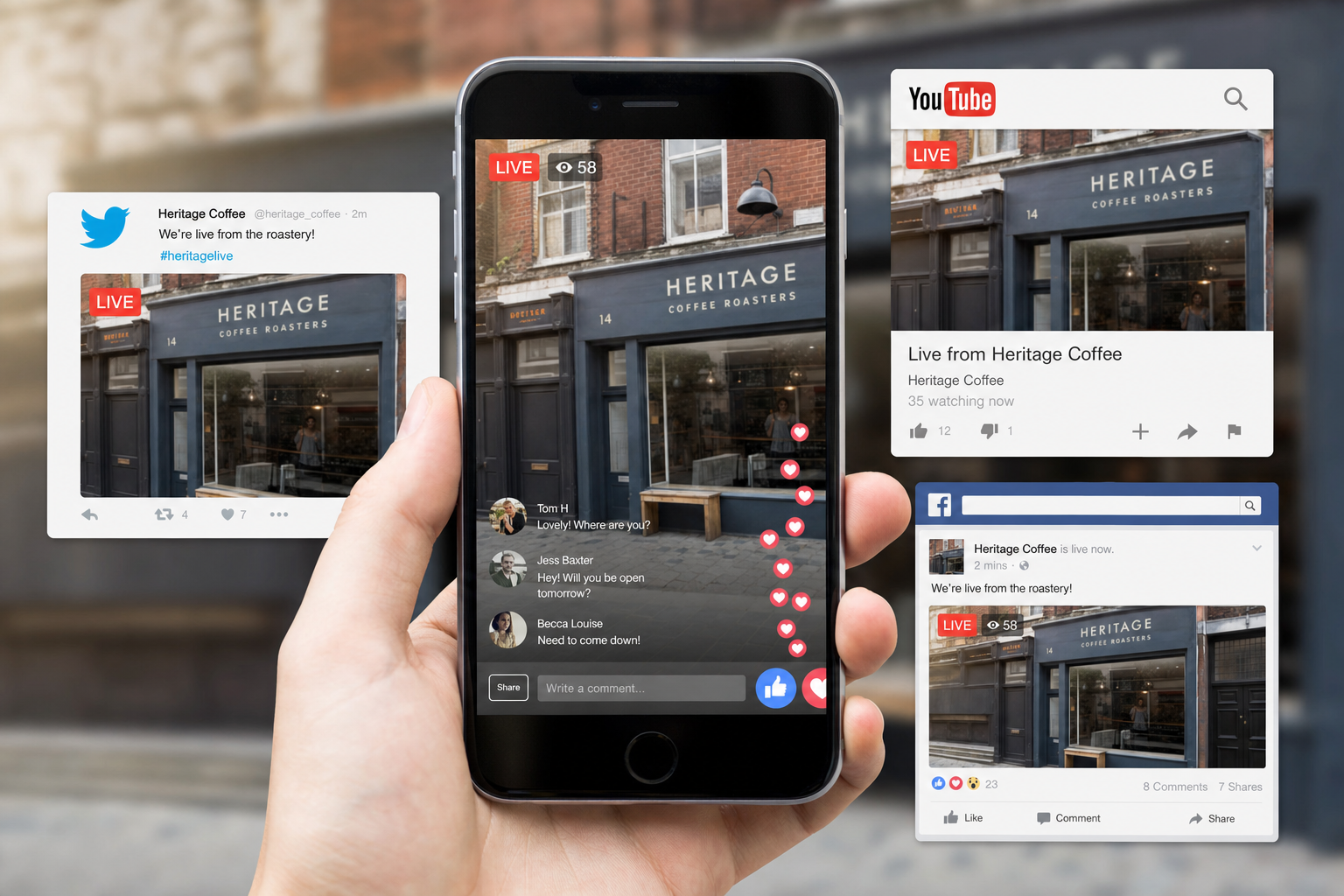
The growth of smartphones, faster mobile connections and social platforms built around instant sharing has made live broadcasting far more accessible. Services such as Periscope, YouTube Live, Google Hangouts On Air and Facebook Live, which is beginning to roll out more widely, are helping audiences become familiar with the idea of watching and responding to video as it happens.
This matters because online attention is becoming harder to earn. A written update, image or promotional post can be missed very easily as people scroll through crowded social feeds. Live video, by contrast, can create a sense of occasion. It gives followers a reason to stop, watch and take part now rather than later.
There is also a useful psychological element. A live broadcast feels less rehearsed and more personal than heavily edited content. Viewers can see the people behind a business, hear tone of voice and make quicker judgements about trust, expertise and personality. For service-led businesses, that can be a significant advantage.
Live video marketing is not simply about being fashionable. Its value lies in helping a business show rather than tell. A retailer can demonstrate a new product range. A solicitor can host a short question-and-answer session on a common area of concern, without giving individual legal advice. A training provider can stream a short taster session. A restaurant can show preparation before a special event. A manufacturer can offer a controlled look at a process that customers rarely see.
Where live video fits within a digital strategy
Live video should not sit apart from the rest of your online marketing. It works best when it supports a broader strategy that includes a well-designed website, consistent branding, search engine optimisation, email marketing and social media planning.
A live broadcast may happen on a social platform, but the business objective should be clearer than simply gaining viewers. You may want to increase awareness of a new service, encourage enquiries, strengthen loyalty, support a product launch, provide expert guidance or bring people back to your website. The platform provides the moment; your wider digital presence helps convert interest into action.
Your website remains central. If somebody watches a live video and wants to learn more, they are likely to look for a relevant page, a contact form, a telephone number, a location page or further information about your services. If your website is slow, difficult to use on mobile or unclear about what you offer, the attention created by the broadcast may be wasted.
Before investing time in live video, check that key website pages are ready. Your homepage should clearly explain who you help and what you do. Service pages should be well structured and written in language your customers use. Contact details should be easy to find. If you are promoting an event, product or downloadable guide, create a dedicated landing page rather than expecting visitors to search for the right information themselves.
Search marketing also has a role. Live broadcasts themselves may be temporary, depending on the platform, but the ideas, questions and discussions they generate can be turned into search-friendly website content. A short live question-and-answer session could become a blog post. A product demonstration could be followed by a written guide. A recorded stream, where available and appropriate, can be embedded or repurposed into a more permanent video resource.
Choosing the right live video platform
Different platforms suit different audiences and styles of communication. The right choice depends on where your customers already spend time and what you want the broadcast to achieve.
Periscope is closely connected with Twitter and is well suited to immediate, public broadcasting. It can work well for announcements, behind-the-scenes footage, live commentary from events and short interactive sessions. Because it is tied to an existing social conversation, it can help businesses reach people who already follow them on Twitter and may attract additional viewers through timely sharing.
YouTube Live is useful for more structured broadcasts, particularly where a business already uses YouTube as part of its content marketing. It may suit webinars, product demonstrations, educational sessions or longer-form presentations. YouTube also has the benefit of being familiar to many users and can support a more permanent video presence.
Google Hangouts On Air can be useful for interviews, panel discussions and informal webinars. It allows several people to take part from different locations, which can be helpful for professional services, training providers, membership organisations and businesses that want to bring in guest expertise.
Facebook Live is still developing as a mainstream business opportunity, but it is worth watching closely because many businesses have already built communities on Facebook. As availability expands, it may become particularly useful for reaching existing followers through a familiar social environment.
The important point is not to chase every new platform. A single well-planned live session on the right channel is more valuable than an unfocused presence everywhere. Consider your audience, the type of content you can produce confidently and how each platform fits with your existing digital marketing activity.
Practical ideas for business live streams
Live video does not need to be complicated. The strongest formats are often simple, useful and repeatable. A business owner or marketing manager should begin with topics that answer genuine customer questions or reveal something meaningful about the organisation.
- Question-and-answer sessions: Invite customers to submit questions in advance and answer a selection live. This works well for professional services, healthcare-related businesses, education providers and any organisation where customers need reassurance before making contact.
- Product demonstrations: Show how a product works, compare features or explain the best way to use it. This is particularly useful for retailers, equipment suppliers and businesses selling items that benefit from explanation.
- Behind-the-scenes tours: Offer a controlled look at your workshop, studio, kitchen, showroom or event preparation. This can build trust and give your brand more personality.
- Event coverage: Stream short updates from exhibitions, launches, charity events or local business gatherings. Rather than trying to film everything, focus on useful highlights.
- Expert interviews: Speak with a member of your team or a relevant guest about a topic your audience cares about. Keep it focused and avoid turning it into a sales pitch.
- Training tasters: Share a short practical lesson that demonstrates the quality of your expertise and encourages viewers to explore your full services.
Whatever the format, keep the viewer in mind. People are more likely to watch and share content that helps them solve a problem, understand a subject or feel closer to a brand. A live broadcast that exists only to promote a business is unlikely to hold attention for long.
Planning a live broadcast properly
The informal nature of live video can be misleading. Although the content may feel spontaneous, the best broadcasts are usually planned in advance. You do not need a full script, but you do need a clear structure.
Start with a simple objective. Decide what you want viewers to know, feel or do after watching. Then choose one main topic and outline the key points you want to cover. If more than one person is involved, agree who will speak, who will monitor comments and who will deal with any technical issues.
Promotion is also important. Tell your audience when you will be live and why they should watch. Use your website, email list and social media channels to announce the broadcast. If the topic is particularly useful, consider creating a short blog post beforehand with the date, time and subject, then update it afterwards with key points or a recording if one is available.
Check your setting before you begin. Good lighting, clear sound and a stable internet connection make a significant difference. A live stream does not need expensive production, but viewers should be able to hear and see you properly. Avoid noisy rooms, cluttered backgrounds and weak mobile signals where possible.
Brand presentation still matters. Think about what appears in the frame. A clean background, visible signage, appropriate clothing and a professional tone all contribute to how your business is perceived. The aim is not to remove personality, but to make sure the experience reflects the quality of your organisation.
How live video can support SEO and website content
Search engines cannot understand a live conversation in the same way that a person can, so it is important to connect live video activity with written and structured website content. This is where many businesses can gain longer-term value from a broadcast.
After a live session, review the questions asked by viewers. These questions often reveal the language customers use when searching online. They can inspire blog posts, frequently asked questions pages, service page improvements and future video topics. If several people ask the same question during a broadcast, there is a good chance other potential customers are searching for similar answers.
Where a recording is available, add it to a relevant page with an introduction, summary and clear next steps. Do not rely on the video alone. A written explanation helps visitors scan the content, supports search visibility and makes the page more useful for people who cannot watch immediately.
Use descriptive page titles, headings and natural wording around the subject. If your live video is about choosing the right accountancy support for a small business, for example, build a page or article that clearly reflects that topic. Avoid stuffing the page with repeated keywords. Search marketing is more effective when useful content is organised clearly and written for real people.
Live video marketing can also improve engagement signals indirectly. If a broadcast drives visitors to a useful page, encourages them to explore further and supports enquiries, it is contributing to the overall strength of your digital presence. The key is to make sure the journey from social platform to website is simple and relevant.
Domain names, campaign pages and brand consistency
Some businesses may be tempted to register a new domain name for every campaign or live video project. In most cases, it is better to strengthen your main website rather than spreading attention across several small sites. A clear page on your existing domain can benefit from your established brand, existing search visibility and consistent user experience.
There are occasions when a separate domain may be useful, such as a distinct event, campaign or product with its own identity. If you do register a domain, keep it short, memorable and easy to spell. For UK businesses, consider whether a .co.uk, .uk or .com address best fits your audience and brand. Avoid hyphens where possible, and be careful with names that could be misheard when spoken aloud during a video.
Think about protection as well as promotion. If your brand name is important, it may be sensible to secure relevant domain variations so that customers can find you easily and your brand remains consistent. However, avoid registering names without a clear purpose. A domain only has marketing value when it supports a properly planned website or campaign.
When mentioning a web address during a live stream, make it simple. A short, memorable page address is far easier for viewers to remember than a long, complicated URL. If you are asking people to visit a page after the broadcast, repeat the address clearly and include it in the accompanying social post where possible.
Measuring success without getting distracted
Live video platforms can encourage businesses to focus heavily on viewer numbers, hearts, likes, comments and shares. These figures are useful, but they do not tell the whole story. A smaller audience of relevant prospects may be more valuable than a large audience with little interest in your services.
Measure success against the objective you set at the beginning. If the aim was awareness, look at reach, shares and new followers. If the aim was engagement, consider comments, questions and repeat attendance. If the aim was lead generation, look at visits to the relevant website page, contact form submissions, telephone enquiries or email sign-ups following the broadcast.
It is also worth reviewing quality. Did the topic hold attention? Were the questions useful? Did the broadcast reflect your brand well? Were there technical problems that need fixing next time? Treat each live session as a learning opportunity rather than a one-off performance.
Consistency can help. A monthly live question-and-answer session or a regular product demonstration slot gives your audience something to expect. It also makes planning easier for your team and provides a steady stream of ideas for future website and social content.
Using live video with confidence
Live video marketing is not right for every message, but it is a valuable addition to the digital marketing toolkit. It gives businesses a way to be more visible, approachable and responsive. Used well, it can build trust before a customer ever makes an enquiry.
The best approach is to start with a focused, manageable idea. Choose a topic your audience cares about, select the platform that best fits your community, prepare properly and make sure your website is ready to support the interest you create. Keep the broadcast useful, human and relevant.
As live video becomes more familiar, audiences will expect higher standards of clarity and purpose. Businesses that experiment now, while keeping strategy at the centre, will be better placed to use the format effectively as part of their wider online presence. Whether you are planning a new website, improving your search visibility or refreshing your social media strategy, live video can help your brand reach people in a more immediate and memorable way.