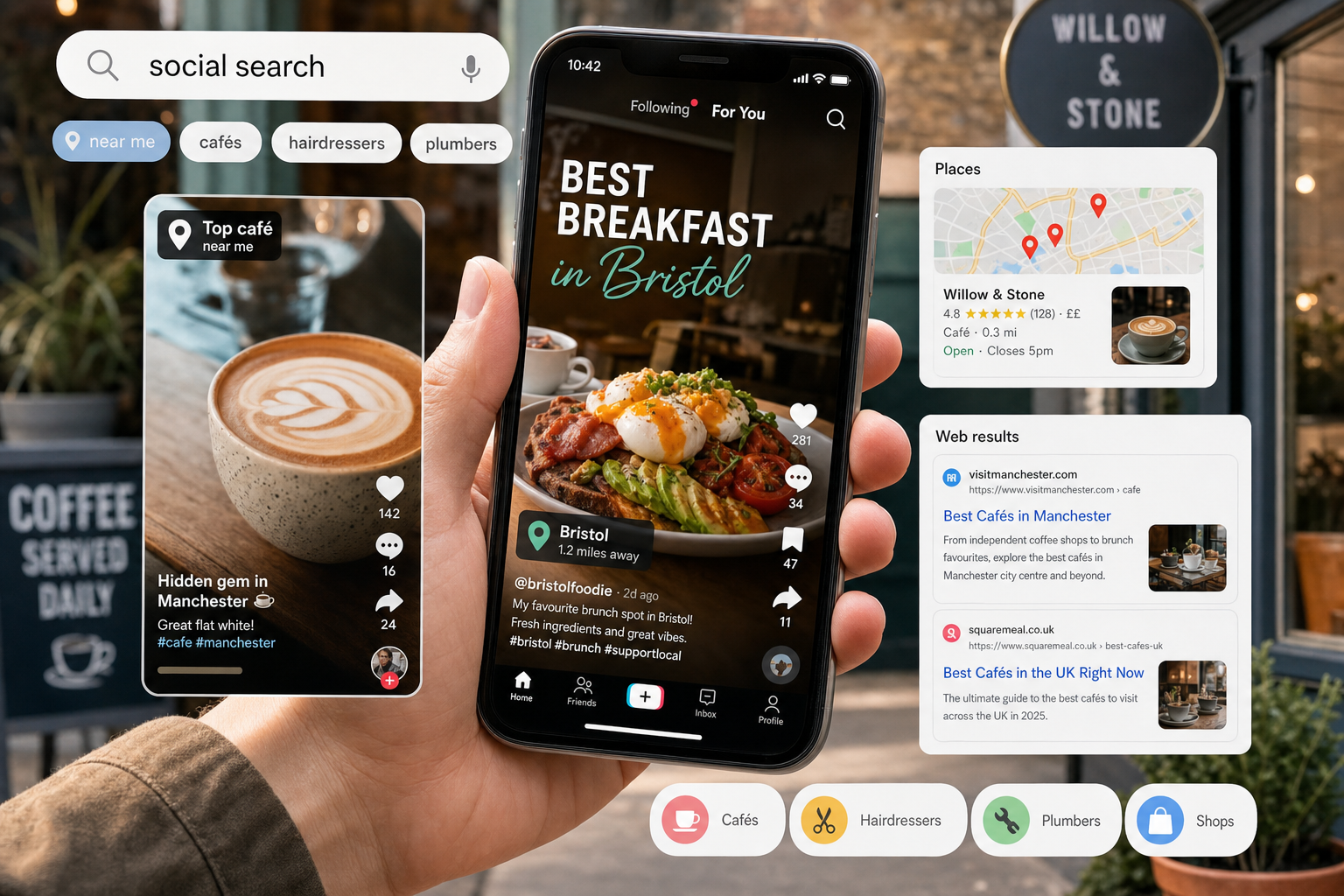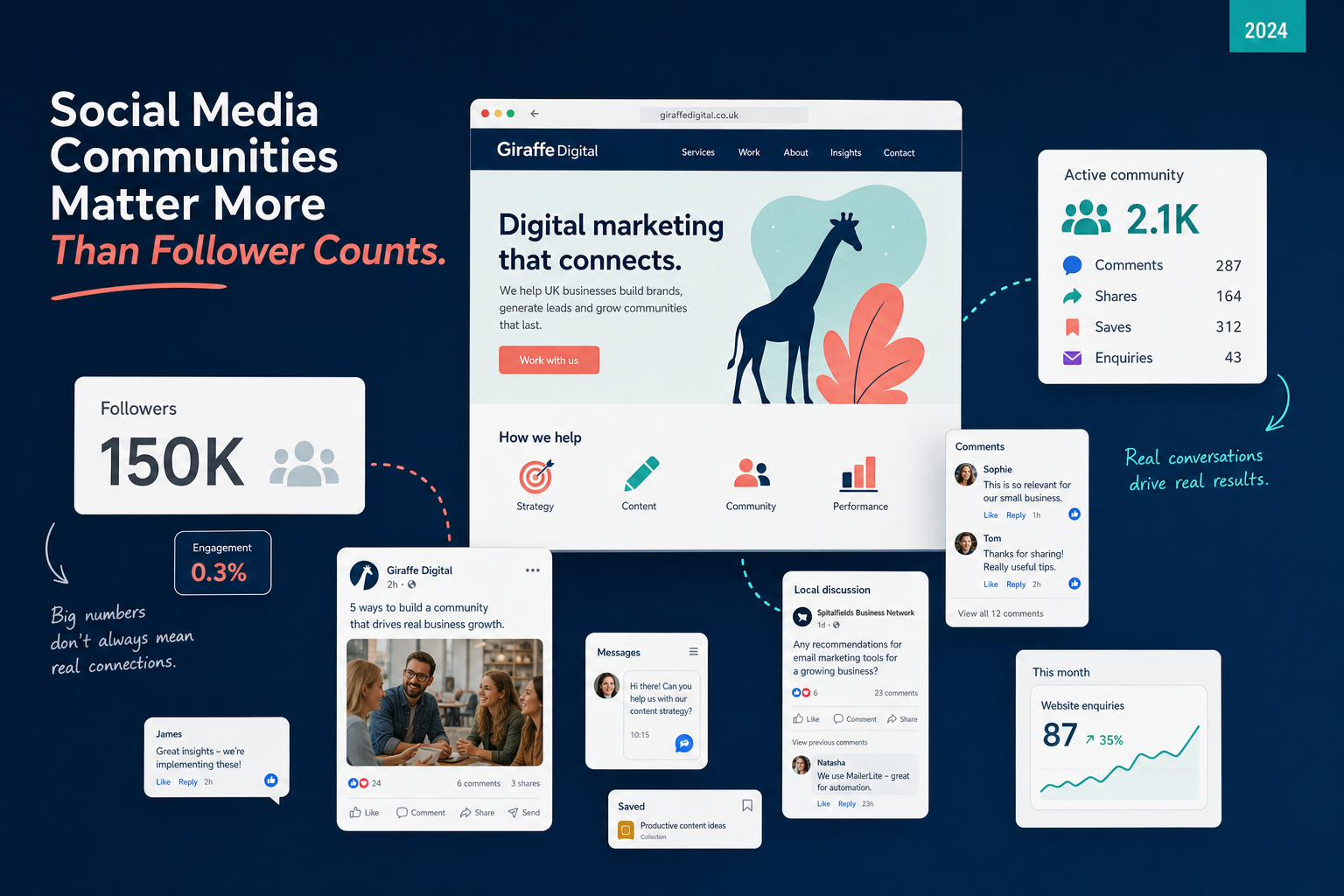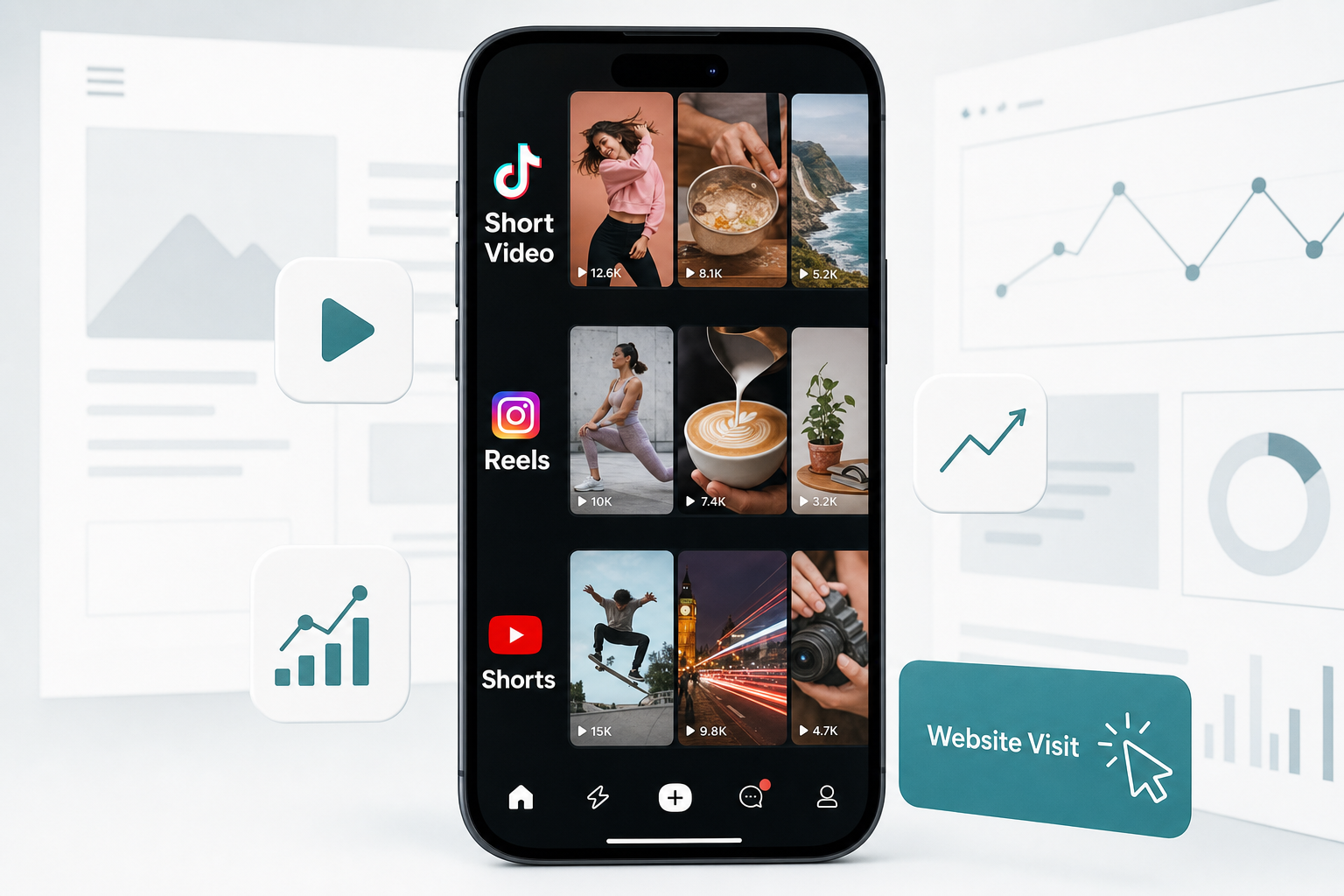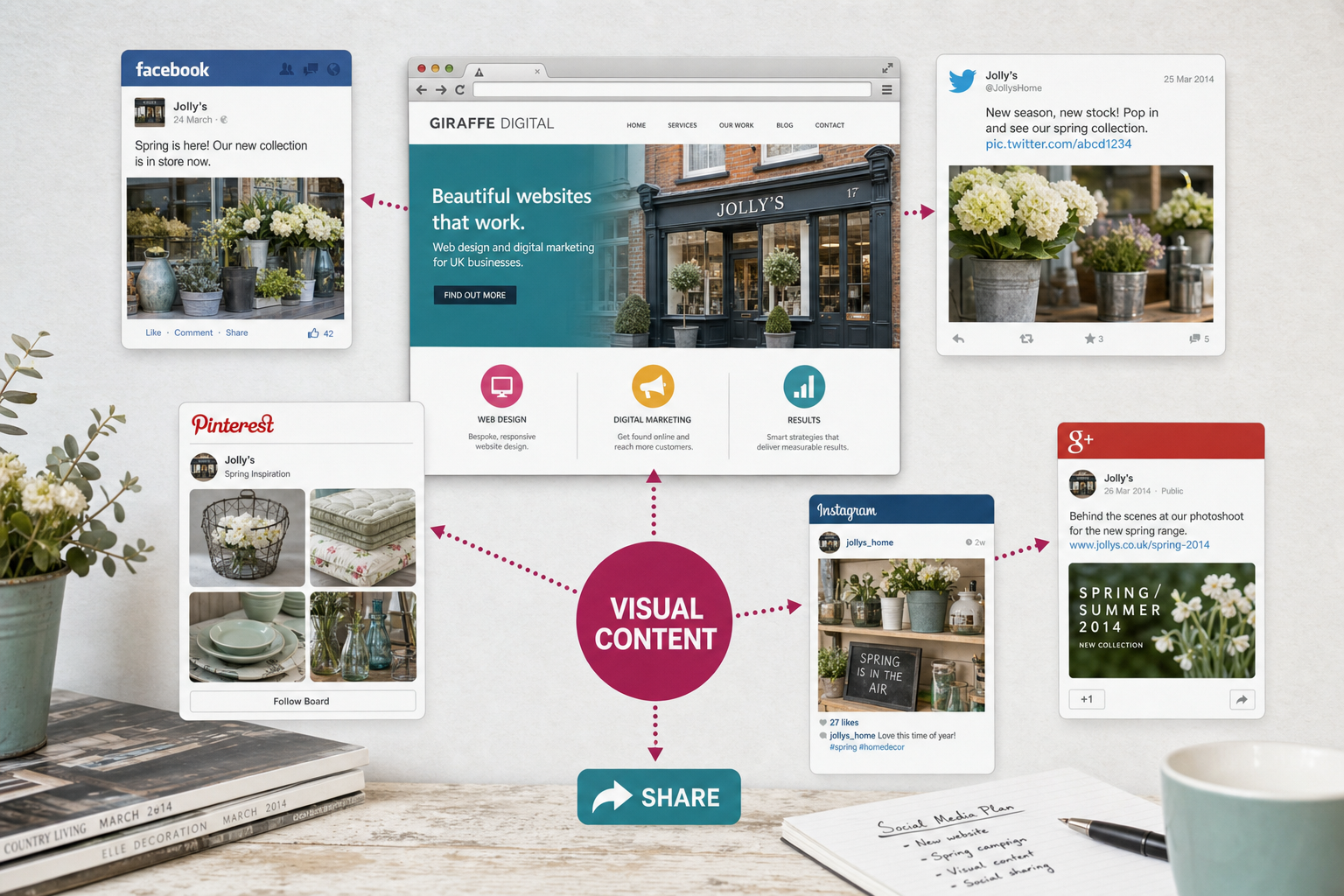
Visual content marketing is becoming an essential part of how businesses communicate online. Social networks are increasingly busy, customers are scrolling quickly, and a well-planned image, graphic or short video can often explain an idea faster than a paragraph of text. For UK business owners, this is not simply a matter of making posts look attractive. Good visual content can support brand recognition, website traffic, search visibility and customer trust when it is used with purpose.
Whether you run a local service business, an online shop, a professional practice or a growing organisation with several locations, your audience is likely to see your brand across more than one channel before making an enquiry. They may visit your website, notice a post on Facebook, see an image shared on Twitter, browse a board on Pinterest, or compare your tone and presentation with those of your competitors. Consistent, useful visual content helps those touchpoints feel connected.
Why social media is becoming more visual
Social media platforms are built around attention. Text still matters, particularly for clarity, search and calls to action, but the first thing many people notice is the visual element. A photograph, illustration, infographic or video thumbnail gives a post shape. It provides context before the user has committed to reading the caption.
Facebook posts with strong imagery tend to stand out more clearly in a crowded News Feed. Twitter is no longer only a stream of short text updates; images and media previews can make a tweet more noticeable and more shareable. Pinterest is built entirely around visual discovery, making it particularly useful for products, interiors, fashion, food, events, crafts and lifestyle-led brands. Instagram, while still more mobile-focused, is becoming a useful place for brands with a clear visual style. Google+ and LinkedIn also reward presentable, well-structured content, especially when posts link back to useful articles or company updates.
The important point is not to chase every network for the sake of it. Instead, businesses should consider where their audience spends time and what sort of visual material will help that audience understand, remember or act upon the message.
How visual content improves engagement
Engagement is not just a vanity measure. Likes, comments, shares, retweets, repins and clicks all indicate that people have noticed and responded to your content. While not every interaction leads directly to an enquiry, regular engagement can increase familiarity with your brand and improve the chance that your next offer, article or announcement is seen by the right people.
Visual content helps engagement in several practical ways. Firstly, it improves stopping power. A post with a relevant image has a better chance of breaking the pattern of a fast-moving feed. Secondly, it improves understanding. A simple diagram can explain a process, a before-and-after photograph can show workmanship, and a short video can demonstrate a product in a way that text alone cannot. Thirdly, visuals make content easier to share. People are more likely to pass on something that looks useful, clear and well presented.
There is also a branding benefit. When your images use consistent colours, typography, photography style and tone, your business becomes more recognisable. This matters for organisations that are competing on trust as much as price. A solicitor, architect, accountant, tradesperson or training provider may not have a naturally glamorous product, but all can use visual content to communicate professionalism, approachability and expertise.
Types of visual content businesses can use
Visual content marketing does not have to mean producing expensive campaign material every week. Many effective visuals are simple, practical and based on information the business already has. The key is to create assets that are genuinely useful rather than decorative filler.
Photographs with a clear purpose
Original photography can be very powerful. For retailers, restaurants, venues and product-led companies, photographs can show details, finishes, sizes, textures and atmosphere. For service businesses, photographs can show completed projects, team members, premises, events or the steps involved in a process.
Where possible, avoid relying entirely on generic stock images. Stock photography can be helpful for blog headers or conceptual pieces, but overuse can make a business look indistinct. Original photographs, even when simple, often feel more credible. Make sure they are well lit, cropped carefully and suitable for the platform where they will be shared.
Infographics and simple diagrams
An infographic can turn complex information into a format that is easier to scan. This might include a step-by-step guide, a comparison, a timeline, a checklist or a set of key statistics. In 2014, infographics remain a strong link and share asset when they are well researched and not overloaded with tiny text.
For many businesses, a smaller graphic may be more suitable than a large infographic. A single useful chart, a process diagram or a short visual checklist can work well in a blog post and then be adapted for social sharing. The aim is to make the information clearer, not simply to make it bigger.
Short video and demonstrations
Video is increasingly accessible for businesses, especially for demonstrations, interviews, product explanations and event coverage. A short, focused video can help potential customers see how something works or understand the people behind a brand. It should be planned carefully, with clear sound, steady framing and a concise message.
For social media, the first few seconds matter. A video should open with a reason to keep watching. It should also have a clear title, description and link back to a relevant page on your website where viewers can take the next step.
Quote cards, tips and branded snippets
Short visual tips can work well when they are genuinely helpful. A gym might share a training tip, a garden designer might share a seasonal planting reminder, and an accountant might share a deadline prompt. These should not become repetitive or overly promotional. Use them to demonstrate expertise and encourage conversation.
Connecting visual content with website design
Social media engagement should not sit separately from your website. The most effective visual content marketing supports a wider digital journey. A user may first see a graphic on Facebook, click through to a blog post, browse your services and then make an enquiry. If the website feels inconsistent, slow or difficult to use, the value of the social post is reduced.
Your website should give visual content a proper home. Blog posts should include strong images, captions where useful, and clear formatting. Product pages should use quality photography and avoid forcing users to guess important details. Case studies should show the problem, the process and the result with relevant visuals. Service pages can benefit from diagrams that explain stages, options or benefits.
Responsive website design is also important. More people are accessing social media from mobile phones and tablets, so many social clicks will arrive on smaller screens. Images should resize cleanly, text should remain readable, and calls to action should be easy to find. A beautiful graphic that leads to a poor mobile experience will not deliver its full value.
Using visual content to support search marketing
Visual content can assist search marketing when it is planned properly. Search engines cannot interpret an image in the same way a person can, so the surrounding signals matter. Use descriptive file names before uploading images, rather than leaving them as camera-generated names. Add sensible alternative text that describes the image accurately. Place visuals near relevant copy, headings and captions so that the page has clear context.
Image file size also matters. Large images can slow a page down, particularly for users on mobile connections. Compress images appropriately and use the dimensions needed for the design. A faster website usually provides a better user experience, and user experience is closely linked with the performance of digital campaigns.
When publishing infographics or original resources, include supporting text on the page. A graphic alone may be attractive, but a written introduction, key points and a useful conclusion make the page more accessible and more relevant for search. If others share or reference your visual resource, make it easy for them to link back to the original page.
Social signals should not be treated as a simple shortcut to rankings, but a strong visual asset can help content earn attention. More attention can lead to more visits, more links, more brand searches and more enquiries. That is where visual content marketing and search marketing work best together.
Brand consistency across social platforms
Each social platform has its own habits, image sizes and audience expectations, but your brand should still feel consistent. This does not mean every image must look identical. It means your use of colour, tone, logo placement, photography and language should feel deliberate.
Create a simple visual approach that your team can follow. Decide how your logo should appear, which colours should be used, what type of imagery suits the brand, and how much text should be placed on graphics. Keep templates tidy and avoid clutter. A professional image with one clear message is usually stronger than a crowded design trying to say everything at once.
For a small business, this guidance can be brief. A one-page visual style guide is often enough to improve consistency. For a larger organisation, a more detailed set of brand guidelines may be necessary, especially if several people or departments publish content.
Practical ideas for UK business owners
If you are unsure where to begin, start with the questions customers already ask. Visual content is most effective when it solves real problems or removes uncertainty. A kitchen supplier could show layout options, materials and installation stages. A financial adviser could illustrate a planning process without giving individual advice. A hotel or venue could show room arrangements, local attractions and event details. A manufacturer could demonstrate quality control, product features or packaging options.
Useful visual content might include:
- Before-and-after images showing improvements, repairs, redesigns or transformations.
- Step-by-step graphics explaining how a service is delivered.
- Product photographs that show scale, detail and use.
- Event images that capture atmosphere and participation.
- Team photographs that make the business feel more approachable.
- Checklists helping customers prepare for a meeting, purchase or project.
- Short demonstrations answering common questions.
Plan these ideas in a simple content calendar. Link them to seasonal demand, product launches, common customer concerns and website updates. This helps avoid last-minute posting and ensures that visuals support commercial priorities rather than existing as isolated social activity.
Domain names, landing pages and campaign ownership
Visual campaigns often work best when they direct people to a clear destination. For some businesses, this may be a page on the main website. For others, a memorable campaign domain or dedicated landing page may be useful, particularly for events, product launches or local promotions.
When considering domain registration, choose a name that is easy to read, easy to say and difficult to misspell. A shorter domain is usually better than one packed with hyphens or unnecessary words. For UK businesses, consider whether a UK-focused domain extension is appropriate for the audience, while also thinking about long-term brand protection. Register domains in the name of the business, keep renewal details up to date, and make sure ownership is properly documented.
A campaign domain should not become a dead end. It should lead to a well-designed landing page with relevant imagery, concise copy and a clear action. If the campaign ends, plan what will happen next. Redirecting visitors to a relevant page on the main website is usually better than leaving an unused page online with outdated information.
Measuring whether visual content is working
Measurement should go beyond counting likes. Social engagement is useful, but it needs to be considered alongside website visits, enquiries, email sign-ups, downloads, phone calls and sales where appropriate. Use web analytics to see which social platforms are sending traffic and whether visitors are taking meaningful actions after they arrive.
It is also worth reviewing which types of visual content attract the best response. Do project photographs perform better than tips? Do infographics earn more shares than product images? Does video encourage more time on site? These answers will vary by sector, so treat each post as a learning opportunity.
A simple monthly review can be enough for many businesses. Record what was published, where it was shared, what response it received and whether it supported a business objective. Over time, this builds a clearer picture of what your audience values.
Quality matters more than noise
It is tempting to post more often simply to remain visible, but poor-quality visuals can weaken a brand. Blurry photographs, cluttered graphics, inconsistent colours and vague messages all make it harder for customers to trust what they are seeing. It is better to publish fewer, stronger pieces of content than to fill every channel with rushed material.
Good visual content marketing begins with a clear purpose. Decide what the audience needs to know, what action you want them to take, and how the visual will make the message easier to understand. When images, design, copy and website experience work together, social media becomes more than a broadcasting tool. It becomes a route into a more complete brand experience.
For UK businesses investing in website design, SEO, branding or digital strategy, visual content should be treated as part of the overall plan. A carefully designed image can attract attention, but a consistent strategy turns that attention into recognition, trust and measurable opportunities.