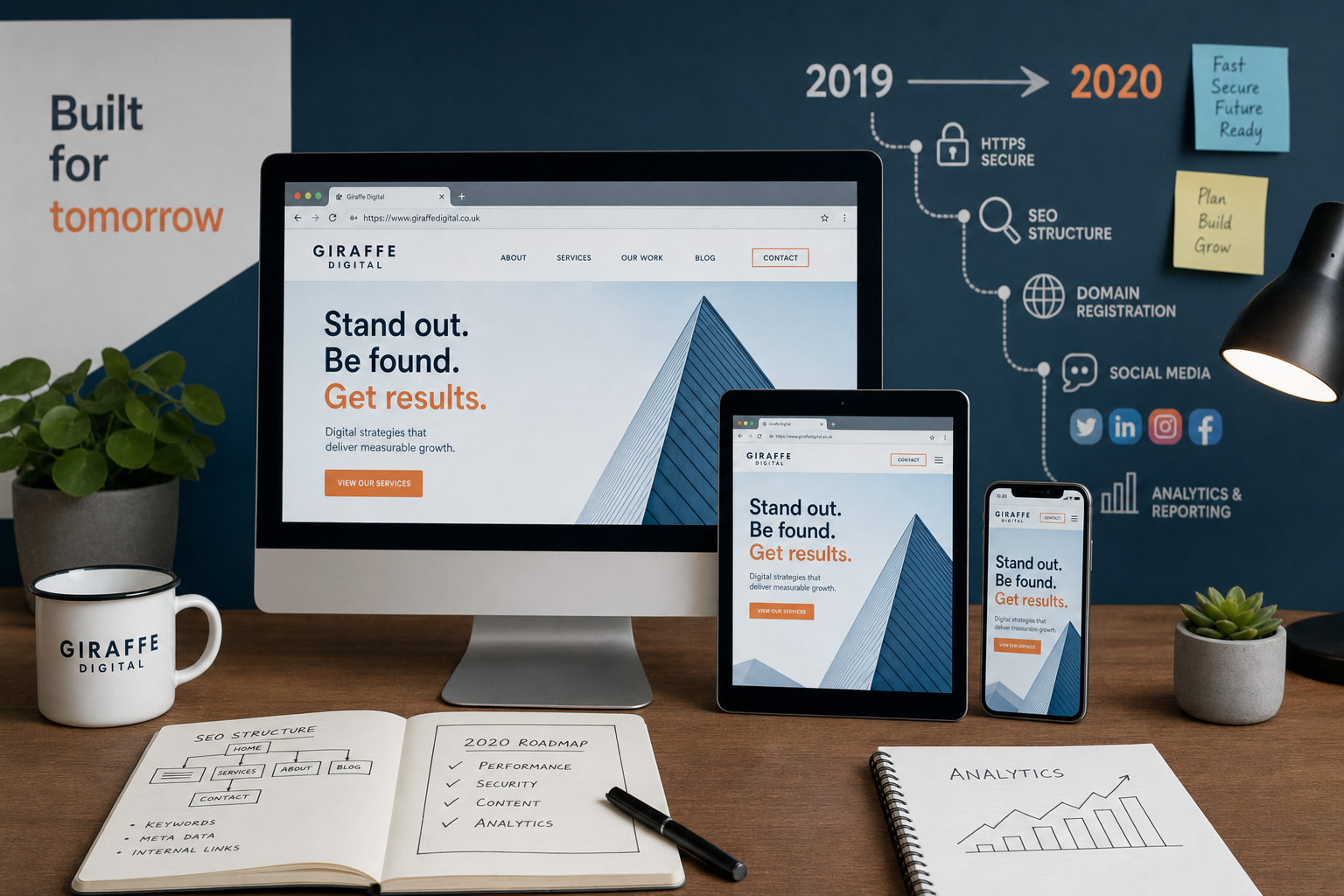
A business website should not be treated as a finished brochure that is replaced every few years when it starts to look tired. For many UK businesses, it is the centre of sales enquiries, customer support, recruitment, brand trust and local discovery. A future-ready website is built with enough flexibility to adapt as customer behaviour, search engines, devices and marketing channels continue to change. The aim is not to chase every new idea, but to create a stable digital foundation that can keep improving without requiring a complete rebuild every time the market moves on.
As we approach a new decade, the most valuable websites will be those that are fast, useful, measurable, secure and easy to manage. Good design still matters, but design alone is not enough. A site needs to work hard for the business behind it: helping the right people find you, understand what you offer, trust your organisation and take the next sensible step.
What makes a future-ready website
A future-ready website is planned around business objectives rather than visual trends alone. Before thinking about colours, layouts or animations, it is worth asking what the website must achieve. Does it need to generate qualified enquiries, sell products, support existing customers, attract staff, explain a specialist service or strengthen local visibility? The answers should guide the structure, content, calls to action and technical choices.
Future readiness also means avoiding unnecessary limitations. A website should be built on a content management system that allows your team to update pages, add articles, publish case studies, manage landing pages and keep key information current. If every small change requires developer involvement, marketing becomes slower and opportunities can be missed.
At the same time, flexibility should not become complexity. Businesses are often tempted by excessive features, integrations and design effects that add little value. A practical website performs well for users and administrators alike. It should be simple enough to maintain, but robust enough to grow with new services, locations, campaigns and content formats.
Design for users, not just first impressions
Strong website design should make a business feel credible within seconds, but the best design is more than surface appearance. Visitors need to understand where they are, what the business does, who it helps and what they should do next. Clear navigation, readable typography, thoughtful page hierarchy and consistent branding all contribute to trust.
Mobile design is especially important. Many customers will first discover a business on a smartphone, whether through search, social media, maps or a shared link. A future-ready website should be responsive as standard, with menus, forms, images and calls to action that work comfortably on smaller screens. It is not enough for a site to shrink to fit a mobile display; it must be planned for mobile use from the outset.
Speed is also a design issue. Large images, unnecessary scripts and overcomplicated page elements can create a poor experience, particularly for users on mobile connections. Optimised images, sensible page layouts and clean development help visitors get the information they need without delay. Fast websites tend to support better engagement and can also contribute positively to search performance.
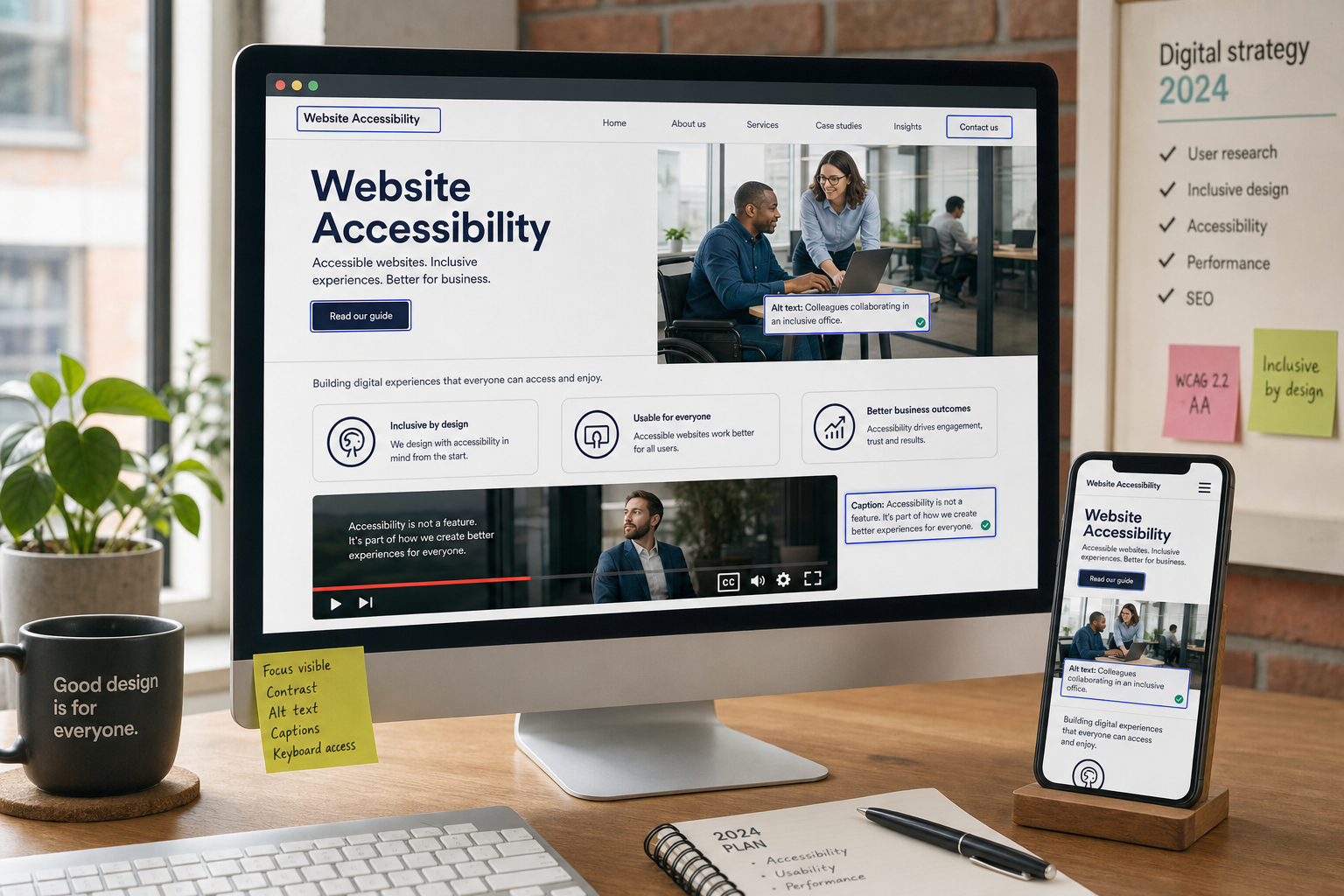
Accessibility should be part of the design conversation too. Clear contrast, meaningful headings, descriptive link text, keyboard-friendly navigation and properly labelled forms help more people use your website. Accessibility is not only a legal or ethical consideration; it improves usability for many everyday visitors, including people viewing on small screens, in bright light or under time pressure.
Build a content structure that can grow
A website prepared for the next decade needs a content strategy, not just a set of pages. The structure should reflect the way customers search, compare and make decisions. For example, a service business may need separate pages for each core service, supporting pages for sectors served, local pages where relevant, frequently asked questions and a regularly updated blog or insights section.
Good content answers real questions. Instead of relying on vague claims such as high-quality service or tailored solutions, useful pages explain what the service includes, who it is for, what problems it solves and what the next step involves. This helps users make informed decisions and gives search engines clearer context.
It is also important to avoid letting content become stale. Staff changes, service updates, old opening times, outdated accreditations and abandoned news sections can undermine confidence. A future-ready website should include an editorial routine: review key pages, refresh statistics, add new examples, improve older articles and remove content that no longer supports the business.
For search marketing, content should be organised around topics rather than isolated keywords. Keyword research remains useful, but pages should be written for genuine user intent. A potential customer searching for advice may need an informative guide, while someone searching for a specific service in a location may need a clear landing page with contact details, proof of expertise and a strong call to action.
Search visibility still starts with sound foundations
Search engine optimisation in 2019 is not about shortcuts. A sustainable approach combines technical quality, relevant content, authority and a good user experience. Search engines have become increasingly effective at understanding context and identifying pages that genuinely satisfy searchers, so thin content and mechanical keyword repetition are unlikely to serve a business well.
Technical SEO should be addressed during planning and development, not bolted on after launch. Important foundations include logical URL structures, clean navigation, optimised title tags and meta descriptions, correct heading hierarchy, XML sitemaps, sensible redirects and pages that can be crawled and indexed. If a new website replaces an old one, redirect planning is essential to preserve existing search value and avoid broken links.
Structured data can also help search engines understand content more clearly. Depending on the business, this may include organisation details, local business information, articles, products, reviews or frequently asked questions. Structured data should be used accurately and honestly, reflecting information that is visible and useful on the page.
Local search is particularly important for many UK businesses. Consistent name, address and telephone details across the web, well-written location pages, customer reviews and an up-to-date local business profile can all support visibility. Local SEO should be treated as an ongoing activity, especially for organisations with multiple branches, service areas or seasonal opening information.
Choose domains with long-term clarity
Domain registration is one of the earliest digital decisions a business makes, and it can affect branding, trust and marketing for years. A good domain is easy to spell, easy to say aloud, memorable and closely aligned with the organisation’s name or main trading identity. Avoid unnecessary hyphens, confusing abbreviations and spellings that customers are likely to mistype.
UK businesses should consider which domain extensions are most appropriate for their audience. A UK-focused organisation will often benefit from a domain that feels familiar and trustworthy to local customers, while businesses with international ambitions may want a broader option as well. The right choice depends on the brand, market and future plans.
It is sensible to register key variations where there is a clear reason to protect the brand, but domain registration should not become a collection of unused names with no strategy. The priority is to choose a primary domain and use it consistently across the website, email, printed materials, social media profiles and advertising.
Ownership and access are just as important as the name itself. The domain should be registered using appropriate business details, with renewal dates monitored carefully and access credentials stored securely. Losing control of a domain can disrupt email, search visibility, advertising campaigns and customer confidence, so it should be treated as a core business asset.
Technology choices should support marketing, not restrict it
The technology behind a website should be selected according to business needs, content requirements and future marketing plans. Some businesses need a straightforward content-managed site, while others require e-commerce, booking systems, customer portals, multilingual content or integration with stock, finance or customer relationship systems.
Whatever the platform, it should be secure, maintainable and supported. Regular updates, reliable hosting, SSL encryption, backups and sensible user permissions are essential. Security is not only an IT issue; a warning message in a browser or a compromised website can quickly damage trust and reduce enquiries.
Integration is becoming increasingly important. A website that works with email marketing, analytics, customer relationship management and advertising platforms can provide a clearer view of which activity is producing value. However, integrations should be planned carefully. Connecting tools without a clear purpose can create clutter and confusion rather than insight.
Progressive web app techniques, improved browser capabilities and richer mobile experiences are giving businesses more options, but not every organisation needs advanced functionality. The most important question is whether the technology improves the user journey or business process. If it helps customers complete a task, supports staff efficiency or creates measurable marketing value, it may be worth exploring. If it merely looks impressive, it should be challenged.
Connect the website with social media marketing
Social media should not sit separately from the website. For many businesses, social platforms are useful for awareness, community engagement, recruitment, event promotion and remarketing. The website remains the place where deeper information, conversion-focused pages and long-term search value can be developed.
A future-ready website should make it easy for visitors from social channels to continue their journey. Campaign links should lead to relevant landing pages, not simply the homepage. If a business promotes a particular service, guide, event or product, the landing page should match that message and provide a clear next step.
Content planning can also connect website activity with social media. A useful blog article can be turned into several social posts, a short video discussion, an email newsletter feature and a downloadable resource. This approach gives each piece of content more value and keeps messaging consistent across channels.
Tracking is important, too. Businesses should use analytics and campaign tagging where appropriate to understand which social activity is driving meaningful visits, enquiries or sales. Vanity metrics such as likes and impressions can be useful indicators, but they should not be the only measure of success. The key question is whether social media activity is supporting wider business objectives.
Measure what matters and keep improving
No website is truly future-ready if it is launched and then left alone. Digital marketing works best as an ongoing programme of measurement, learning and improvement. Analytics should be configured to track meaningful actions such as form submissions, phone link clicks, downloads, purchases, newsletter sign-ups or booking requests.
It is also worth reviewing how users move through the site. Which pages attract visitors? Where do people leave? Which calls to action are being used? Are mobile visitors behaving differently from desktop visitors? These insights can guide practical improvements, from rewriting a service page to simplifying a form or making a contact button more prominent.
Testing does not always need to be complicated. Small changes to headlines, page layouts, enquiry forms or supporting content can improve conversion rates over time. The most successful websites are often those that evolve steadily in response to evidence rather than opinion.
A future-ready website is not about predicting every change in the next decade. It is about creating a flexible, measurable and trustworthy platform that can adapt as customers, search engines and marketing channels change.
Planning your next website with confidence
For UK business owners, preparing a website for the next decade is a commercial decision as much as a creative one. The right website can improve visibility, strengthen brand perception, support sales conversations, reduce administrative friction and give marketing activity a reliable home. The wrong website can become a costly constraint, making every campaign harder than it needs to be.
Start with strategy: define what the website needs to achieve, who it must serve and how success will be measured. Build around users: make information clear, journeys simple and content genuinely helpful. Protect the foundations: choose a sensible domain, invest in secure technology, maintain search visibility and keep ownership details under control. Then continue improving, using real data and customer feedback to guide decisions.
A future-ready website does not need to include every possible feature on day one. It needs the right foundations, a clear direction and enough flexibility to grow. With thoughtful planning across design, technology, SEO, content and digital marketing, your website can become an asset that supports the business throughout the years ahead.