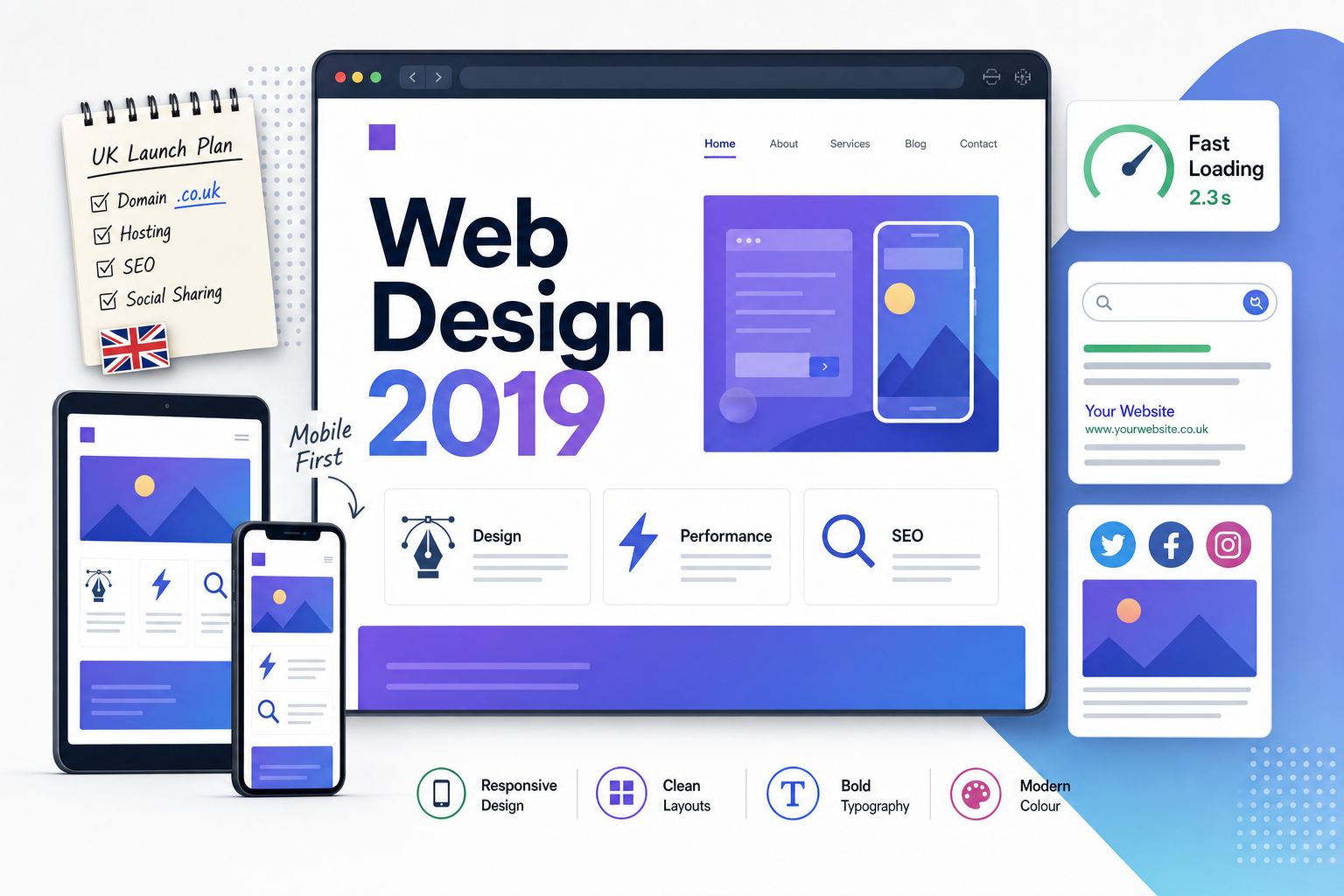
The Web Design Trends to Watch in 2019 are not just about visual style. For UK business owners, the most useful trends are those that make a website clearer, faster, easier to trust and more effective at turning visitors into enquiries or sales. A modern website should support search marketing, social media campaigns, brand credibility and the everyday needs of customers who expect to find information quickly on any device.
As competition online continues to grow, a website can no longer be treated as a static brochure. It needs to work as part of a wider digital marketing strategy, helping people discover your organisation through search, recognise your brand across social platforms and take the next step with confidence. The following trends are worth watching because they combine good design with practical commercial value.
Mobile-first design becomes the normal starting point
Mobile browsing has been important for years, but in 2019 it should be the default starting point for most website design projects. Many customers will first encounter your business on a phone, whether they have clicked from a search result, a social media post, an email campaign or a local directory listing.
A mobile-first website is not simply a desktop design squeezed onto a smaller screen. It means planning the most important content, calls to action and navigation around the way people actually use mobile devices. Menus should be simple, tap targets should be generous, contact details should be easy to find, and forms should ask only for the information genuinely needed.
This is particularly important for local businesses, hospitality brands, professional services, trades, retailers and appointment-led organisations. A visitor looking for opening times, directions, services or a phone number will not wait for a cluttered page to load or search through several layers of navigation.
From a search perspective, mobile usability is also closely linked to visibility. Search engines increasingly evaluate websites through a mobile lens, so a poor mobile experience can affect more than just conversion rate. It can make your wider SEO work less effective.
Speed, performance and leaner pages
Fast websites are not a luxury. They are a core part of user experience and search marketing. In 2019, businesses should expect web design discussions to include image optimisation, clean code, reliable hosting, sensible use of scripts and careful testing across devices.
Heavy pages can be especially damaging when visitors arrive on mobile connections. Large banner images, unnecessary animations, oversized video files and excessive third-party scripts can all slow down a site. A visually impressive page that takes too long to load can lose potential customers before they have read a single sentence.
Performance-led design does not mean creating bland websites. It means making deliberate choices. For example, a high-quality hero image may be worthwhile on a key landing page, but it should be properly compressed and sized. Animation can add polish, but it should not block content or distract from the message. Video can be powerful, but it should be used where it supports a clear business objective.
For business owners, the question to ask is simple: does each design element help the visitor understand, trust or act? If it does not, it may be adding weight without adding value.
Clearer brand personality through design
One of the strongest web design trends in 2019 is the move away from generic templates and towards more distinctive brand expression. Many websites have started to look very similar: a full-width hero image, a short slogan, three service boxes and a contact form. While these layouts can still work, they need to be supported by stronger branding, better copy and more memorable visual direction.
Businesses can stand out by using a consistent colour palette, considered typography, custom illustration, strong photography and a tone of voice that reflects how they want to be perceived. A solicitor, restaurant, software company and charity should not all feel the same online. Good design helps communicate trust, energy, expertise or creativity before a visitor has read every word.
Typography is especially important. Larger headings, generous spacing and readable body text can make content feel more premium and easier to digest. Serif typefaces are also returning in some sectors, often used alongside clean sans-serif fonts to create a more editorial or established feel.
The key is consistency. Your website, social media graphics, email marketing, printed materials and business stationery should feel connected. When someone moves from a social post to a landing page, the visual language should reassure them that they are in the right place.
Purposeful animation and micro-interactions
Subtle motion can make a website feel modern and responsive. Hover states, animated buttons, smooth transitions, progress indicators and small confirmation messages all help users understand what is happening. These details are often called micro-interactions, and they can make a site feel more polished when used carefully.
For example, a form button might change state once submitted, a menu icon might animate clearly when opened, or a product filter might show that results are updating. These touches reduce uncertainty and make the interface feel more intuitive.
However, animation should not become decoration for its own sake. Too much movement can feel distracting, slow down the page or cause accessibility issues for some users. The best approach is to use motion to guide attention, explain change or confirm an action.
Content-led layouts for better SEO and conversions
Design and content need to be planned together. A beautiful website with thin, vague or badly structured content will struggle to perform in search and may not persuade visitors to enquire. In 2019, more effective website design will be shaped around clear messaging, useful page structure and well-written content.
Service pages should answer real customer questions: what you do, who you help, where you operate, what makes you credible and what the next step involves. Product pages should provide enough information for confident decision-making. About pages should go beyond generic claims and show personality, experience and values.
Good content structure also supports SEO. Sensible headings, descriptive page titles, internal links and focused copy help search engines understand each page. This does not mean stuffing pages with repeated keywords. It means using natural language, covering the topic properly and matching the intent behind likely searches.
For example, a business targeting local customers should consider location-specific content where relevant, accurate contact information and clear references to the areas served. A business selling specialist services should explain those services in enough depth to be useful, rather than relying only on short promotional statements.
Trust signals and GDPR-aware design
Trust has become a major part of digital decision-making. Visitors are more aware of how their data is used, particularly following GDPR. In 2019, websites should be transparent about privacy, cookies, contact forms and marketing consent.
This does not mean overwhelming visitors with legal language on every page. It means using clear privacy notices, honest form labels and straightforward consent options where needed. If someone is signing up to a newsletter, they should understand what they are signing up for. If a form collects personal information, the process should feel professional and secure.
Other trust signals remain equally important. These may include testimonials, case studies, professional accreditations, clear contact details, team information, secure browsing through HTTPS and well-maintained content. Out-of-date pages, broken links and poor spelling can all reduce confidence.
For businesses in competitive sectors, trust can be the difference between an enquiry and a lost opportunity. Web design should make credibility visible without making the page feel cluttered.
Accessibility and inclusive design
Accessible design is becoming more widely recognised as a mark of quality. A website should be usable by as many people as possible, including those with visual, motor, cognitive or hearing impairments. It is also good for everyday usability, because accessible websites tend to be clearer, better structured and easier to navigate.
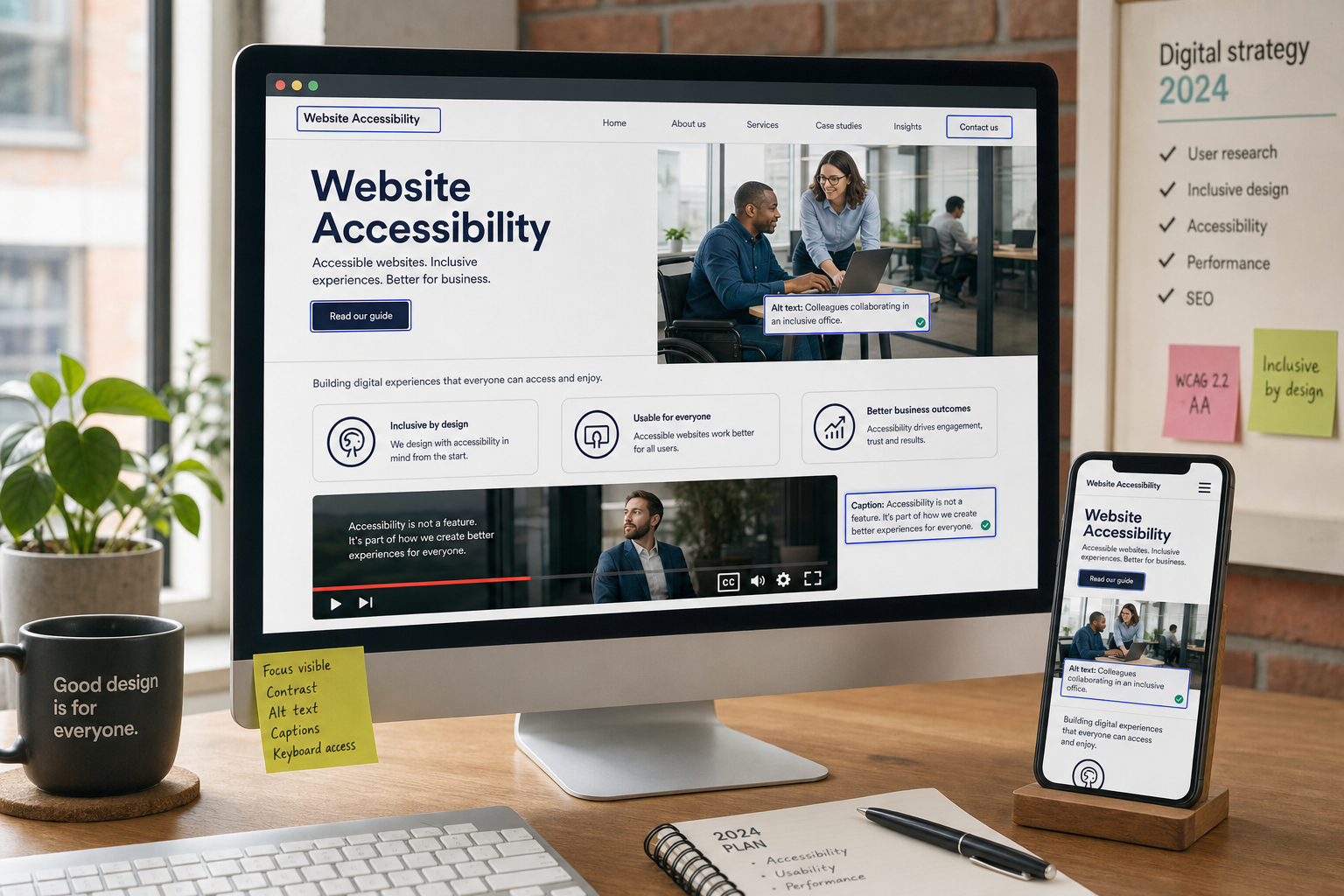
Practical steps include strong colour contrast, readable font sizes, meaningful link text, keyboard-friendly navigation, descriptive alternative text for important images, and captions or transcripts for key video content. Forms should have clear labels and helpful error messages.
Accessibility should be considered from the start of a project rather than treated as a final check. It influences colour choices, layout, interactive elements and content structure. For UK businesses, it also demonstrates professionalism and care for a wider audience.
Video, photography and visual storytelling
Visual content continues to be valuable in 2019, particularly when it helps customers understand a business quickly. Authentic photography can be far more persuasive than generic stock imagery, especially for service-led organisations where people want to know who they may be working with.
Short video can also support website performance when it has a clear purpose. A brief introduction, product demonstration, venue walkthrough or customer guidance video can help explain information that might otherwise take several paragraphs. It can also be repurposed for social media marketing, giving your campaigns more consistent creative material.
That said, video should not be used just because it is fashionable. It needs to be planned, edited and presented in a way that supports the user journey. Autoplaying sound, slow-loading backgrounds and vague brand videos can frustrate visitors. Clear, useful and well-compressed content will usually perform better.
Social media and website design working together
Social media marketing should not sit separately from the website. In 2019, businesses should think carefully about how social campaigns and website journeys connect. If a visitor clicks from a Facebook, Instagram, LinkedIn or Twitter post, the destination page should match the promise of that post.
For example, if a social campaign promotes a seasonal service, the landing page should lead with that service rather than sending visitors to a generic homepage. If a post highlights a guide or resource, the page should make that content easy to access. This improves user experience and makes campaign measurement clearer.
Websites can also support social activity by providing useful content worth sharing. Blog posts, guides, FAQs, galleries, product updates and event pages all create opportunities for social distribution. The strongest digital strategies use the website as the central hub, with social channels helping to attract attention and start conversations.
Smarter domain and naming decisions
Domain registration is often treated as a quick administrative task, but it can have a long-term impact on brand clarity and marketing. A good domain name should be easy to say, easy to spell, memorable and appropriate for the business. For UK organisations, a relevant UK domain can still be a strong trust signal, particularly where customers expect a local or national presence.
Businesses should avoid overly long domains, awkward hyphens and names that are easily confused with competitors. It is also worth thinking about how the domain will appear in email addresses, printed materials, radio mentions and social media profiles. A name that looks clever on paper may be difficult to communicate in conversation.
Where possible, protect important variations of your brand name and keep registration details organised. Domain ownership should be held securely and renewed reliably. Losing access to a domain can cause serious disruption to websites, email, search visibility and customer trust.
It is also sensible to align domain decisions with brand and SEO strategy. A keyword-rich domain may sound attractive, but it should not come at the expense of credibility or long-term brand value. In most cases, a clear and trustworthy brand name will serve a business better than a forced phrase designed only for search engines.
Technology choices that support future growth
The technology behind a website matters because it affects performance, security, editing, maintenance and scalability. In 2019, businesses should choose platforms and development approaches based on their needs rather than following trends blindly.
A small brochure website, an e-commerce store, a membership platform and a lead generation site all require different planning. Content management should be straightforward for the team using it, but the website also needs proper technical foundations. Clean development, secure configuration, regular updates and reliable backups are essential.
Modern front-end techniques such as responsive design, flexible layouts and scalable graphics allow websites to look sharp across a wide range of screens. Progressive enhancement is also a useful principle: provide a strong core experience first, then add richer features where the device and browser can support them.
Businesses considering more advanced features, such as live chat, booking systems, customer portals or e-commerce integrations, should think carefully about the user journey and operational impact. A feature is only valuable if it helps customers and can be managed properly by the business.
Practical steps for business owners planning a website in 2019
If you are reviewing your website this year, start with objectives rather than visuals. Decide what the site needs to achieve: more enquiries, better-quality leads, online sales, stronger recruitment, clearer service information or improved brand perception. Design choices should then support those goals.
- Review your analytics: Look at popular pages, mobile usage, traffic sources and where visitors leave the site.
- Test your website on real devices: Check speed, readability, forms, menus and calls to action on phones and tablets.
- Audit your content: Remove outdated information, expand thin pages and make key services easier to understand.
- Check technical basics: Ensure HTTPS is in place, redirects work correctly and search engines can crawl important pages.
- Align marketing channels: Make sure SEO, social media, email and paid campaigns send visitors to relevant pages.
- Plan for maintenance: A successful website needs updates, security checks, fresh content and regular performance reviews.
The best web design trends in 2019 are the ones that make websites more useful, trustworthy and commercially effective. Strong design should not chase novelty at the expense of clarity. Instead, it should help customers understand your business, feel confident in your offer and take action without friction.
For UK business owners, this is an ideal time to review whether your website still reflects your brand, supports your marketing and meets the expectations of modern users. A well-planned website can become the centre of your digital activity, connecting search, social media, content, technology and customer experience into one coherent platform.