Many UK businesses have changed how they sell, serve customers and communicate during 2020. Websites that were once treated as digital brochures are now expected to answer questions, generate enquiries, support online sales and reassure visitors before they make contact. That shift has made trust-based web design more important than ever. A trustworthy website does not rely on one badge, one testimonial or one attractive homepage. It combines clear design, useful content, reliable technology and consistent digital marketing so that visitors feel confident at every stage.
For business owners reviewing their website in 2020, the challenge is not simply to look modern. The real goal is to remove doubt. A potential customer may be comparing you with several competitors, checking your social media, looking at reviews, reading your delivery information or deciding whether your business looks established enough to contact. Good Website Design for Trust After Rapid Digital Change should support that decision with clarity, speed, transparency and professionalism.
Why trust matters more after rapid digital change
Digital behaviour has moved quickly. Customers who previously preferred phone calls, trade shows, printed brochures or face-to-face appointments are now more comfortable researching and buying online. At the same time, they are also more cautious. They have seen poor online experiences, confusing checkout processes, delayed responses and websites that do not match the claims made in advertising.
Trust-based web design helps bridge the gap between interest and action. It gives visitors enough confidence to continue reading, submit an enquiry, book a consultation, sign up to a mailing list or complete a purchase. This is particularly important for service businesses, professional firms, local companies and B2B organisations where the buying decision often involves judgement, reassurance and timing rather than an instant transaction.
A trusted website usually communicates four things quickly: who you are, what you do, who you help and what the visitor should do next. If any of those points are unclear, people may hesitate. If the page is slow, dated, difficult to use on mobile or filled with vague claims, they may leave before your sales team has any opportunity to help.
The foundations of trust-based web design
Trust begins with the basics. A website does not need to be overcomplicated to be credible, but it does need to feel intentional. Visitors notice whether pages are consistent, whether the copy sounds genuine and whether the experience matches the standard they expect from a serious business.
Clear visual identity
Your logo, colours, typefaces, imagery and layout should feel consistent from page to page. Inconsistent design can make even a capable business appear disorganised. A strong visual identity helps people remember you and reassures them that they are dealing with a real, established organisation.
Imagery also matters. Generic stock photography can be useful in moderation, but it should not be a substitute for authenticity. Where possible, include real team photography, images of your premises, examples of your work, product photography or relevant visual explanations. If you use illustrations or icons, keep the style consistent and avoid anything that feels decorative but unhelpful.
Plain, useful copy
Trustworthy websites explain things clearly. Avoid relying on broad claims such as being innovative, passionate or customer-focused unless you support them with specific evidence. A stronger approach is to explain what you provide, how your process works, what customers can expect and what makes your service suitable for their situation.
For example, a vague statement such as we deliver leading digital solutions is less reassuring than a practical explanation of the services offered, the types of businesses supported and the next steps after an enquiry. Clear copy improves both user confidence and search visibility because it helps search engines understand what each page is about.
Visible contact and company information
Visitors should not have to search for basic information. Make contact details easy to find, especially on service pages and near calls to action. For many UK businesses, this may include a telephone number, email address, contact form, location, opening hours or service area. If you operate by appointment or work nationally, say so clearly.
An About page is also valuable. It should do more than repeat marketing language. Use it to explain your background, values, team, experience and approach. People buy from businesses they feel they can understand. Even in B2B markets, there is still a human decision behind the enquiry.
Designing pages that reduce hesitation
Every important page should help visitors move from uncertainty to confidence. This is especially true for homepages, service pages, product pages, landing pages and contact pages. Each one should answer likely questions before they become barriers.
Use page structure to guide decisions
A well-structured page usually starts with a clear headline, a short explanation of the offer and a sensible next step. After that, it should provide supporting information in a logical order. This may include benefits, service details, examples, frequently asked questions, testimonials and contact options.
Good design uses headings, spacing and short sections to make information easier to scan. Many visitors will not read every word on their first visit. They will scan for signs that you are relevant, credible and easy to deal with. If the page is dense, cluttered or dominated by internal terminology, that reassurance is harder to find.
Make calls to action specific
Calls to action should be clear and appropriate to the level of commitment required. A visitor who is early in their research may not be ready to request a proposal, but they might download a guide, read a case study or ask a question. A visitor on a detailed service page may be ready to book a call or send an enquiry.
Useful calls to action include phrases such as request a consultation, ask about this service, view our work or send us your brief. The wording should match what happens next. If a button says someone can book a call, the following step should make that process simple.
Show proof in the right places
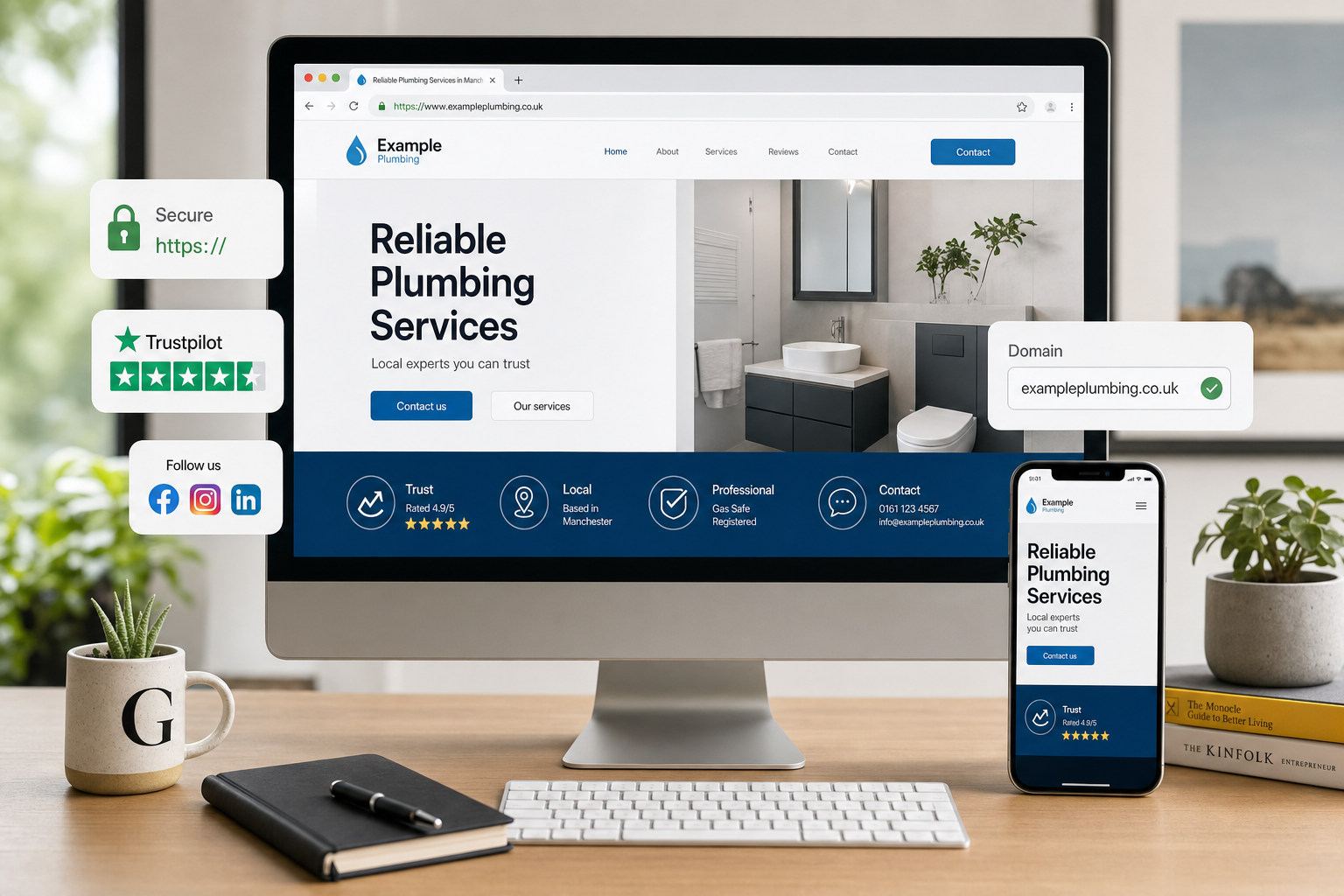
Social proof is most effective when it appears near relevant decisions. Testimonials, reviews, accreditations, portfolio examples, industry memberships and partner credentials can all support trust, but they should be used honestly and selectively. A short, specific testimonial near a service description is often more helpful than a long carousel of generic praise on the homepage.
If you include case studies, focus on the problem, approach and outcome without exaggeration. Business owners are usually looking for evidence that you understand their situation. A clear example of process and thinking can be just as persuasive as a headline result.
Technical trust: speed, security and mobile usability
Trust is not only visual. Technical performance has a direct effect on how visitors perceive your business. A slow or unreliable site can make people question whether the rest of the service will be equally frustrating.
In 2020, mobile usability is essential. Many customers will first visit your website from a smartphone, even if they later make a decision on desktop. Menus, forms, buttons and page layouts should be easy to use on smaller screens. Contact details should be easy to tap, and forms should ask only for information that is genuinely needed.
Security is another visible trust signal. Your website should use HTTPS so that visitors see a secure connection in their browser. This is particularly important for forms, logins and e-commerce, but it is also a basic expectation for most business websites. If a browser warns that a site is not secure, confidence can disappear immediately.
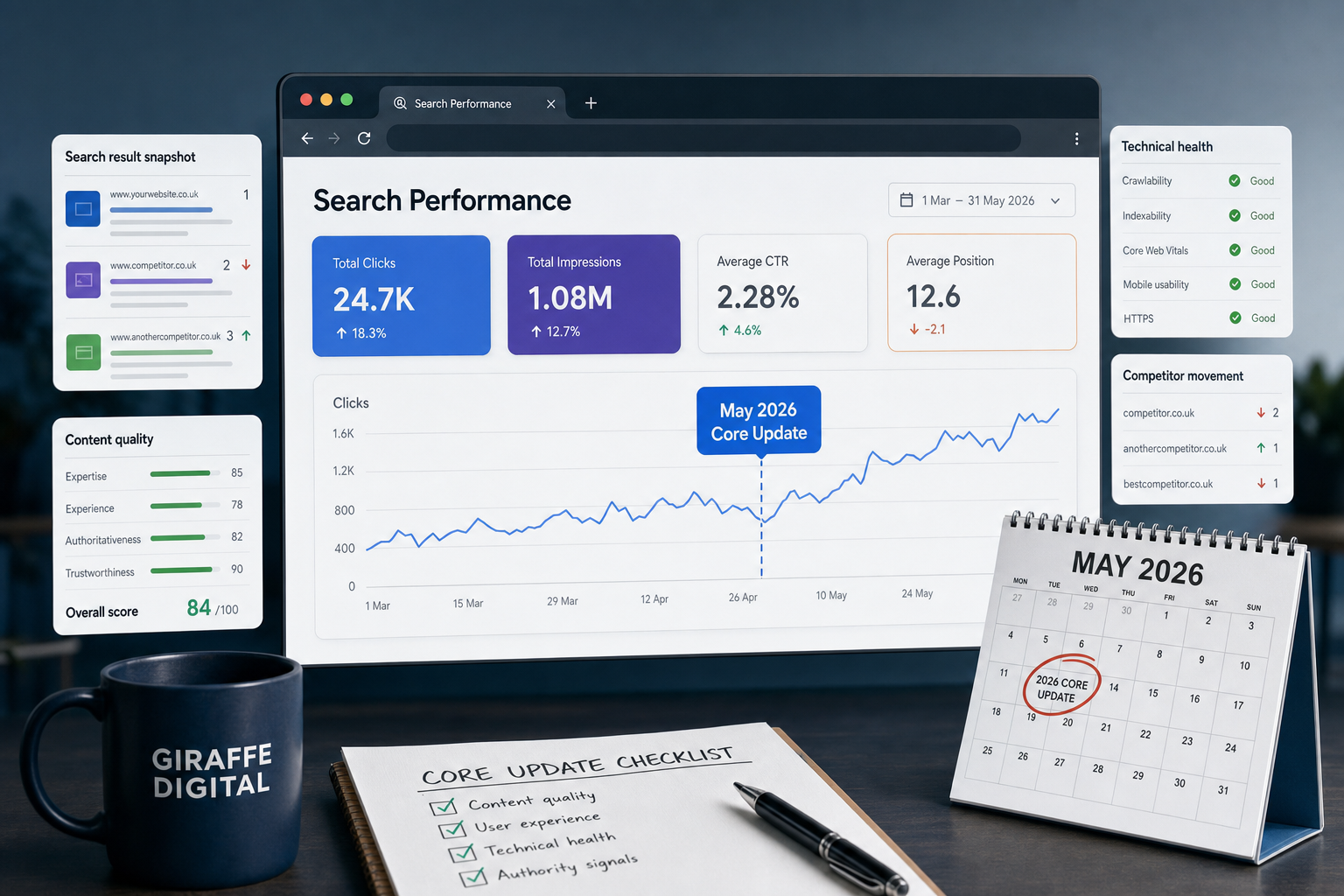
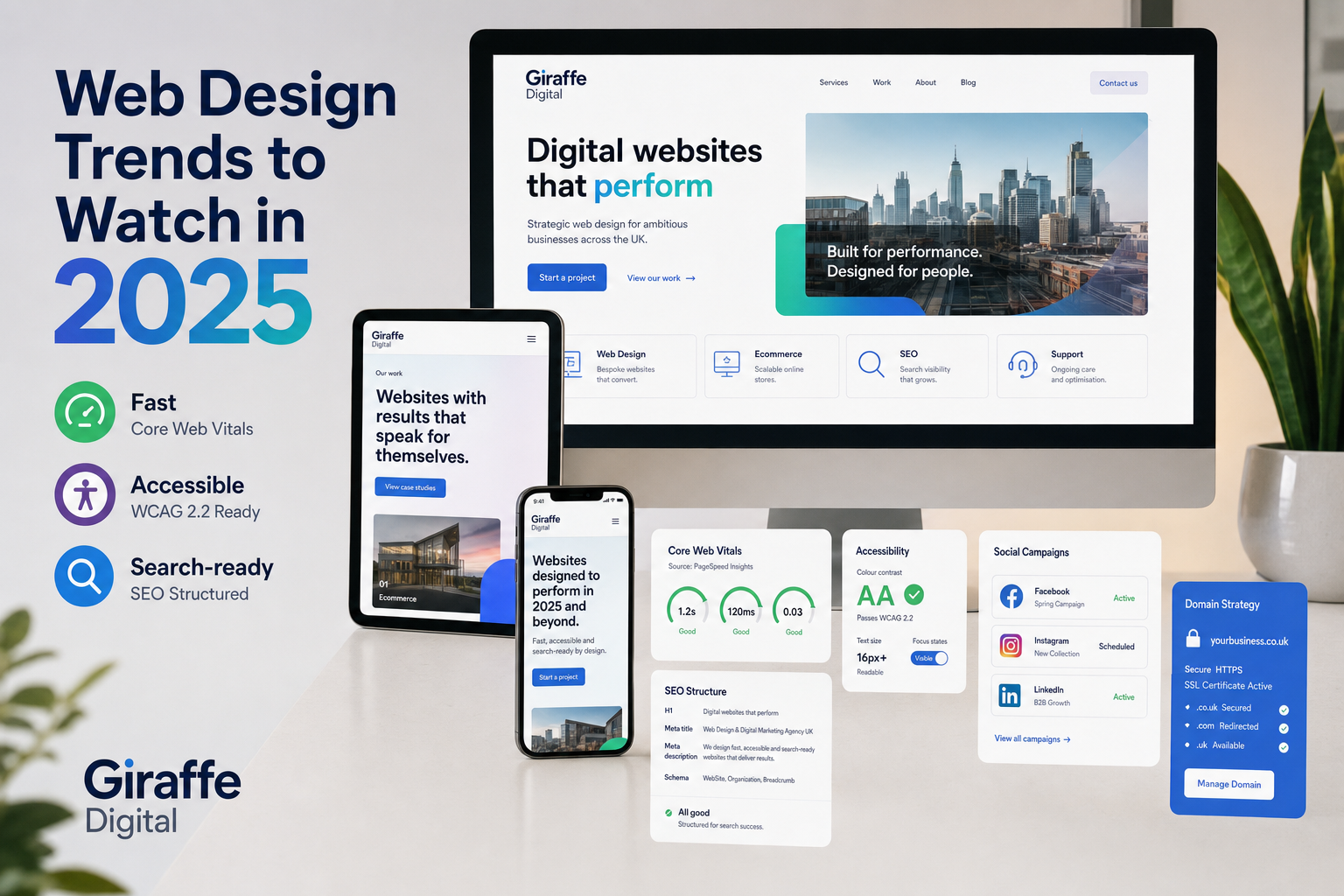
Page speed should also be part of the design conversation. Large images, unnecessary scripts, heavy themes and poorly configured hosting can all slow a website down. Google’s Core Web Vitals are placing greater attention on loading performance, interactivity and visual stability. Even without considering rankings, a faster website usually creates a better first impression and reduces frustration.
SEO and content that build credibility
Search marketing and trust-based web design should work together. Ranking for relevant search terms is valuable, but the page visitors land on must then meet their expectations. If a page has been written only for search engines, it may attract traffic without creating confidence.
Each core service should have a clear, useful page that explains the offer in language customers actually use. For example, a business providing website design, social media marketing or digital strategy services should avoid hiding those services behind vague labels. Searchers often use practical phrases because they are trying to solve practical problems.
Content should also answer common questions. This can include blog posts, guides, FAQs, comparison pages and advice articles. Helpful content demonstrates expertise before a sales conversation begins. It also gives you useful material to share through email and social media, supporting a more joined-up digital marketing strategy.
Local SEO is important for many UK businesses. If location matters to your customers, make sure your website clearly explains the areas you serve. Keep business details consistent across your website, search listings and social profiles. Inconsistent names, addresses or opening hours can create confusion and reduce confidence.
Social media and website trust should feel connected
Customers rarely judge a business from one channel alone. They may find you through search, then check your LinkedIn page, Instagram profile, Facebook reviews or recent posts before making contact. If your website is polished but your social media looks abandoned, the experience can feel inconsistent.
Your social media marketing does not need to be active on every platform. It should be focused where your audience is most likely to pay attention. LinkedIn may be more suitable for professional services and B2B firms, while Instagram, Facebook, YouTube or TikTok may be relevant for more visual, consumer-facing or community-led brands. The important point is consistency: the message, tone and visual identity should feel connected to the website.
Use social content to support trust rather than simply broadcasting promotions. Share useful advice, behind-the-scenes updates, project examples, customer questions, team insights and industry observations. Then make sure your website gives interested visitors somewhere credible to go next. A strong post can spark attention, but a strong website turns that attention into action.
Domain names and first impressions
Your domain name is often one of the first trust signals people notice. It appears in search results, email addresses, printed materials, adverts and social profiles. A good domain is easy to read, easy to say and closely aligned with your business name or primary offer.
For UK businesses, a relevant UK domain can help reinforce location and familiarity, while a broader domain may be suitable for organisations trading internationally. The right choice depends on your market, brand and long-term plans. Avoid overly long domains, confusing hyphens, unusual spellings or names that are too close to another organisation’s brand.
It is also sensible to keep domain registration details organised. Make sure the domain is registered under appropriate business control, renewal dates are monitored and access is not dependent on one individual’s personal email account. Losing track of a domain can damage email, website access and customer confidence very quickly.
When choosing related domains, focus on protecting the brand and reducing confusion rather than buying large numbers of variations without a plan. If you use more than one domain, redirects should be set up properly so visitors and search engines arrive at the correct website.
Practical improvements business owners can make now
Improving trust does not always require a complete rebuild. Many websites can be strengthened through focused changes that improve clarity, usability and credibility. Start by reviewing the site as a customer would. Ask whether the homepage explains the business quickly, whether service pages answer real questions and whether the contact process feels simple.
- Review the first screen of key pages: visitors should immediately understand what the page is about and what to do next.
- Update outdated content: old news, expired offers, broken links and inactive pages can all reduce confidence.
- Improve mobile forms: keep fields clear, labels visible and confirmation messages helpful.
- Add relevant proof: include testimonials, examples, accreditations or process explanations where they support a decision.
- Check page speed: compress large images, remove unnecessary plugins and review hosting performance.
- Make policies easy to find: privacy information, delivery details, returns, terms or service expectations should be accessible where relevant.
- Align social profiles: make sure branding, descriptions, links and contact details match the website.
It is worth involving people outside the business in this review. Internal teams often understand the offer too well, which makes it difficult to spot gaps in the customer journey. A fresh perspective can reveal unclear wording, missing information or friction that has become invisible over time.
A trustworthy website supports long-term growth
Trust-based web design is not about adding superficial reassurance to a weak website. It is about designing the whole experience around clarity, credibility and customer confidence. That includes branding, copywriting, technical performance, SEO, social media alignment, domain management and the way visitors are guided towards the next step.
For UK businesses adapting to faster digital expectations, this approach has practical value. A trusted website can improve enquiry quality, support sales conversations, strengthen brand perception and make marketing activity more effective. When people feel confident in what they see, they are more likely to take action.
The businesses that benefit most are those that treat their website as an active part of their customer journey rather than a static online brochure. By reviewing how trust is built across every page and channel, you can create a digital presence that feels professional, useful and ready for the way customers now make decisions.