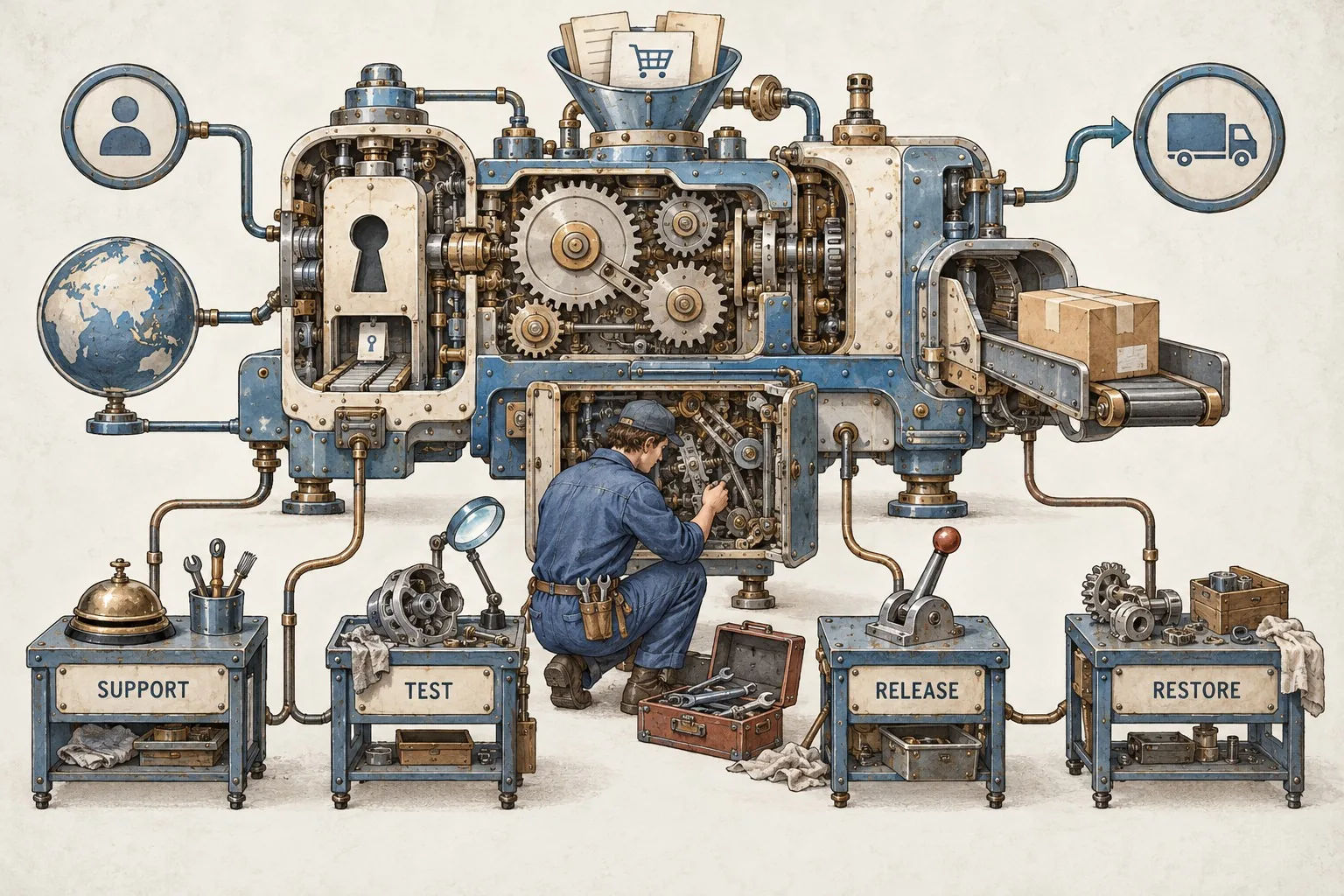

A bespoke internal tool can help a team manage work that standard software handles poorly. It can also turn an unclear process into an expensive application that is difficult to maintain. Before commissioning one, establish the problem, the people affected and the operating result you need. The decision should explain why a particular approach fits the work.
Start with the process as it exists today. Understand the records, handovers and decisions that staff rely on, then compare practical alternatives. A custom application is one possible response. Improving the process, configuring an existing product or connecting current tools may also produce the required outcome.
Describe the problem through actual work
Choose a representative task and follow it from beginning to end. An internal tool proposal might begin with a request to replace spreadsheets, but that does not identify what is wrong. Are staff entering the same information repeatedly, losing track of approvals or working from conflicting records?
Capture a recent example with the people who performed it. Record what arrived, which decisions were made, where information moved and what counted as completion. Include exceptions and corrections, since those often explain why a seemingly simple process becomes difficult.
Understand the problem before committing to a solution. Investigate the task, the people carrying it out and its constraints before treating a proposed application as the answer. A useful discovery process can also reveal that a simpler operational change would meet the need. Our discovery and user research guide provides the related checks.
Find the operating cost of the current difficulty
Gather evidence about repeated work, delays and errors. Use recorded examples where available and distinguish measured activity from estimates. Ask how much time goes into preparing records, reconciling versions and correcting mistakes, rather than counting only the visible data-entry step.
Include the consequence for customers and staff. An approval delay might hold up a delivery, while conflicting records might lead to an inaccurate update. Describe those effects without inventing a dramatic cost figure that the business cannot support.
Check whether the difficulty is frequent enough to justify ongoing software ownership. A task performed rarely may still matter, but its solution should fit its scale and consequences. The team needs a clear reason for the investment and a realistic way to assess improvement later.
Separate missing rules from missing software
Ask where staff disagree about the process. Who can approve a request? Which record is authoritative? What happens if information is incomplete? Software can apply an agreed rule, but it cannot resolve a business decision that nobody has made.
Try clarifying the process before designing screens. A shared definition of status, a named owner or a better handover may remove part of the difficulty. Record what remains afterwards so that the application brief addresses the actual gap.
Do not automate every existing workaround simply because it appears in the current process. Some workarounds exist to compensate for older constraints that no longer apply. Ask why each step is necessary and whether it still serves the intended outcome.
Compare existing products and configuration options
List the capabilities that the task requires, using specific working examples. A team may need assignments, approval states, attachments and a history of changes. Ask potential suppliers to show those capabilities through the same representative journey.
Include configuration and integration in the comparison. An existing product may support the core task but require additional work to connect to the business's current records. A bespoke tool may fit the workflow closely but create a larger maintenance responsibility.
Keep gaps explicit. Mark each requirement as demonstrated, uncertain or unsupported, and identify any workaround. This helps you compare approaches without assuming that a long feature list or an attractive prototype proves fit.
Understand the information the tool will depend on
Identify the source of important records and who maintains them. If customer details, product references or job status already live elsewhere, decide whether the internal tool will read them, copy them or become their authoritative source.
Discuss how updates and conflicts will be handled. If two systems can change the same field, the team needs a rule for determining the accepted value. A new interface can make work appear easier while creating hidden reconciliation tasks behind it.
Inspect data quality early. Missing identifiers, inconsistent labels and duplicated records can complicate any approach. Ask the developer to explain which issues must be corrected before building and which the tool can safely help staff resolve.
Define permissions through real responsibilities
Map who needs to see, create, change and approve information. Use roles linked to the work rather than a generic administrator and everyone else. A colleague may need to update a delivery date without being able to change an approved price.
Include temporary cover and role changes. The team should be able to maintain the process when someone is absent without sharing personal accounts or giving unnecessary permanent access. Ask how permissions will be administered and reviewed.
Verify access in the underlying system as well as the visible interface. A hidden button alone does not establish that an action is protected. The developer should demonstrate permitted and prohibited actions using appropriate test roles.
Prototype the difficult parts first
A prototype should answer a question about the workflow. It might test whether staff can understand approval status, find the correct record or recover from an incomplete request. Choose the uncertain parts before polishing every screen.
Use realistic examples and ask staff to perform the task without a narrated demonstration. Observe hesitation, mistakes and missing context. A prototype is useful when it changes the brief based on evidence, including evidence that a simpler approach would work better.
Test exceptions deliberately. Include a cancelled request, a missing attachment, a changed customer detail and an approval returned for correction. An internal tool that handles only the ideal sequence may create more manual work when ordinary cases diverge from it.
Plan ownership beyond the first release
Identify who will support the application, manage changes and keep its dependencies current. Ask about monitoring, testing, backups and recovery. These responsibilities belong in the decision before the team becomes dependent on the tool.
Establish account control and practical handover information. The business should understand where the application runs, which external services it uses and how another authorised developer could maintain it. Discuss the agreed code and documentation arrangements with the supplier.
Include an exit route for the information. Ask to see a usable export and explain what another system would need to interpret it. A tool that captures important records should not make their meaning dependent on an undocumented interface.
Compare the complete delivery and operating effort
Set out discovery, design, development, integration, data preparation, training and ongoing support. Compare alternatives over an appropriate operating period using stated assumptions. Include the effort your staff will contribute to testing and maintaining information.
Ask what would change the estimate. New approval rules, additional integrations and a wider user group can affect the work substantially. A useful proposal explains the scope and uncertainty rather than presenting an apparently fixed figure for an undefined tool.
Consider a limited first release where it can deliver a complete useful task. Avoid splitting the workflow so that staff must maintain two contradictory records indefinitely. The first release needs a workable operating arrangement, even if later improvements remain planned.
Make a decision with a review point
Record the problem, evidence, alternatives considered and reason for the chosen approach. Define what success will look like after the team starts using it. That might include fewer corrections, clearer ownership or less time spent reconciling records.
Assign someone to review the outcome and collect staff feedback. If the benefit does not appear, investigate the workflow, data and adoption before automatically adding more features. A growing application can conceal an unresolved original problem.
Giraffe Digital's digital strategy service can help businesses connect tools to customer journeys and operating needs. A strong internal-tool decision leaves the team with a clear task, a justified approach and the responsibilities needed to keep the solution useful.
Frequently asked questions
How should we describe the problem through actual work?
Choose a representative task and follow it from beginning to end. An internal tool proposal might begin with a request to replace spreadsheets, but that does not identify what is wrong. Are staff entering the same information repeatedly, losing track of approvals or working from conflicting records? Capture a recent example with the people who performed it. Record what arrived, which decisions were made, where information moved and what counted as completion. Include exceptions and corrections, since those often explain why a seemingly simple process becomes difficult. Understand the problem before committing to a solution. Investigate the task, the people carrying it out and its constraints before treating a proposed application as the answer. A useful discovery process can also reveal that a simpler operational change would meet the need.
How should we separate missing rules from missing software?
Ask where staff disagree about the process. Who can approve a request? Which record is authoritative? What happens if information is incomplete? Software can apply an agreed rule, but it cannot resolve a business decision that nobody has made. Try clarifying the process before designing screens. A shared definition of status, a named owner or a better handover may remove part of the difficulty. Record what remains afterwards so that the application brief addresses the actual gap. Do not automate every existing workaround simply because it appears in the current process. Some workarounds exist to compensate for older constraints that no longer apply. Ask why each step is necessary and whether it still serves the intended outcome.
How should we understand the information the tool will depend on?
Identify the source of important records and who maintains them. If customer details, product references or job status already live elsewhere, decide whether the internal tool will read them, copy them or become their authoritative source. Discuss how updates and conflicts will be handled. If two systems can change the same field, the team needs a rule for determining the accepted value. A new interface can make work appear easier while creating hidden reconciliation tasks behind it. Inspect data quality early. Missing identifiers, inconsistent labels and duplicated records can complicate any approach. Ask the developer to explain which issues must be corrected before building and which the tool can safely help staff resolve.
How should we plan ownership beyond the first release?
Identify who will support the application, manage changes and keep its dependencies current. Ask about monitoring, testing, backups and recovery. These responsibilities belong in the decision before the team becomes dependent on the tool. Establish account control and practical handover information. The business should understand where the application runs, which external services it uses and how another authorised developer could maintain it. Discuss the agreed code and documentation arrangements with the supplier. Include an exit route for the information. Ask to see a usable export and explain what another system would need to interpret it. A tool that captures important records should not make their meaning dependent on an undocumented interface.
How should we make a decision with a review point?
Record the problem, evidence, alternatives considered and reason for the chosen approach. Define what success will look like after the team starts using it. That might include fewer corrections, clearer ownership or less time spent reconciling records. Assign someone to review the outcome and collect staff feedback. If the benefit does not appear, investigate the workflow, data and adoption before automatically adding more features. A growing application can conceal an unresolved original problem. Giraffe Digital's digital strategy service can help businesses connect tools to customer journeys and operating needs. A strong internal-tool decision leaves the team with a clear task, a justified approach and the responsibilities needed to keep the solution useful.