For many UK businesses, social media begins with enthusiasm and then becomes difficult to maintain. A new Facebook page is launched, a Twitter profile is set up, perhaps a LinkedIn company page is created, and for a few weeks everything feels active. Then client work, telephone calls, staff holidays and day-to-day business demands take priority. The result is familiar: long gaps between updates, rushed posts with little purpose, and missed opportunities to guide people back to the company website. Social media scheduling is a practical way to solve this problem. Used sensibly, it helps a business plan ahead, maintain a steady presence and make better use of the content it is already creating.
Why consistency matters on social media
Social media is not just about posting when there is a spare five minutes. Customers and prospects use social platforms to form quick impressions of a business. If the most recent update is months old, it can suggest that the business is quiet, disorganised or no longer paying attention to its online presence. That may not be true, but perception matters.
Consistency helps to reassure people that the business is active and available. It also gives followers more chances to see useful information, whether that is a blog post, a service reminder, a seasonal offer, a project photograph or a helpful answer to a common question. Posting steadily over time is usually more effective than publishing several updates in one afternoon and then disappearing for weeks.
For search marketing, consistent social activity can also support wider visibility. Social posts are not a replacement for a well-structured website, relevant page titles, good copy and sound technical SEO, but they can help content reach more people. A blog post that is shared once may be missed. The same post, promoted at sensible intervals with different wording, has a better chance of attracting visits, enquiries and links.
What social media scheduling actually means
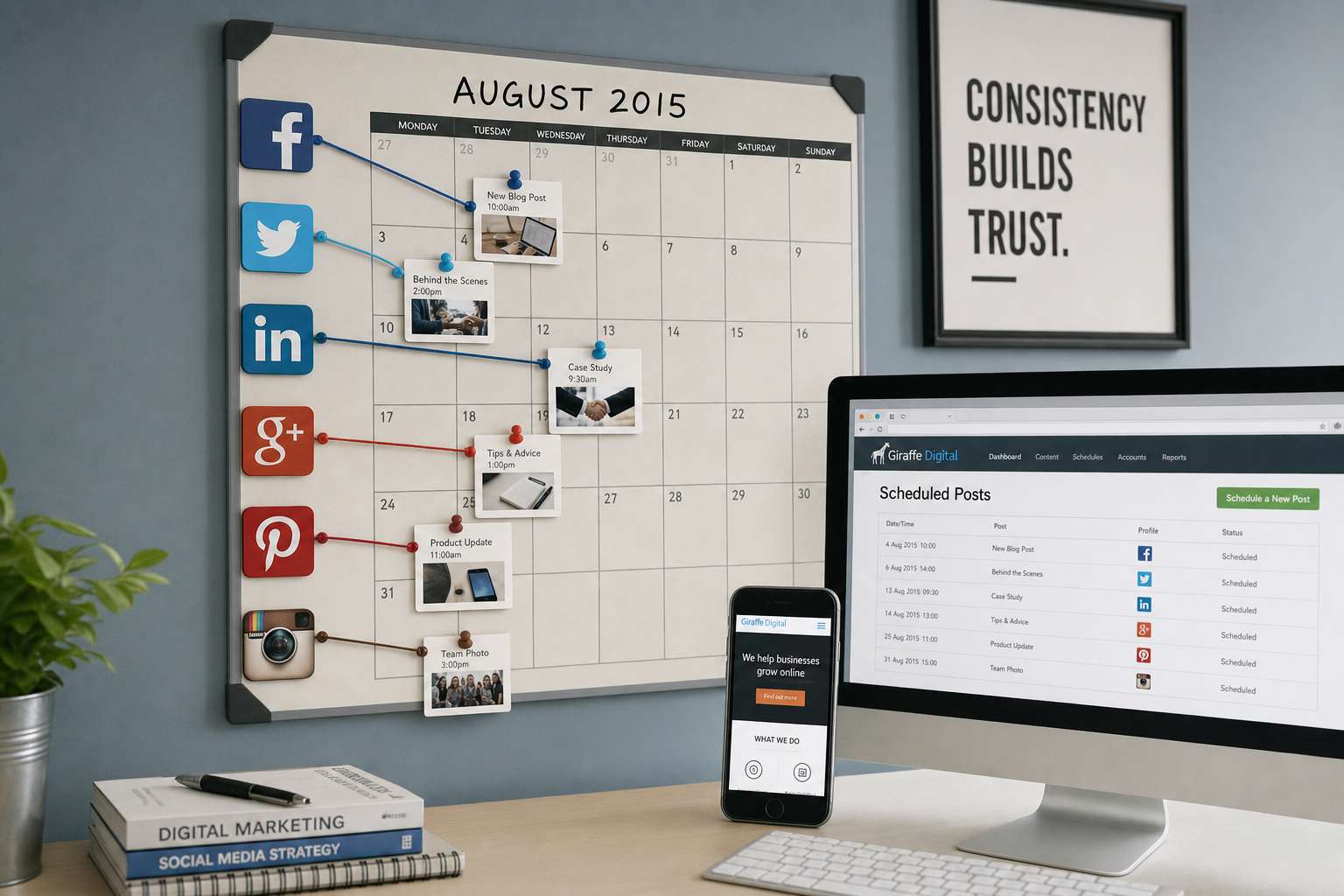
Social media scheduling means preparing updates in advance and setting them to publish at selected times. Instead of logging in to each platform every day, a business can create a week or month of updates in one focused session. These updates might include links to website pages, blog posts, service information, event reminders, photographs, industry observations or questions designed to encourage discussion.
Scheduling does not mean putting social media on autopilot and forgetting about it. That is one of the most common mistakes. A scheduled plan should provide structure, but someone still needs to monitor replies, answer questions, thank people for sharing, and respond to current events where appropriate. The best approach is a blend of planned content and timely interaction.
For example, a local professional services firm might schedule two educational posts per week linking to guidance on its website, one staff or office update to add personality, and one reminder about a core service. If a relevant news item appears during the week, the firm can still post manually. Scheduling simply ensures that the basic rhythm continues, even when the office is busy.
The practical business value of scheduling
The first benefit is time management. Writing social updates one by one throughout the week can be inefficient, especially if the person responsible has to stop other work, find a link, create suitable wording and choose an image each time. Planning in batches is usually quicker and produces better results because the content can be considered as a whole.
The second benefit is quality control. When posts are rushed, mistakes are more likely. A scheduled plan gives you time to check spelling, confirm links, review images and make sure the message fits the brand. This is especially important for businesses where several people contribute to marketing. A simple approval process can prevent inconsistent tone, repeated messages or posts that do not support business goals.
The third benefit is better coverage. Many businesses only post during office hours because that is when staff are at their desks. However, customers may be browsing early in the morning, during lunch breaks, in the evening or at weekends. Scheduling allows a business to test different times without expecting someone to log in manually outside normal hours.
The fourth benefit is continuity. Staff holidays, busy trading periods and project deadlines can all interrupt marketing activity. Scheduled updates help maintain visibility during those periods. For a small business, this can be particularly valuable because marketing often sits alongside many other responsibilities.
Choosing the right platforms for your business
By August 2015, many businesses are active across a mix of Facebook, Twitter, LinkedIn, Google+, Pinterest and Instagram. Not every platform is right for every organisation. Social media scheduling works best when the business chooses channels that match its audience, its content and its capacity to respond.
Facebook can be useful for consumer-facing companies, local businesses, venues, retailers, charities and organisations with a strong community element. Twitter is well suited to short updates, links, industry conversation, customer service and event commentary. LinkedIn is particularly relevant for business-to-business services, recruitment, professional expertise and company news. Google+ can still be considered as part of a search-conscious digital presence, especially for businesses already maintaining their wider Google profile. Pinterest can work well for visual sectors such as interiors, fashion, food, weddings, crafts and design. Instagram is increasingly important for visual storytelling, although posting and management routines differ from more link-focused networks.
The key is not to chase every platform. A consistent presence on two appropriate channels is better than a neglected presence on six. Scheduling should make social media more manageable, not encourage a business to overextend itself.
What to schedule: useful content ideas
A good social media schedule should not be made up entirely of sales messages. People are more likely to follow, share and respond when the content is genuinely useful, interesting or relevant. A balanced schedule might include several types of post.
- Website content: links to service pages, blog articles, guides, case study summaries and frequently asked questions.
- Educational updates: short tips, explanations of common issues, maintenance reminders or advice based on customer queries.
- Brand content: photographs of finished work, team updates, behind-the-scenes details or company milestones.
- Seasonal messages: reminders connected to holidays, weather, business planning periods or industry events.
- Conversation starters: questions, polls where available, or invitations for followers to share their experiences.
- Curated content: carefully selected articles or resources from reputable sources, with a short comment explaining why they are useful.
For instance, a web design business could schedule a Monday post linking to an article about mobile-friendly website design, a Wednesday tip about improving contact forms, and a Friday reminder to review domain renewal dates and website backups. A restaurant could schedule menu highlights, booking reminders and photographs of seasonal dishes. A trades business could share maintenance tips, project images and links to service pages.
Connecting scheduling with your website design
Social media should not sit apart from the company website. The website is usually the place where a visitor learns more, views services, submits an enquiry, makes a booking or finds contact details. Scheduled social updates should therefore be planned with the website in mind.
If your website has a blog or news section, scheduling can help each article work harder. A new post can be introduced on launch day, then shared again later with a different angle. For example, an article called Five Ways to Improve Your Shop Website could be promoted once as a web design tip, once as an e-commerce reminder and once as a customer experience discussion. Each update should be written naturally rather than repeated word for word.
Good website design also makes social traffic more valuable. If a visitor clicks through from Facebook or Twitter and lands on a slow, confusing or outdated page, the opportunity may be lost. Clear navigation, readable copy, strong calls to action and mobile-friendly layouts are all important. With more people using smartphones to browse social media, a website that works well on smaller screens is no longer optional for many businesses.
It is also sensible to use clear landing pages. If a scheduled post promotes a specific service, link directly to the relevant page rather than to the home page. This reduces friction and helps visitors find what they expected.
How scheduling supports SEO and digital marketing
Search engine optimisation in 2015 is about much more than placing keywords on a page. Businesses need useful content, technically sound websites, relevant local information, quality links, good user experience and clear signals of trust. Social media scheduling can support this wider activity by helping content reach an audience more reliably.
When a business publishes a useful article and shares it consistently, more people may read it, mention it, bookmark it or link to it. These outcomes cannot be forced, but regular promotion increases the chance of the content being discovered. Social activity can also help with brand searches. If people repeatedly see a business name and later search for it, that is a positive sign that social media is contributing to awareness.
For local businesses, scheduled posts can highlight location-specific services, opening hours, events and seasonal demand. A heating engineer might schedule autumn reminders about boiler servicing. A solicitor might share guidance around moving house during popular buying periods. A design agency might promote articles about preparing a new website before a product launch. Each post should connect naturally to a useful page on the website.
Measurement matters too. Businesses should review which scheduled posts attract clicks, enquiries, shares or comments. The aim is not simply to publish more; it is to learn what your audience finds useful and refine the plan accordingly.
Domain names, branding and scheduled promotion
A clear, memorable domain name is an important part of a business's online identity. When social media posts send people to a website, the domain should feel credible and consistent with the brand. If a company uses one name on its signage, another on social media and an unclear or unrelated domain for its website, customers may become confused.
When choosing or reviewing a domain name, keep it simple, easy to spell and aligned with the business name wherever possible. Avoid unnecessary hyphens or overly long phrases if they make the address harder to remember. Consider whether the domain will still suit the organisation if services expand. It is also wise to keep renewal details organised so that an important domain is not lost through an avoidable administration error.
Social media scheduling can help reinforce the domain over time. Regularly sharing helpful pages from the website encourages followers to recognise the address and associate it with useful information. This is another reason to ensure that the website, domain, social profiles and printed marketing materials all present a consistent brand.
Creating a simple social media schedule
A schedule does not need to be complicated. Many businesses can begin with a basic monthly plan. Start by identifying key business objectives. Do you want more website enquiries, more telephone calls, better awareness of a particular service, more event bookings or stronger local recognition? The answer should influence the content you schedule.
Next, list the content already available. This may include website pages, old blog posts, brochures, photographs, frequently asked questions, testimonials where permission has been given, and seasonal messages. Many businesses have more material than they realise; the challenge is organising it.
Then decide on a realistic frequency. A small business might begin with three posts per week on one platform and two on another. It is better to maintain this reliably than to attempt daily updates on every channel and give up after a fortnight.
A simple weekly structure could look like this:
- Monday: share a useful tip or link to an advice article.
- Wednesday: highlight a service, product or recent project.
- Friday: post a lighter brand update, question or weekend reminder.
Once the structure is in place, write posts in batches. Check each link, choose suitable images and read the wording aloud to make sure it sounds natural. If more than one person is involved, agree who has final approval before posts are scheduled.
Avoiding common scheduling mistakes
The most obvious mistake is scheduling too much promotional content. If every post says the same thing in slightly different words, followers will lose interest. Aim for a mix of helpful, informative and promotional updates.
Another mistake is ignoring replies. Scheduled posts can start conversations, and those conversations need attention. If someone asks a question and receives no response, the business can appear distant. Set aside time each day to check notifications and respond appropriately.
It is also important to review scheduled posts when circumstances change. A message that seemed harmless when planned may become inappropriate if there is breaking news, severe weather or an unexpected business issue. Scheduling should be flexible, with someone responsible for pausing or amending posts when necessary.
Finally, avoid using identical wording across every platform. Twitter, Facebook and LinkedIn have different styles and audience expectations. A message can carry the same core idea, but it should be adapted for the channel.
Making scheduling part of a wider digital strategy
Social media scheduling is most effective when it supports a wider digital marketing plan. It should connect with website design, search marketing, email activity, branding, content creation and customer service. Rather than treating social media as a separate task, view it as one route by which people discover and return to your website.
For business owners, the value is practical. Scheduling reduces last-minute pressure, improves consistency, supports better planning and helps content reach people at more suitable times. It also encourages the discipline of thinking ahead: what should customers know this month, which services need visibility, and what questions can the business answer before they are asked?
The businesses that benefit most are usually not the ones posting the most often. They are the ones posting with purpose, reviewing results and keeping their online presence aligned. With a clear schedule, a well-designed website and useful content, social media becomes less of a daily scramble and more of a reliable part of business development.