Instagram is no longer just a place for attractive photographs and personal updates. For many UK businesses, it has become a useful channel for brand awareness, community building and customer enquiries. The introduction of the Instagram business profile gives organisations a more suitable way to present themselves on the platform, with features designed to make contact easier and marketing activity simpler to measure.
For business owners already investing in website design, search engine optimisation, branding or social media marketing, this development is worth understanding. Instagram remains a visual platform, but the new business tools help connect that visual activity with real commercial goals: enquiries, visits, phone calls, directions, email sign-ups and website traffic.
What is an Instagram business profile
An Instagram business profile is a version of an Instagram account intended for organisations rather than individuals. It gives businesses the opportunity to add more useful contact information and access data that is not available through a standard personal profile.
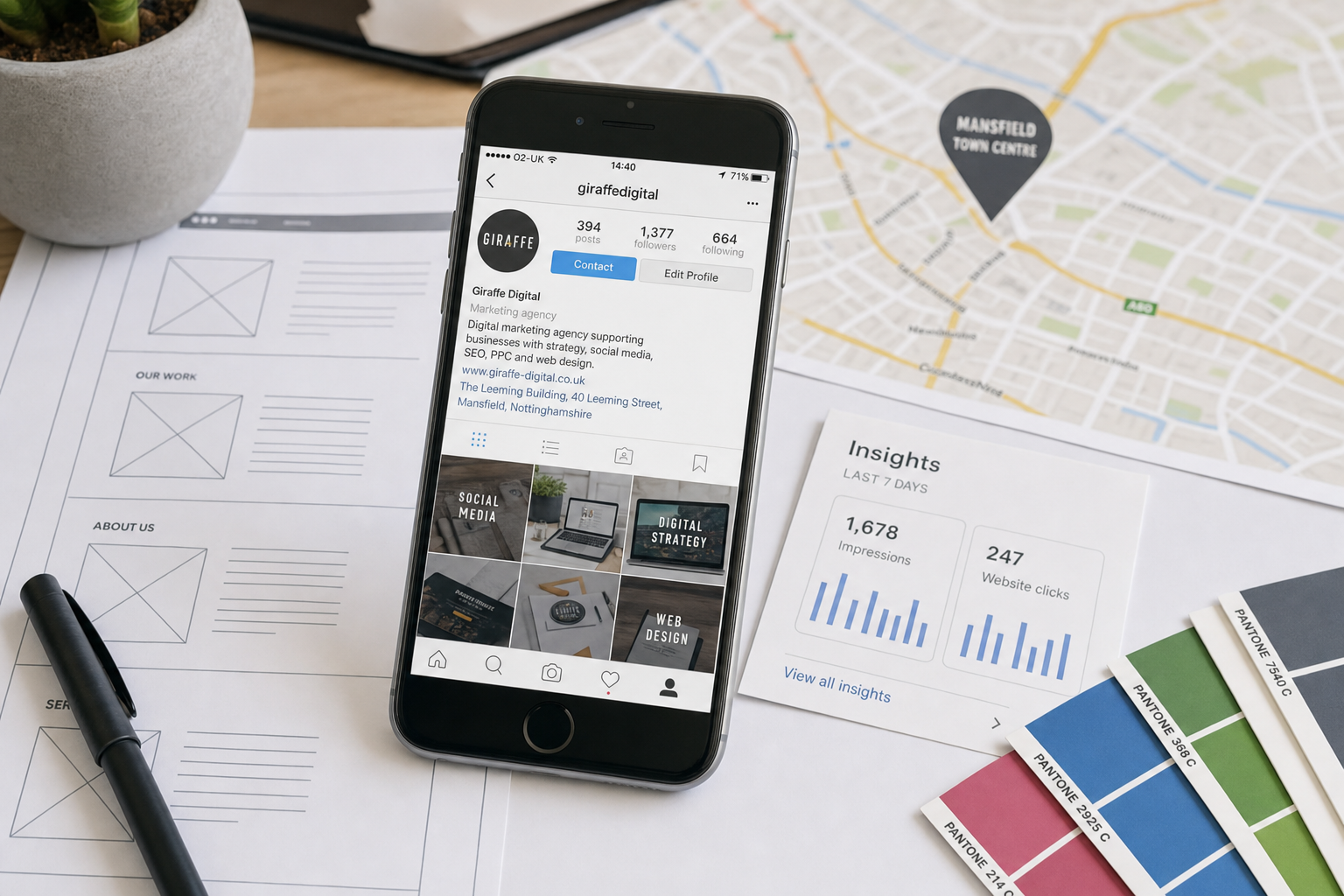
The most obvious change is the addition of clearer contact options. Instead of expecting users to copy an email address from a biography or search for a website link, a business profile can present contact details in a more direct and helpful way. Depending on the information a business provides, people may be able to email, call or get directions from the profile.
For local businesses, professional service firms, retailers, restaurants, venues and trades, that is a meaningful improvement. Instagram has always been good at showing personality and visual appeal. The business profile starts to make it easier for that attention to turn into action.
Instagram is also adding insights for business users. These analytics are designed to help organisations understand how their posts are performing and who they are reaching. While business owners should not become distracted by every single figure, reliable information can help guide better decisions about content, timing and audience behaviour.
Why this matters for UK business owners
Many businesses already recognise that customers research organisations across several channels before making contact. A person may find a company through Google, visit its website, check reviews, browse social media profiles and then decide whether to call or enquire. In that process, Instagram can play a useful supporting role.
A strong Instagram presence can help demonstrate quality, consistency and trust. A florist can show recent arrangements. A hotel can display rooms, dining spaces and local attractions. A building firm can share completed projects and details of workmanship. A design studio can show portfolio pieces and behind-the-scenes sketches. A café can present its atmosphere as well as its menu.
Until now, however, many business Instagram profiles have had to work around limitations. A short biography, a single website link and manually written contact details leave room for friction. If a potential customer has to work too hard to find a phone number or address, some will simply move on. The Instagram business profile helps reduce that friction.
From a marketing point of view, it also gives businesses a clearer reason to treat Instagram as part of a wider digital strategy rather than as a separate hobby. If your website, search presence, branding and social channels are all working together, each platform can support the next stage of the customer journey.
Turning profile visits into useful enquiries
The most immediate benefit of an Instagram business profile is improved contact. That may sound simple, but small improvements in accessibility often have a significant effect on digital marketing performance.
For example, a restaurant sharing photographs of seasonal dishes can make it easier for someone to call about a booking. A salon displaying recent work can encourage prospective clients to email for availability. A shop with a physical location can help people find directions after seeing a product post. A training provider can direct interested users to a course page on its website.
The key is to think carefully about what someone is likely to want after viewing your Instagram profile. Not every business needs to prioritise the same action. A local service business may want phone calls. A consultancy may prefer email enquiries. A venue may benefit from directions. An e-commerce business may want website visits. Your profile should make the next step obvious.
It is also important that the website link in the profile leads somewhere useful. Sending everyone to a homepage can work, but it is not always the strongest option. If Instagram is being used to promote a particular product range, event, service or campaign, consider linking to a relevant landing page. That page should be fast, clear, mobile-friendly and consistent with the message seen on Instagram.
What Instagram insights can tell you
The analytics available through an Instagram business profile are particularly useful for businesses that want to make informed content decisions. Instead of guessing which posts are successful, owners and marketing teams can begin to look at performance patterns.
Useful questions include:
- Which posts receive the most engagement?
- Are product photographs, staff photographs or behind-the-scenes images performing best?
- What time of day do followers appear most responsive?
- Is the audience broadly aligned with the customers the business wants to attract?
- Are posts encouraging profile visits, website clicks or contact actions?
These figures should be treated as guidance rather than absolute truth. A single popular post does not necessarily prove a complete strategy. However, over time, patterns can reveal what your audience values. If educational posts consistently perform well, create more of them. If polished product shots receive attention but do not encourage enquiries, test captions with clearer calls to action. If local posts produce better interaction than generic content, make your location part of your story.
The availability of insights also helps businesses have more constructive conversations with designers, marketers and content teams. Rather than relying only on personal preference, decisions can be based on audience behaviour.
Using promoted posts carefully
Instagram business tools also include the ability to promote posts. This allows businesses to give selected content greater reach. For organisations already familiar with paid social media advertising, this will feel like a natural extension of existing activity.
Promoting posts can be useful, but it should not replace a clear strategy. A poor post does not become a strong campaign simply because money is placed behind it. The best posts to promote are usually those that already have a clear purpose, strong visual appeal and a relevant next step.
Before promoting content, decide what the business is trying to achieve. Possible aims might include increasing local awareness, attracting visitors to a website page, encouraging enquiries or supporting a seasonal campaign. The image, caption, audience and landing page should all support that objective.
For smaller businesses, it is often sensible to start with focused activity rather than trying to reach everyone. A local company, for instance, may benefit more from a defined geographic audience than from a broad national reach. A specialist business may want to focus on people with particular interests rather than chasing high numbers for their own sake.
How this connects with website design
An Instagram business profile can create more interest in your business, but the website still has to do much of the heavy lifting. If Instagram sends visitors to a site that looks dated, loads slowly or is difficult to use on a mobile phone, the opportunity can quickly be lost.
In 2016, mobile use is already central to online behaviour. Instagram itself is a mobile-first platform, so many people clicking through from a profile will be using a smartphone. Your website should therefore be responsive, easy to read and simple to navigate on smaller screens.
Good website design should support the same messages seen on Instagram. If your social feed presents a modern, well-organised and visually appealing business, the website should reinforce that impression. Consistent colours, typography, photography style and tone of voice all help build trust.
Landing pages also matter. A visitor arriving from Instagram should be able to understand where they are, what is being offered and what to do next. Clear headings, concise copy, well-placed enquiry forms and visible contact details can all improve the journey from social media interest to business enquiry.
Instagram, SEO and the wider digital strategy
Instagram activity is not a direct replacement for search engine optimisation. People still use search engines when they have a specific need, and a well-optimised website remains essential for being found by customers who are actively looking for products or services.
However, Instagram can support SEO and digital marketing in broader ways. A recognisable social presence can increase brand familiarity. Strong content can encourage people to search for the business by name. Profile links can send visitors to the website. Consistent branding across channels can make the organisation appear more established and trustworthy.
It is helpful to think of Instagram as one part of a connected system. Search helps people find you when they know what they need. Your website explains your services and converts interest into action. Social media helps build recognition, personality and repeat engagement. Email marketing, content marketing and offline activity may also play a role. The strongest results usually come when these elements are planned together.
Branding and content ideas for business profiles
A business profile will only be effective if the content gives people a reason to care. Instagram is visual, so quality and consistency matter. This does not mean every image must be a studio photograph, but it does mean posts should feel considered and on brand.
Useful content ideas include:
- Finished work, such as projects, products, installations or room designs.
- Behind-the-scenes photographs that show process, care and expertise.
- Staff introductions, helping customers put faces to the business.
- Short educational captions that answer common customer questions.
- Seasonal updates, offers or events where appropriate.
- Local content that links the business to its community.
- Customer-focused posts that explain benefits rather than only features.
Captions should be clear and purposeful. A good caption can explain context, add personality and encourage the next step. For example, a garden designer might describe the brief behind a completed project and invite people to visit the website to view more portfolio work. A retailer might explain why a product is suitable for a particular season and encourage users to call or visit the shop.
Hashtags can help discovery, but they should be relevant. A handful of specific, well-chosen hashtags is often more professional than a long list of vague terms. Local hashtags can also be useful for businesses that serve a particular town, city or region.
Domain names and professional consistency
Instagram should not be the only place where your business identity exists online. A professional website on a suitable domain name gives you more control, credibility and long-term security than relying solely on a social platform.
When choosing or reviewing a domain name, keep it clear, memorable and closely connected to the business name or service. Avoid spellings that are difficult to explain over the phone. If your organisation serves the UK market, consider whether a UK-focused domain ending is appropriate, alongside any wider domain options you may need to protect your brand.
It is also sensible to keep social media usernames as consistent as possible with your domain and trading name. Exact matches are not always available, but unnecessary variation can confuse customers. A person who sees your Instagram profile should be able to recognise the same business when they arrive on your website, receive an email or see you in search results.
Before committing to a name, check that it is suitable for your brand, easy to read, not misleading and available across the key channels you intend to use. For many businesses, this naming decision sits at the centre of website design, branding and future marketing activity.
Preparing your business for the new profile features
If your business is considering the switch to an Instagram business profile, start with the basics. Review your profile photograph, biography, website link and contact information. Make sure they are accurate, professional and aligned with your current marketing objectives.
Next, look at your recent content. Does it represent the business well? Does it show what customers most need to understand? Is there a consistent visual style? Are captions helpful? A business profile may improve the structure of your presence, but it will not compensate for unclear messaging.
It is also worth checking the destination page linked from your profile. If the page is not mobile-friendly or does not support the action you want visitors to take, improve it before expecting meaningful results from Instagram traffic.
Finally, decide how success will be measured. For some businesses, the aim will be more phone calls. For others, it may be website visits, appointment requests, brochure downloads, email enquiries or increased local awareness. Defining this early makes it easier to judge whether Instagram is contributing to the wider marketing plan.
A useful opportunity, not a magic solution
The Instagram business profile is a welcome development for organisations that take social media seriously. It offers clearer contact options, useful insight and a more business-focused structure for marketing activity. For UK businesses already working to improve their website, search visibility and brand presence, it creates another way to connect attention with action.
As with any digital marketing tool, the value depends on how well it is used. A strong profile needs thoughtful content, consistent branding, a suitable website and a clear understanding of the customer journey. Businesses that approach Instagram in this way will be better placed to turn visual engagement into genuine commercial opportunities.