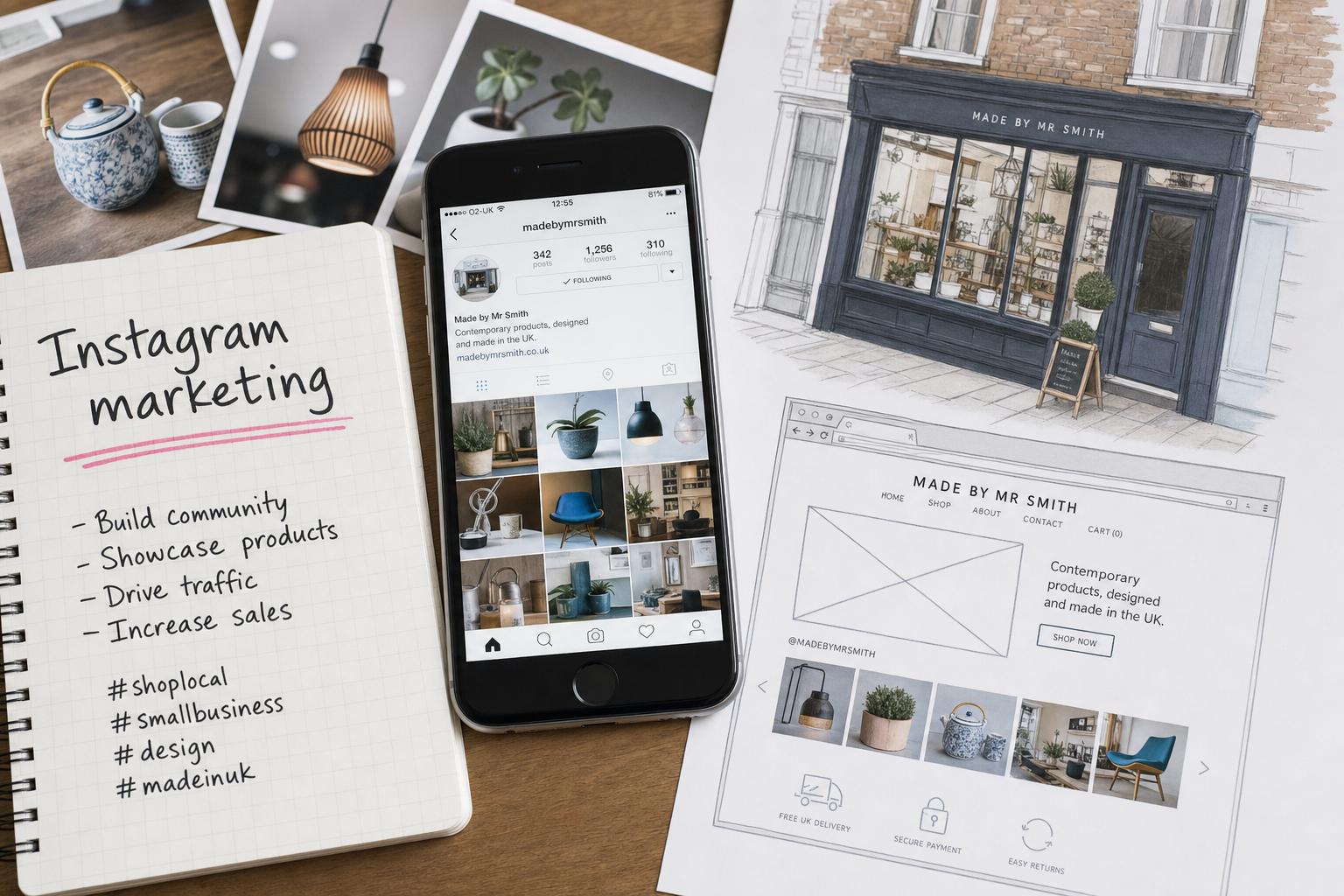
Instagram has moved well beyond being a simple photo-sharing app for friends. For many UK businesses, it is becoming a practical marketing channel that can support brand awareness, customer engagement, website traffic and wider digital strategy. Its strength lies in visual communication: a well-composed image, short video or behind-the-scenes post can often explain a product, service or company culture more quickly than a lengthy paragraph of copy.
For business owners considering website design, SEO, branding or social media marketing, Instagram is worth taking seriously in 2015. It should not replace a good website or search marketing programme, but it can add a valuable layer to your online presence. The businesses that benefit most are not necessarily those with the largest budgets; they are the ones that understand their audience, publish consistently and use Instagram as part of a joined-up digital plan.
Why Instagram marketing matters for businesses
Instagram is particularly useful because it encourages people to engage with brands in a more relaxed and visual environment. A bakery can show its morning preparation, a hotel can share the view from a room, a design studio can post work in progress, and a retailer can highlight new stock as it arrives. These moments can make a business feel more approachable and memorable.
The platform is also highly mobile-led. Customers increasingly browse, research and compare businesses from their phones, whether they are at home, commuting or already near a high street location. If your business relies on being noticed at the right moment, Instagram can help you stay visible in a format that suits mobile behaviour.
For many organisations, the value of Instagram marketing is not a direct sale from every individual post. It is more often found in repeated brand exposure, stronger recognition, increased trust and a larger audience for future campaigns. A person may first see your business on Instagram, then visit your website, search for your name, join your mailing list or visit your premises. That journey is not always instant, but it is still commercially valuable.
Start with a clear purpose, not just attractive pictures
Good Instagram activity begins with a simple question: what should people understand, feel or do after seeing your posts? Without a clear purpose, it is easy to publish attractive images that do little for the business. Your content should support your commercial aims while still fitting naturally into the platform.
A local restaurant may want to increase lunchtime bookings, promote seasonal menus and show atmosphere. A professional services firm may want to build credibility by showing its team, events, speaking engagements and useful visual tips. An e-commerce business may want to showcase products in real settings rather than relying only on catalogue images.
Before posting regularly, define three or four themes that you can return to throughout the month. These might include products, people, customer stories, the local community, events, tips, processes or finished projects. This gives your account structure without making it feel repetitive. It also helps different members of staff understand what is suitable to photograph and share.
Create content that suits the platform
Instagram rewards clarity, consistency and personality. Images do not need to look like expensive advertising campaigns, but they should be well lit, properly framed and relevant to your audience. Avoid posting every photograph taken in the office simply because it exists. Each post should have a reason to be there.
Square images remain central to the Instagram experience, so composition matters. Products should be easy to identify, signage should be readable where relevant, and clutter should be removed unless it adds useful context. If you use filters, apply them consistently so that your account develops a recognisable look. A polished visual style can help even a small business appear more established.
Short videos can also be useful. Instagram allows brief video clips, which are well suited to demonstrations, quick tours, event snippets or product details. A florist might show a bouquet being finished, a mechanic might show a simple maintenance tip, or a gym might share a short exercise demonstration. Keep videos focused and understandable without relying too heavily on sound, as many people browse casually.
Useful Instagram content ideas for UK businesses
- Behind-the-scenes images: show how products are made, prepared, packed or delivered.
- Before-and-after posts: useful for design, renovation, grooming, fitness, cleaning and creative services.
- Staff introductions: help customers recognise the people behind the business.
- Seasonal updates: connect posts with holidays, local events, weather changes or buying patterns.
- Customer-focused posts: share permitted images of customers using your product or enjoying your service.
- Educational tips: turn expertise into quick, visual advice that people can remember or share with others.
Use hashtags and captions with care
Hashtags are one of the simplest ways to make Instagram posts more discoverable. They help people find content by subject, location or interest. However, adding a long list of unrelated hashtags can make a business look unfocused or desperate for attention. A considered mix is usually more effective.
Use a combination of broad and specific hashtags. A coffee shop in Leeds, for example, might use hashtags relating to coffee, independent businesses, Leeds and the local neighbourhood. A wedding photographer may combine wedding-related hashtags with location terms and venue references where appropriate. Local hashtags can be especially useful for businesses that depend on nearby customers.
Captions should add context rather than merely repeat what the image already shows. Explain what is new, why it matters, how it can be used or what the customer should do next. A simple question can encourage comments, but avoid forced engagement. If a post is promoting an event, include the key date and remind people that the website link in your profile can provide further details.
Make the most of the profile link
Instagram does not provide the same linking opportunities as a website, blog or email campaign. The main link available to most businesses is the one in the profile. This makes it important to choose that destination carefully.
Many businesses simply link to the home page, and in some cases that is sensible. However, if you are running a campaign, event, seasonal offer or product launch, it may be better to link to a dedicated page on your website. That page should match the message people have just seen on Instagram. If the post shows a new collection, do not make people search through several pages to find it.
This is where website design becomes important. A visitor arriving from Instagram is likely to be using a mobile device. The page should load quickly, be easy to read on a small screen and have a clear next step. That might be making an enquiry, viewing a menu, booking a consultation, joining a mailing list or finding directions. If your website is difficult to use on a phone, Instagram interest can be wasted.
Connect Instagram with your website and wider marketing
Instagram works best when it is connected to the rest of your digital presence. Your website should remain the central hub because it is the space you control. Social platforms can change their features and rules, but your website, domain and customer database are long-term assets.
Consider adding an Instagram feed or selected images to your website where it genuinely improves the user experience. A venue, restaurant, fashion retailer or creative business may benefit from showing recent visual activity. However, avoid adding social widgets simply for decoration. If they slow the page down, distract from enquiries or look untidy, they may do more harm than good.
Your blog can also support Instagram. For example, you could publish a detailed article about a new project, then use Instagram to share visual highlights and direct people to the full story. This approach gives you the immediacy of social media and the search value of properly written website content.
Email marketing can work in a similar way. If you are building an audience through a newsletter, include occasional links to your Instagram account or feature popular images. Likewise, Instagram can remind followers that more detailed guides, downloads or announcements are available through your website or email list.
Instagram and search marketing in 2015
Instagram marketing should not be confused with traditional SEO. Posting to Instagram is unlikely to replace the need for well-structured website pages, useful written content, technical optimisation, local search visibility and quality links. Search engines still need accessible, relevant website content to understand what your business offers.
That said, Instagram can support search marketing indirectly. A stronger brand presence can lead to more people searching for your business by name. Good visual content can encourage mentions, shares and conversations on other websites or social platforms. It can also help customers remember you when they later return to Google to compare options.
Businesses should therefore treat Instagram as part of a broader online marketing mix. Make sure your website clearly explains your services, locations and contact details. Use descriptive page titles, sensible headings and well-written copy. Add relevant images to your own website with meaningful file names and alternative text. Maintain a consistent business name, address and telephone number across your website and online profiles, particularly if local customers are important.
If you run campaigns, use tracking where appropriate so that visits from Instagram can be identified in your analytics. Even a simple tagged link in your profile can help you understand whether Instagram is contributing to website visits, enquiries or sales. The aim is not to measure vanity alone, but to connect social activity with business outcomes.
Branding and consistency matter
Your Instagram account should feel like a natural extension of your brand. The tone of captions, the style of images and the subjects you choose should all support the impression you want customers to have. A premium brand may use cleaner compositions and more restrained copy. A family attraction may use brighter images and a friendlier, more informal tone. A consultancy may focus on clarity, expertise and trust.
Consistency also applies to your username, profile description and domain. If possible, choose a username that closely matches your trading name. Your profile description should explain what you do and where you are based, particularly if location matters. Avoid vague descriptions that might suit any business in any sector.
From a domain registration perspective, businesses should choose a web address that is memorable, easy to spell and aligned with the brand. For UK companies, a relevant UK domain can help customers recognise your location and market. Keep the name short where possible, avoid unnecessary hyphens, and think carefully before choosing a spelling that has to be explained over the phone. It is also sensible to secure closely related domain options where they protect the brand and prevent confusion, but the main domain should remain clear and easy to promote.
Encourage engagement without losing professionalism
Instagram is a social platform, so conversation matters. Responding to comments, acknowledging compliments and answering questions can help build trust. A business that posts but never replies may appear distant, while one that engages thoughtfully can feel more human.
Competitions and user-submitted content can be useful, especially for consumer-facing businesses. For example, a retailer might invite customers to share photographs of how they use a product, or a local attraction might ask visitors to tag their day out. If you run this type of activity, make the instructions clear, keep the rules straightforward and ensure you have permission before reusing anyone’s image in your own marketing.
Professionalism is still important. Avoid arguments, careless jokes or rushed replies that could damage the brand. If a complaint appears, acknowledge it politely and move the detailed conversation to a suitable private channel where possible. Social media can amplify both good and poor customer service, so agree internal guidelines before problems arise.
Plan posting frequency and responsibilities
A common mistake is to launch an Instagram account enthusiastically and then leave it dormant after a few weeks. A quiet, neglected account can create the impression that the business is inactive. It is better to post at a manageable pace than to start with an unrealistic schedule.
For many small businesses, a few good posts each week is a reasonable starting point. The exact frequency depends on the sector, available content and audience response. A café, fashion shop or events venue may have daily visual material. A consultancy or manufacturer may need to plan more carefully to avoid repetitive posts.
Decide who is responsible for taking photographs, writing captions, approving posts and responding to comments. If several people contribute, create basic guidance around image quality, tone of voice, hashtags and sensitive subjects. This keeps the account consistent while still allowing staff to capture spontaneous moments.
Measure what matters
Follower numbers are visible, but they are not the only measure of success. A smaller audience of relevant local customers, potential buyers or industry contacts can be more useful than a large audience with little interest in your business. Look at engagement, website visits, enquiries, event attendance and customer feedback.
It is also worth noting which types of posts attract the most useful response. Are people more interested in finished projects, practical tips, staff photographs or product close-ups? Do local hashtags attract better engagement than broad ones? Do posts about events lead to more website visits? These observations can help refine your content plan.
Measurement should be practical rather than excessive. The aim is to learn enough to make better marketing decisions. If Instagram activity is taking time but producing no evidence of value, the strategy may need to change. If it is helping people discover, trust and contact the business, it deserves a considered place in your digital marketing plan.
A useful addition to a joined-up digital strategy
Instagram is becoming more useful for business marketing because it reflects how many people now discover and evaluate brands: visually, socially and on mobile devices. It gives businesses a way to show character, demonstrate quality and stay present in customers’ minds between visits to the website or shop.
However, it should be treated as one part of a wider strategy. A well-designed website, clear domain, strong branding, search-friendly content and consistent social media presence all support one another. Instagram can attract attention, but your website must convert that attention into meaningful action.
For UK business owners, the opportunity is straightforward: use Instagram to show what makes your organisation worth noticing, then make it easy for interested people to take the next step. With careful planning, good visuals and a clear connection to your website, Instagram marketing can become a practical and valuable part of your online presence in 2015.