Short-form video has moved quickly from a social media novelty to a practical marketing format for businesses of all sizes. For UK business owners, it offers a way to explain ideas quickly, show personality, answer common questions and encourage people to take the next step towards an enquiry. As platforms place more emphasis on vertical, mobile-first video, brands that can communicate clearly in a few seconds have an opportunity to increase visibility without relying solely on static posts or paid advertising.
The rise of short-form video does not mean every business needs to chase trends or publish constantly. The real value comes from using the format with purpose. A good short video can introduce a service, demonstrate a product, show a process, highlight a frequently asked question or reinforce trust before a visitor reaches your website. When planned as part of a wider digital strategy, short-form video can support social media marketing, website design, search engine optimisation and brand recognition.
Why short-form video is growing across social media
Social media behaviour is increasingly shaped by mobile use. People scroll quickly, watch in short bursts and often decide within moments whether something is worth their attention. Short-form video suits this behaviour because it delivers a message quickly and visually. It can be watched on a commute, during a break or while browsing in the evening, and it usually requires less commitment than a long article or a full-length video.
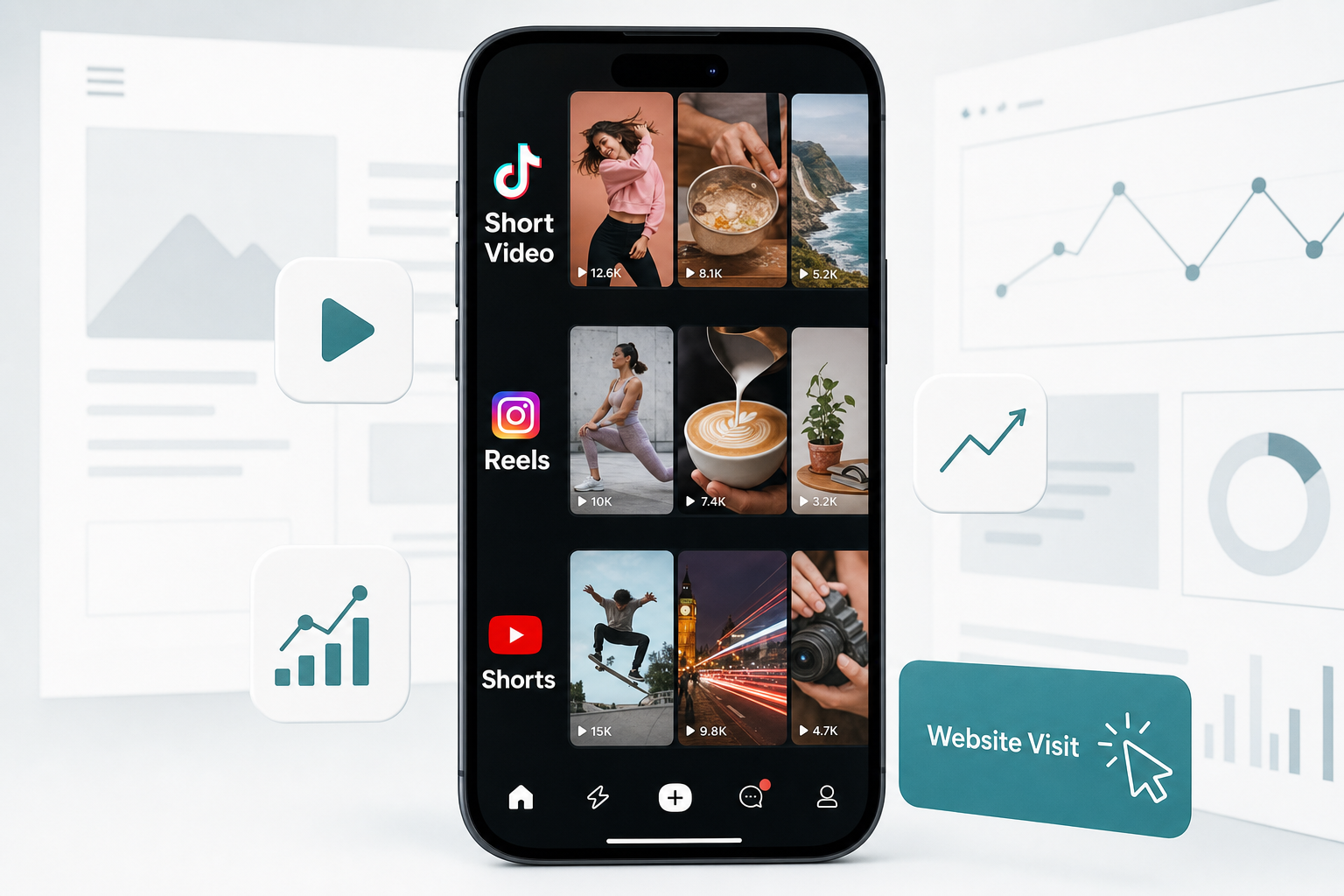
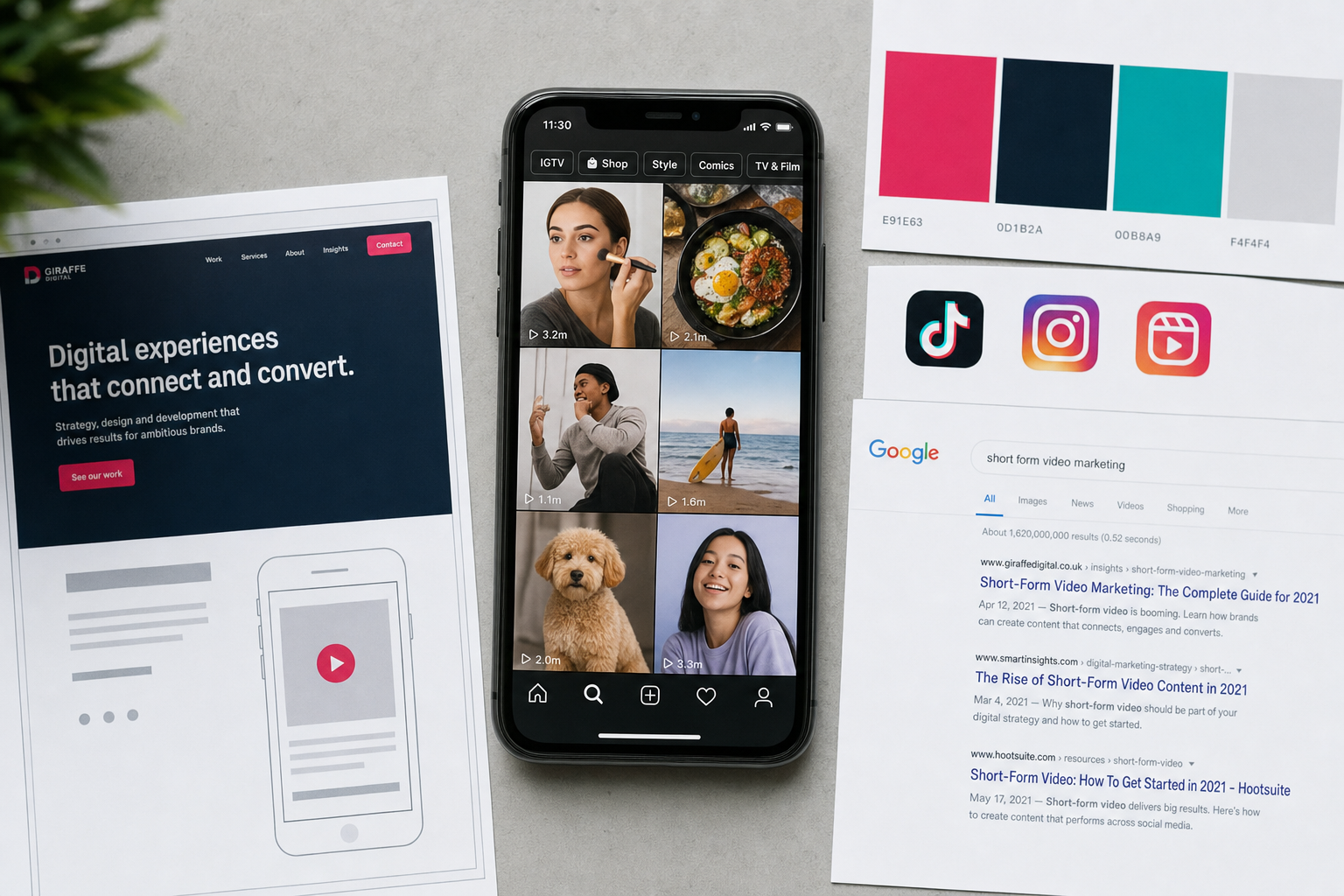
Platforms have also been encouraging this shift. TikTok has made short, vertical video central to its experience, with discovery driven by interests and viewing behaviour rather than only by who a person follows. Instagram Reels has given businesses another way to create short videos alongside Stories, feed posts and IGTV. Facebook Stories and Instagram Stories remain useful for timely, informal updates, while Snapchat Spotlight has added further attention to short, entertaining mobile video. YouTube Shorts is also emerging in selected markets, showing how strongly the wider industry is moving towards shorter video formats.
For businesses, the important point is not simply that these platforms exist. It is that audience expectations are changing. People are becoming more comfortable learning about products, services and organisations through quick visual snippets. A brief video can make a company feel more approachable, especially where the service is complex, personal or difficult to explain through text alone.
The practical business value of short-form video
Short-form video can support several business objectives at once. It can increase awareness by reaching people who may not yet be searching for your service. It can build familiarity by showing the faces, values and working style behind your brand. It can also help potential customers understand what you do before they visit your website or make contact.
For a local service business, a short video might answer a common customer question in under 30 seconds. For a retailer, it might show a product in use rather than relying on a still image. For a professional services firm, it might simplify a common problem and encourage viewers to read a more detailed guide on the website. For a hospitality or leisure business, it might capture atmosphere, setting and experience in a way that text cannot.
The strongest short videos usually focus on one message. Trying to explain every feature, benefit and detail in a single clip will make the video feel crowded. Instead, treat each video as a small piece of a larger content plan. One video can address one question, one objection, one product benefit or one behind-the-scenes moment. Over time, these small pieces can build a much richer picture of your business.
Choosing the right platforms for your audience
It is tempting to publish everywhere, but a more focused approach is usually more effective. The right platform depends on your audience, your content style and the amount of time you can realistically commit to producing posts and responding to engagement.
TikTok is particularly strong for creative, personality-led and educational content. It can work well for businesses willing to test ideas, use a more informal tone and produce videos that feel native to the platform. Instagram Reels is useful for brands that already have an Instagram presence and want to reach beyond their existing followers. Stories on Instagram and Facebook are well suited to quick updates, reminders, behind-the-scenes clips and time-sensitive messages. LinkedIn is not primarily a short-form entertainment platform, but short native video can still work well for business-to-business marketing when the content is useful, concise and professionally presented.
Before choosing a platform, consider where your customers already spend time. A business selling visually appealing consumer products may find Instagram and TikTok more suitable than a specialist consultancy would. A local professional service may gain more value from short educational videos shared on LinkedIn and Facebook, or embedded into relevant website pages. The best approach is to match the format to the audience rather than follow a trend for its own sake.
Planning short-form video content with a clear purpose
Good short-form video does not have to be heavily produced, but it does need a clear idea. Start with the question: what should the viewer understand, feel or do after watching? If the answer is unclear, the video is likely to feel unfocused.
Useful short-form video ideas for businesses include:
- Frequently asked questions: answer one common question per video in plain language.
- Product demonstrations: show how something works, how it looks in use or what makes it different.
- Service explainers: break a process into simple steps so potential customers know what to expect.
- Before and after examples: demonstrate transformation where appropriate, without making exaggerated claims.
- Behind-the-scenes clips: show care, craft, preparation or the people involved in delivering the service.
- Customer education: offer quick tips that help viewers make better decisions.
- Brand values: communicate what your business stands for through real examples rather than slogans.
A simple structure can help. Open with a clear hook, deliver one useful point, then end with a next step. The hook might be a question, a common misconception or a direct statement of value. The next step could be to visit a guide on your website, follow for more advice, send an enquiry or save the video for later.
How short-form video supports website design
Short-form video works best when it is connected to a strong website. Social platforms are excellent for discovery, but your website remains the place where people should find complete information, understand your offer and make an enquiry with confidence.
When planning website design, consider how video can support the user journey. A short introductory video on a service page can help visitors quickly understand what you do. A product page may benefit from a concise demonstration. An about page can use video to convey personality and trust. A blog post can include a related short video to summarise the main point and keep visitors engaged.
However, video should not slow the website down or distract from the main action. Good website design uses video carefully, with attention to page speed, mobile performance, accessibility and clear calls to action. Videos should be compressed appropriately, embedded in a way that does not harm loading times and supported by useful written content. Captions or written summaries are also important because many people watch without sound, and search engines still rely heavily on text to understand page content.
For service businesses, short videos can also reduce uncertainty. A visitor may be more likely to enquire if they have already seen how your process works, who they might speak to or what makes your approach different. This is particularly useful where trust is a major part of the buying decision.
Search marketing and SEO considerations
Short-form video can support search marketing, but it should not replace solid SEO foundations. Search engines need clear page structure, relevant written content, fast performance and trustworthy signals. Video can improve engagement and make a page more useful, but it works best alongside well-written copy, sensible headings, internal links and clear metadata.
When creating videos for social media, think about how the same topic could support your website content. A 20-second video answering a common question might link to a more detailed blog post. A series of quick tips could become a longer guide. A product demonstration could sit alongside specifications, images and customer guidance on a product page. This joined-up approach helps avoid treating social media as separate from your wider digital marketing.
Descriptions, captions and on-screen text should use language your customers actually use. If people search for a particular service in a local area, reflect that phrasing naturally in supporting website content. Avoid stuffing keywords into captions or descriptions. Instead, make the content genuinely useful and ensure the next step is clear.
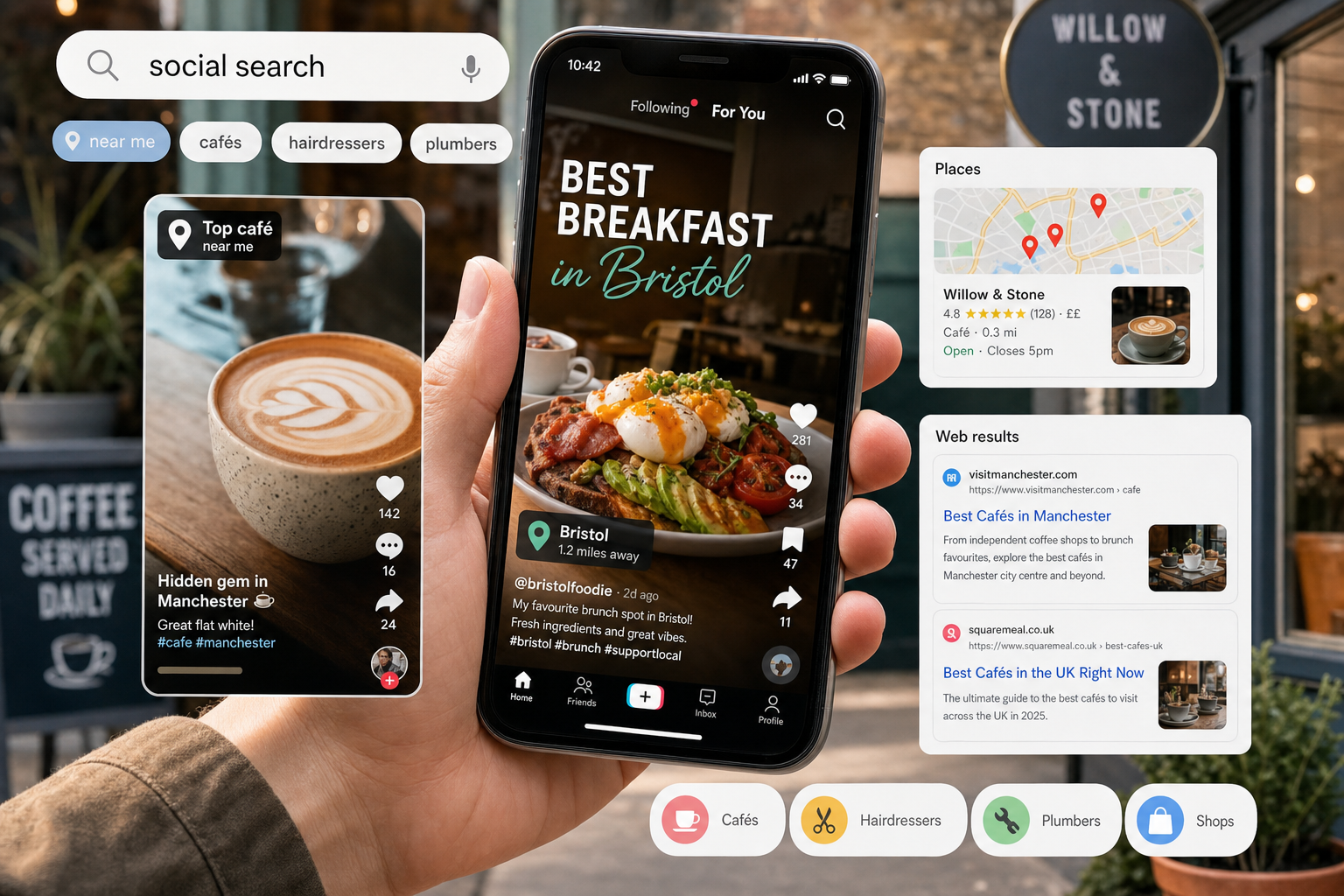
It is also worth considering how videos appear in social search within platforms. Users often look for recommendations, tutorials and examples directly inside social apps. Clear titles, captions and spoken explanations can help your content be understood by both viewers and platform systems. In March 2021, the fundamentals remain straightforward: be clear, be relevant and create content that answers real customer needs.
Branding, consistency and domain considerations
Short-form video can reach people quickly, but consistency is what helps them remember you. Use recognisable colours, tone of voice, visual style and messaging across your videos, website and other marketing channels. This does not mean every video needs to look overly polished. It means the overall experience should feel connected to your brand.
Your domain name is part of that consistency. A clear, memorable domain helps people move from social media to your website with confidence. If you are starting a new business or reviewing your brand, choose a domain that is easy to spell, easy to say aloud and closely aligned with your business name. For UK-focused organisations, a relevant UK domain can help reinforce local trust, while other domain extensions may be suitable depending on your audience and availability.
Before registering a domain, check that the name supports your long-term brand rather than a short-lived campaign idea. Avoid unnecessary hyphens, confusing spellings and names that are too similar to established organisations. It is also sensible to check social media handle availability so your brand is easier to recognise across platforms. Do not rely on a social media account as your main digital home; platforms can change features and visibility, while your website and domain give you more control.
Making short videos accessible and effective
Accessibility should be built into short-form video from the start. Many viewers watch with the sound off, so captions are valuable for both accessibility and engagement. On-screen text should be readable on a mobile screen, with enough contrast and enough time for people to absorb the message. Avoid placing important text too close to the edges of the frame, as platform interfaces can cover parts of the video.
Keep the first few seconds strong. A slow introduction can lose viewers before the message begins. Start with the useful point, the problem being solved or the result the viewer wants. Use natural language rather than overcomplicated scripts. If someone in the business is speaking on camera, they do not need to sound like a presenter; they need to sound clear, confident and helpful.
Vertical video is generally the most suitable format for TikTok, Reels and Stories. Film with good lighting, steady framing and clear audio where possible. Simple improvements, such as facing a window, using a quiet room and cleaning the camera lens, can make a noticeable difference. The aim is not perfection, but clarity and trust.
Measuring performance without chasing vanity metrics
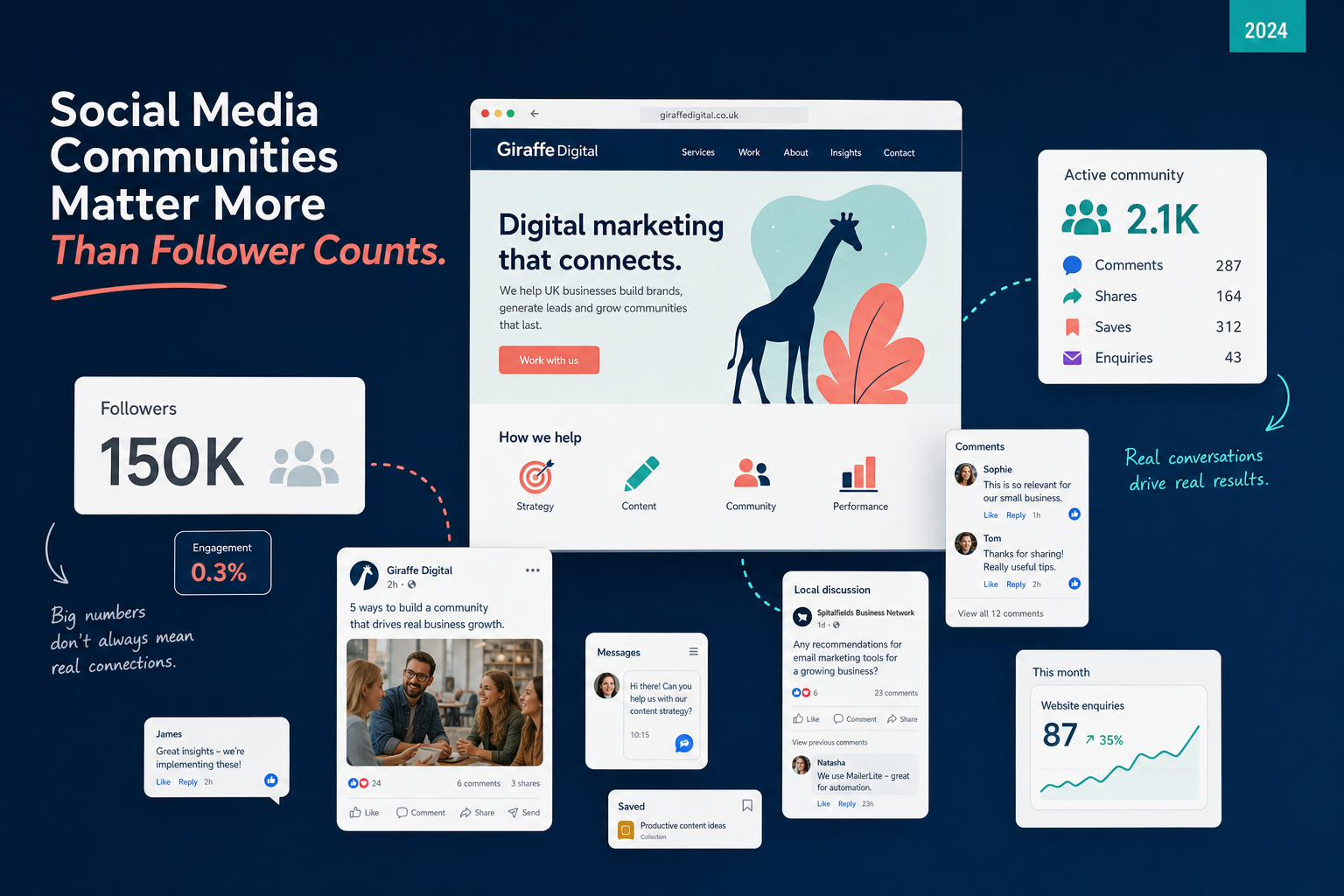
Views and likes can be useful indicators, but they are not the whole story. A video with fewer views may still be valuable if it reaches the right people and encourages enquiries. Look at metrics such as watch time, comments, shares, saves, profile visits, website clicks and direct messages. These can provide a better sense of whether the content is helping people move closer to a decision.
For website activity, review whether social traffic is engaging with key pages. Are visitors reading service pages, completing enquiry forms or spending time with related guides? If a particular video topic brings relevant visitors to your website, it may be worth expanding that topic into a blog post, landing page or email campaign.
Testing is important. Try different hooks, lengths, posting times and content types. Compare educational videos with behind-the-scenes clips. See whether your audience responds better to demonstrations, quick tips or direct answers to questions. Over time, this evidence can guide your social media marketing and reduce guesswork.
How to get started with short-form video
If short-form video feels daunting, start with a small and realistic plan. Choose three to five common questions your customers ask. Record short answers using a mobile phone, keeping each video focused on one point. Add captions, write a clear caption for the post and direct viewers to a relevant page on your website where they can find out more.
Once you are comfortable, create a simple monthly content plan. Include a mixture of educational, trust-building and promotional content. For example, a website design agency might publish one video explaining why page speed matters, another showing what makes a strong homepage, another answering a question about domain names and another giving a quick tip on preparing content for a new website. This variety keeps the feed useful while supporting wider digital marketing goals.
Most importantly, keep the customer in mind. Short-form video is not about copying every trend or producing content for its own sake. It is about making your business easier to understand, easier to trust and easier to choose. When combined with a well-designed website, clear branding, thoughtful SEO and consistent social media activity, short-form video can become a valuable part of a modern digital strategy for UK businesses.