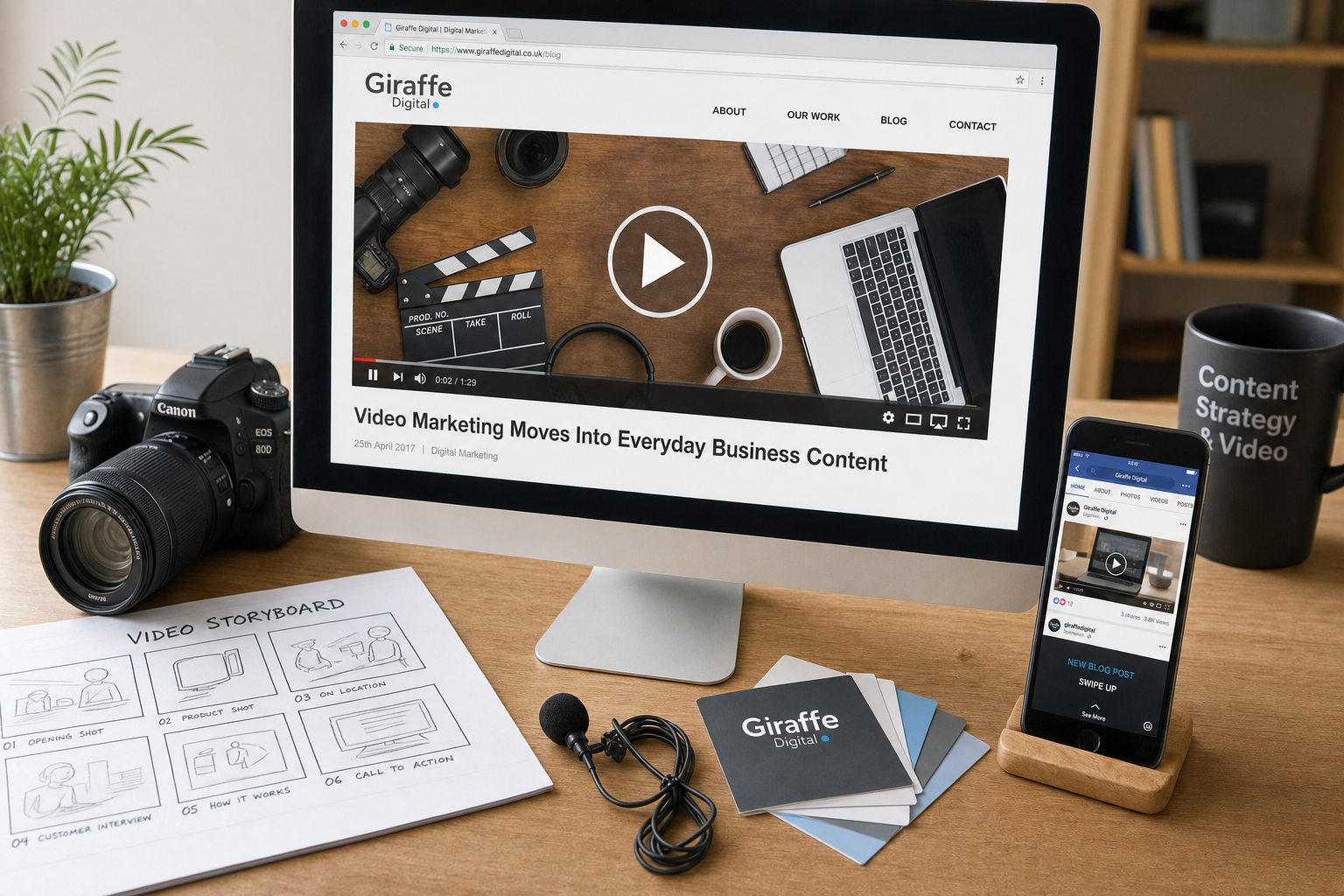
Video is no longer reserved for large brands with large production teams. For many UK businesses, it is becoming a practical part of everyday digital communication: a way to explain services, build trust, support sales conversations and make website content more engaging. Business video marketing does not have to mean producing a costly advert. It can be as simple as a clear service introduction, a product demonstration, a short answer to a common customer question or a useful clip shared through social media.
The important shift is that video is moving from being a one-off campaign asset to something that supports the wider digital strategy. When planned properly, video can improve the way visitors understand a website, strengthen brand personality, encourage social engagement and give search engines more useful signals about the value of a page. For business owners reviewing their website design, SEO, branding or digital marketing plans, video now deserves a place in the conversation.
Why video is becoming more useful for everyday businesses
People often want quick reassurance before making an enquiry. They want to know what a business does, how it works, whether it looks credible and whether it understands their problem. A well-produced video can communicate those points faster than a page of text alone, especially when the service is visual, technical or requires trust.
For example, a solicitor may use a short video to explain the first steps in a conveyancing enquiry. A manufacturer may demonstrate how a component is made. A hotel may show the atmosphere of its rooms, restaurant and local surroundings. A training provider may introduce a course leader and explain what attendees can expect. These are not gimmicks; they are useful pieces of content that help potential customers make decisions.
Video can also support different stages of the buying journey. At the awareness stage, a short social clip can introduce a problem or spark interest. On a website, a more detailed video can help explain a service. After an enquiry, a follow-up video or demonstration can reinforce the sales conversation. This makes business video marketing especially valuable when it is planned alongside website content, search marketing and social media activity rather than treated as a separate exercise.
Start with the purpose, not the camera
It is tempting to begin by discussing equipment, animation styles or filming locations, but the best video projects start with a simple question: what does this video need to achieve? A video designed to build awareness on Facebook will usually be shorter and more visually immediate than one designed to sit on a service page. A video created to improve trust may need a calm, professional tone, while a product demonstration may need close-up detail and a clear sequence.
Before filming, define the audience, the message and the desired next step. Should the viewer call the business, complete an enquiry form, download a guide, book a consultation or visit another page? If there is no clear next step, the video may still look good, but it will be harder to judge whether it has worked.
A useful planning structure is to decide on one main message per video. Many businesses try to include their full history, all services, staff profiles, accreditations and contact details in a single clip. The result can feel unfocused. A stronger approach is to create shorter videos with specific roles: one for an overview, one for a key service, one answering a frequent question and one showing the process behind the work.
How video supports website design and user experience
Good website design is not just about how a site looks; it is about how quickly visitors understand the business and move towards an action. Video can help when it is placed in the right part of the page and supported by clear copy, headings and calls to action.
On a homepage, an introductory video can set the tone and communicate the brand. On a service page, a short explainer can simplify a complex offer. On a product page, video can show scale, movement, finish or use in a way that photography cannot always achieve. On an about page, a founder or team video can help establish credibility, particularly for businesses where personal trust matters.
However, video should not slow the website down or distract from the main purpose of the page. Avoid forcing visitors to watch a long clip before they can find essential information. Use a strong thumbnail image, clear placement and a concise introduction. If the video contains important information, include supporting written content on the page so visitors and search engines can understand the topic even if the video is not played.
It is also sensible to consider mobile users from the beginning. Many visitors will view the website on a phone, so videos should be easy to play, clearly framed and not dependent on tiny text within the footage. Subtitles or on-screen captions can be useful, particularly when people are browsing without sound.
Business video marketing and search visibility
Video can contribute to search marketing, but it should be approached realistically. Simply adding a video to a page does not guarantee higher rankings. The benefit comes from making the page more useful, encouraging engagement and supporting a well-structured piece of content.
Search engines still rely heavily on text to understand page relevance. That means a video should sit within a page that includes a clear heading structure, descriptive copy and relevant internal links. A transcript or written summary can be particularly valuable, as it gives search engines and visitors a readable version of the key points. This also helps people who cannot watch the video at that moment.
When hosting videos on platforms such as YouTube, pay attention to titles, descriptions and tags. Use natural language rather than stuffing keywords. A clear title such as How our commercial printing process works is more useful than a vague title such as Company video 2017. The description should explain the content, include a link back to the relevant website page and encourage the viewer to take the next step.
For videos embedded on a business website, the surrounding page should be optimised in the same way as any other important landing page. That includes relevant page titles, meta descriptions, useful copy, fast loading times and sensible internal linking. Business video marketing works best when it strengthens the overall page, rather than replacing the written content that search engines and visitors still need.
Using video on social media in 2017
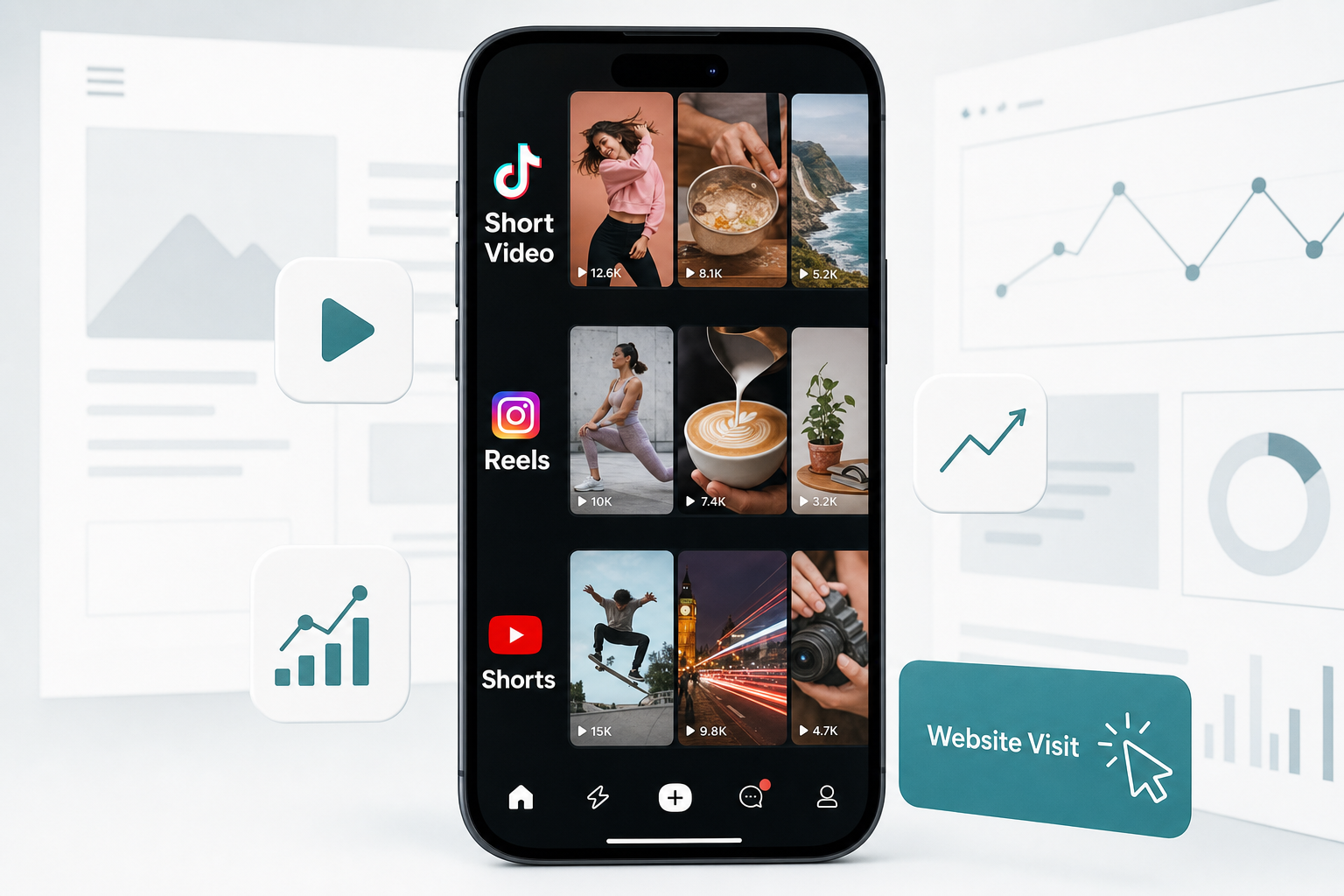
Social platforms are placing increasing emphasis on video, and businesses are responding because video often captures attention more effectively than a plain text update. Facebook, Instagram, Twitter, YouTube and LinkedIn can all play a part, depending on the audience and the type of content.
Facebook is particularly suited to short, engaging videos that work well in a busy feed. Many users watch without sound, so captions, clear visuals and a strong opening are important. Facebook Live can also be useful for Q& A sessions, event coverage or behind-the-scenes updates, provided there is a clear reason for people to watch.
Instagram works well for visual brands and concise storytelling. Short videos and Stories can show products, processes, events or quick tips. The tone is usually more immediate and informal, but it still needs to be consistent with the brand. A professional services firm, for example, may use Instagram less frequently than a restaurant or retailer, but it can still share useful moments from events, community activity or team culture.
YouTube remains valuable as both a video platform and a search destination. People use it to find tutorials, reviews, demonstrations and explanations. A business that regularly answers customer questions may find that YouTube helps attract visitors who are actively researching a topic. LinkedIn is also becoming more relevant for business-focused video, particularly for professional advice, recruitment messages and company updates.
The key is not to post the same video everywhere without thought. A two-minute website explainer may need a shorter edit for Facebook, a square or vertical version for mobile-led platforms, and a more descriptive title for YouTube. Each platform has its own behaviour, so the format should match how people use it.
Practical video ideas for UK businesses
Businesses often delay video because they are waiting for the perfect idea. In practice, the most useful ideas usually come from everyday customer conversations. If a question is asked regularly by prospects, it may be a good subject for a short video.
- Service explainers: a straightforward overview of what the business offers, who it helps and what happens next.
- Frequently asked questions: short answers to common concerns, such as timescales, preparation, process or suitability.
- Product demonstrations: showing how an item works, how it is installed or what makes it different.
- Behind-the-scenes content: giving customers confidence in the people, equipment, standards or care behind the service.
- Event and exhibition clips: capturing launches, trade shows, seminars or community involvement.
- Recruitment and culture videos: helping potential employees understand the organisation before applying.
- Customer guidance: useful tips that help people make informed decisions without feeling pressured.
The strongest content is usually specific. Rather than making a general video called Our Services, a heating company might create What to expect during a boiler service. An accountancy practice might produce Three records to prepare before your year-end meeting. These topics are practical, searchable and helpful.
Quality matters, but authenticity matters too
Not every video needs a television advert finish, but it does need to reflect the standards of the business. Poor sound, shaky framing, bad lighting or an unclear message can undermine credibility. Viewers are often forgiving of simple production if the content is genuinely useful, but they are less forgiving when they cannot hear, understand or trust what they are watching.
For important website videos, professional planning and production can make a noticeable difference. Lighting, sound, pacing, editing and branding all affect the final result. For social updates, businesses may use simpler footage, but it should still be planned and checked before publishing. A consistent look, appropriate tone of voice and clear brand presentation will help video feel like part of the wider marketing strategy.
It is also worth preparing people before they appear on camera. Most staff are not natural presenters, and that is perfectly normal. A short outline, a relaxed filming environment and several takes can produce a much better result than asking someone to improvise. The aim is not to sound scripted; it is to sound clear, confident and helpful.
Branding, domains and trust signals
Video rarely works in isolation. If a viewer sees a video on social media and then visits the website, the brand experience should feel consistent. The logo, colours, tone, photography, copy and calls to action should all support the same impression. If the video feels professional but the website feels dated or confusing, trust can quickly weaken.
Domain names also play a role in credibility. A business should use a clear, memorable domain that matches the brand as closely as possible. For UK-focused companies, a relevant UK domain can help reassure local customers, while a .com may also be useful where the business trades more widely. It is sensible to secure appropriate variations and common misspellings where necessary, but the main domain should remain simple enough to say aloud and include in a video end frame.
When planning a video, think about how the domain and contact details will appear. A clean end screen with the website address, telephone number and one clear call to action is usually more effective than crowding the final frame with every possible channel. The same applies to captions and overlays: keep them readable, brief and on-brand.
Measuring whether video is working
Measurement should connect back to the purpose of the video. A social awareness clip may be judged by reach, views, engagement and shares, while a service page video may be judged by time on page, enquiries, phone calls or form completions. View counts alone can be misleading if the video is attracting the wrong audience or failing to encourage action.
Useful measures include how long people watch, where they drop off, which pages they visit afterwards and whether enquiries improve from pages that include video. YouTube and social platforms provide their own viewing statistics, while website analytics can show how video pages perform within the wider site. Over time, this helps a business decide which topics deserve more investment.
It is also helpful to ask sales teams or customer-facing staff whether prospects mention the video. Sometimes the value of video is not just in direct conversions, but in the quality of the conversation it creates. A prospect who has already watched a service explanation may arrive better informed and more confident.
Building video into a wider digital strategy
The businesses that gain the most from video are usually those that plan it as part of a wider content programme. One filming session can often produce several assets: a main website video, shorter social edits, still images, a transcript, blog content and email newsletter material. This makes the investment work harder and keeps messaging consistent.
Before commissioning or producing video, review the website, landing pages, social channels and search strategy. Decide where each video will live, how it will be promoted and what action it should support. A video without a clear home can quickly disappear into a social feed. A video placed on a relevant, well-designed page can continue to support enquiries for far longer.
Business video marketing is not about following a trend for the sake of it. It is about making communication clearer, more engaging and more useful for customers. Whether the first step is a simple FAQ clip or a polished brand film, the same principle applies: start with the customer, focus on practical value and make sure the video supports the rest of the digital presence.
For UK businesses reviewing their website and online marketing plans, now is a sensible time to consider where video can make the biggest difference. Used carefully, it can help explain, reassure and convert, while giving the brand a more confident and human presence across the web.