Facebook marketing is no longer something that belongs only to students, friends and personal profiles. For many UK businesses, Facebook is becoming a useful part of a wider online marketing programme: a place to be discovered, build familiarity, answer questions, and keep customers close between visits to a website. Used well, it can support your website design, search visibility, customer service and brand reputation. Used casually, it can become another forgotten profile with little commercial value.
The important shift is from treating Facebook as a personal networking site to treating it as a business communication channel. That does not mean every organisation needs to spend all day on Facebook, nor does it replace a well-built website. It means that a business can now create a proper presence on the platform, publish useful updates, encourage people to become fans, and direct interested visitors back to the parts of its website that can turn attention into enquiries, bookings or sales.
Why personal profiles are not the right home for a business
Many businesses begin on Facebook by creating a personal profile under a company name. It is easy to understand why: personal profiles are familiar and quick to set up. However, they are not the best foundation for serious Facebook marketing. A personal profile is designed for an individual, not an organisation. It requires friend requests, mixes personal and commercial communication, and can feel awkward for customers who want to follow a business rather than become its friend.
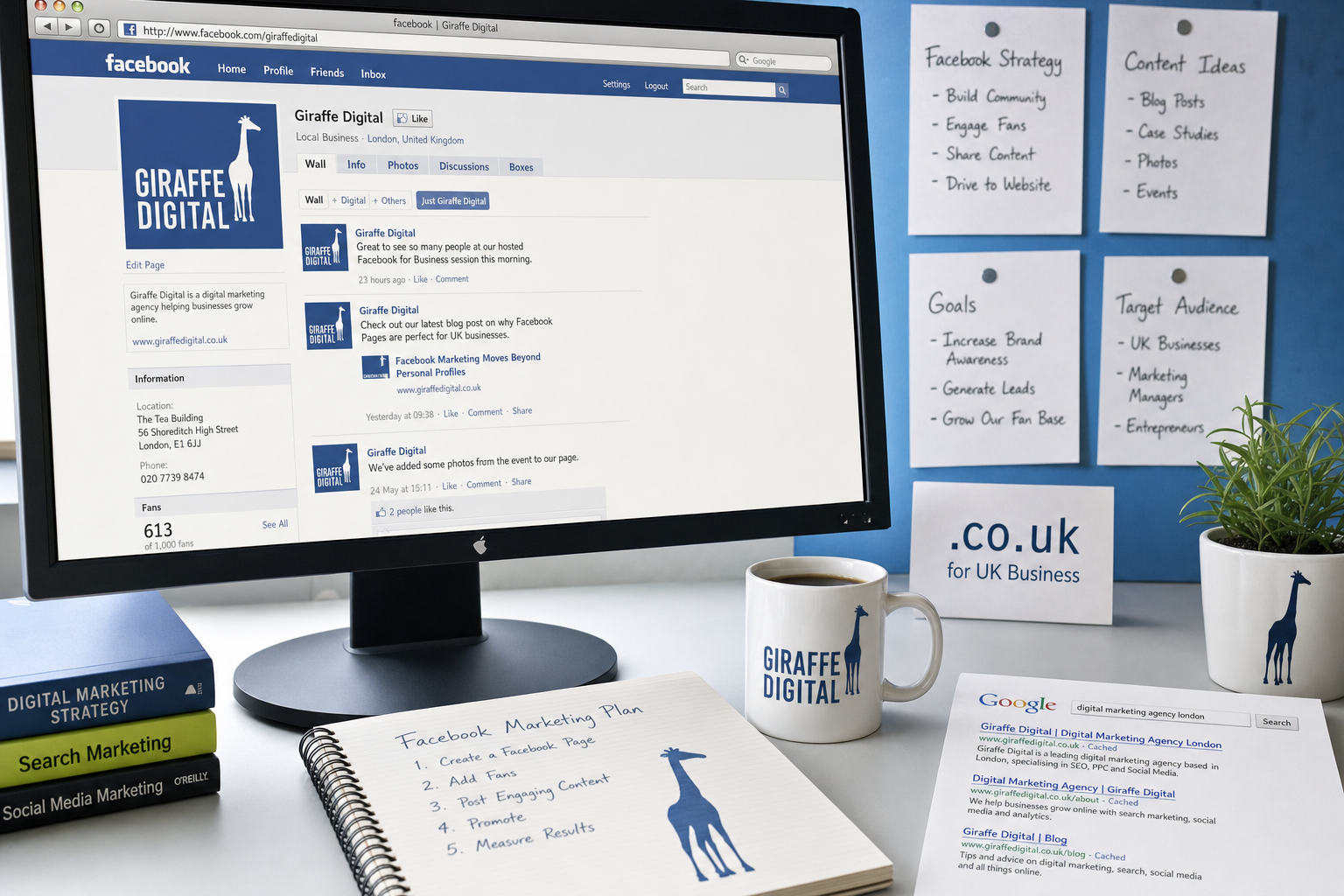
A Facebook Page is a more suitable option for most organisations. Pages are designed for businesses, charities, venues, products and public figures. People can become fans without the mutual approval process of a personal profile, and updates can appear in their News Feed. Pages can also offer business-focused features such as basic statistics, a public Wall, photographs, event listings and custom tabs. This makes them a clearer, more professional basis for marketing activity.
There is also a matter of perception. A customer may be comfortable becoming a fan of a restaurant, design studio, local shop or professional service, but may hesitate to add a company as a personal friend. Separating business communication from private networking helps to protect the brand and makes the relationship more straightforward.
What Facebook marketing can do for a UK business
Facebook marketing works best when it has a clear role. It is not a magic replacement for search engine optimisation, email marketing, local advertising or a good website. Instead, it can strengthen the online journey around those activities.
For example, a local retailer might use a Page to show new stock, announce seasonal opening hours and invite customers to an in-store event. A professional services firm might share short tips, links to useful articles on websites, and reminders about important deadlines. A hotel or restaurant might post photographs, promote special menus and encourage guests to leave comments. A training provider might list forthcoming courses and answer common questions before people enquire.
The practical business value comes from repeated, low-pressure contact. Not every visitor is ready to buy when they first find you. If they become a fan, you have a chance to remain visible and useful. Over time, that familiarity can encourage referrals, repeat visits and direct enquiries.
There is also value in showing that the business is active. A well-maintained Page can reassure potential customers that the organisation is responsive, approachable and up to date. This is especially useful for smaller businesses where trust and personality matter.
Building a business Page with purpose
A successful Facebook Page should not be an afterthought. It needs the same care as any other branded touchpoint. Start with the basics: the correct business name, a concise description, accurate contact details, opening hours if relevant, and a link to the main website. Use a recognisable logo or brand image so people can quickly identify the business in the News Feed.
The Page should make clear what the organisation does and who it serves. Avoid vague descriptions and overstuffed promotional language. A visitor should be able to understand the offer within a few seconds. If the business works locally, include the town, county or service area where appropriate. If it offers national services, explain that clearly.
Custom tabs can be helpful when used sensibly. In 2010, many businesses are using simple custom Page sections to introduce services, highlight promotions or guide fans towards website content. A welcome tab can be useful if it sets expectations and points people towards a clear next step, such as viewing the website, joining a mailing list, reading an article or contacting the business. The aim is not to make Facebook do everything, but to create a tidy route from interest to action.
Photographs are particularly important. A Page with no visual material often feels unfinished. Use images that show products, premises, staff at work, events or completed projects where appropriate. Avoid relying entirely on sales graphics. People respond well to material that feels real, relevant and credible.
Content that earns attention without shouting
The most common mistake in Facebook marketing is publishing only sales messages. A Page that says little more than "buy now" will struggle to keep attention. People use Facebook to keep up with friends, interests and organisations they care about. A business, therefore, needs to provide value, not just an interruption.
A balanced content plan might include several types of update:
- Helpful advice: short practical tips related to your field, written in plain English.
- Website links: articles, guides, case studies or service pages that offer more detail.
- Announcements: opening hours, new services, events, availability or important changes.
- Questions: simple prompts that encourage comments and help you understand customer needs.
- Photographs: behind-the-scenes images, products, venues, displays or project snapshots.
- Community updates: local events, partnerships or relevant industry news.
Frequency matters, but consistency matters more. A small business does not need to publish constantly. It is better to post a few useful updates each week than to publish a burst of activity and then disappear for a month. Plan updates around the natural rhythm of the business: new stock, seasonal services, events, deadlines, product launches or useful advice topics.
Tone is also important. Facebook is less formal than a brochure, but it still represents the business. Write as a helpful organisation rather than as an anonymous advert. Use clear language, respond politely to comments and avoid arguments. If a complaint appears, acknowledge it professionally and, where suitable, move the detailed discussion to email or telephone.
Connecting Facebook with website design
Your website remains the centre of your online presence. It is the place where you control the structure, content, branding, enquiry forms, product information and conversion path. Facebook can send interest to the website, but the website must be ready to receive that traffic.
Good website design should support visitors arriving from Facebook. If you post a link about a specific service, do not send people only to the homepage and expect them to search. Send them to a relevant page with clear information and an obvious next step. If you promote an event, create a page with the date, venue, booking information and contact details. If you share a blog post, make sure related services are easy to find.
It is also sensible to show your Facebook presence on your website. This might include a small link to the Page, a Facebook badge or fan box, or a note inviting visitors to follow updates. Place these elements where they support the user journey rather than distracting from important actions. For many businesses, the main aim of the website is still an enquiry, a booking, a telephone call, or a sale, so social links should not pull visitors away too early.
Design consistency matters. The Facebook Page, website, email newsletter and printed material should look as though they belong to the same organisation. Use the same logo, similar wording and a consistent message. A disjointed presence can make even a good business look less professional.
Facebook, search and online visibility
Facebook marketing should be considered alongside search engine optimisation. A Facebook Page may appear in search results for a business name, particularly if the brand is distinctive and the Page is active. This can help occupy more space in branded search results and give potential customers another way to learn about the business.
However, social media activity should not be treated as a substitute for proper SEO. Search engines still rely heavily on well-structured websites, relevant page titles, useful content, clear navigation and credible links. Your website should contain the detailed information customers search for: services, locations, answers to common questions, product details, testimonials where appropriate, and clear contact information.
Facebook can support this by distributing content. If you publish a useful guide on your website, share it with fans. If people find it helpful, they may comment on it, share it, or link to it from their own sites. This kind of attention can increase the reach of your content, although it should be earned through quality rather than forced tactics.
Think carefully about keywords, but do not write Facebook updates as though they are search engine pages. Use natural language. If your business provides website design in a particular area, say so clearly on your website and, where relevant, in your Facebook Page description. On Facebook itself, write for people first.
Protecting your brand with domains and names
Facebook should sit alongside sensible online brand protection. Before investing heavily in a business name, check that suitable domain names are available. For a UK business, a strong .co.uk domain is often important, and it may also be sensible to secure the .com if it fits the brand and market. Choose a domain that is easy to say, spell and remember. Avoid unnecessary complexity, confusing abbreviations and excessive hyphens.
Do not rely on a Facebook address as your main online identity. Social networks can change their features and rules, whereas a registered domain gives your business a stable address that can be printed on stationery, signage, adverts and vehicles. Your website should be built on a domain you control, with Facebook and other platforms acting as supporting channels.
It is also wise to keep naming consistent. If your domain, Facebook Page name and other social profiles are all noticeably different, customers may be unsure which presence is official. Registering key domains early and choosing social names carefully can prevent confusion later.
Advertising and promotion on Facebook
Facebook advertising can be useful for some businesses, particularly where the audience can be defined by location, age, interests or connections. A local leisure business, for instance, may be able to promote an event to people in a particular area. A specialist retailer may be able to reach users who have indicated an interest in related subjects.
As with any advertising, the message and destination matter. An advert that points to a poor Page or a confusing website will waste attention. Before promoting, make sure the Page clearly explains the offer, the website works properly, and the next step is obvious. Test simple messages and watch the response. Avoid assuming that more exposure automatically means better results.
Organic activity and paid promotion should work together. A Page with useful updates, good photographs and recent interaction is more likely to make a positive impression when someone arrives from an advert. Paid clicks can bring people to the door, but the quality of the presence helps decide whether they stay.
Measuring success without overcomplicating it
Measurement is essential, but it should be practical. A growing fan count is encouraging, yet it is not the only sign of success. A small but relevant audience can be more valuable than a large group of people with no real interest in the business.
Look at a combination of indicators: comments, Wall posts, enquiries, website visits from Facebook, event responses, email sign-ups and direct mentions from customers. Facebook provides basic Page statistics that can help you understand activity and audience response. Your website analytics can also show whether visitors are arriving from Facebook and what they do next.
Set simple objectives. For one business, the goal may be to increase local awareness. For another, it may be to support event attendance, bring visitors to a blog, encourage repeat purchases or reduce common customer service questions. The right measurement depends on the purpose of the Page.
A sensible place in the wider digital strategy
Facebook marketing is at its strongest when it is part of a joined-up digital strategy. Your website, search optimisation, email marketing, domain choices, branding and social media should all support the same commercial aims. Each channel has a role. The website provides depth and conversion. Search brings in people looking for answers. Email supports direct communication. Facebook helps maintain visibility, personality and conversation.
For UK business owners, the opportunity is not simply to "be on Facebook". The opportunity is to build a professional, useful presence that reflects the brand and helps customers take the next step. That requires planning, regular attention and a clear understanding of what the business wants to achieve.
Start with a proper Page rather than a personal profile. Complete it carefully, connect it to a well-designed website, publish genuinely useful updates and measure the results. Facebook marketing will not suit every business in the same way, but for many organisations it is becoming an important part of being visible, approachable and competitive online.